Donkey Milk Demand Grows in North Telangana, With 50 ml Selling for ₹50
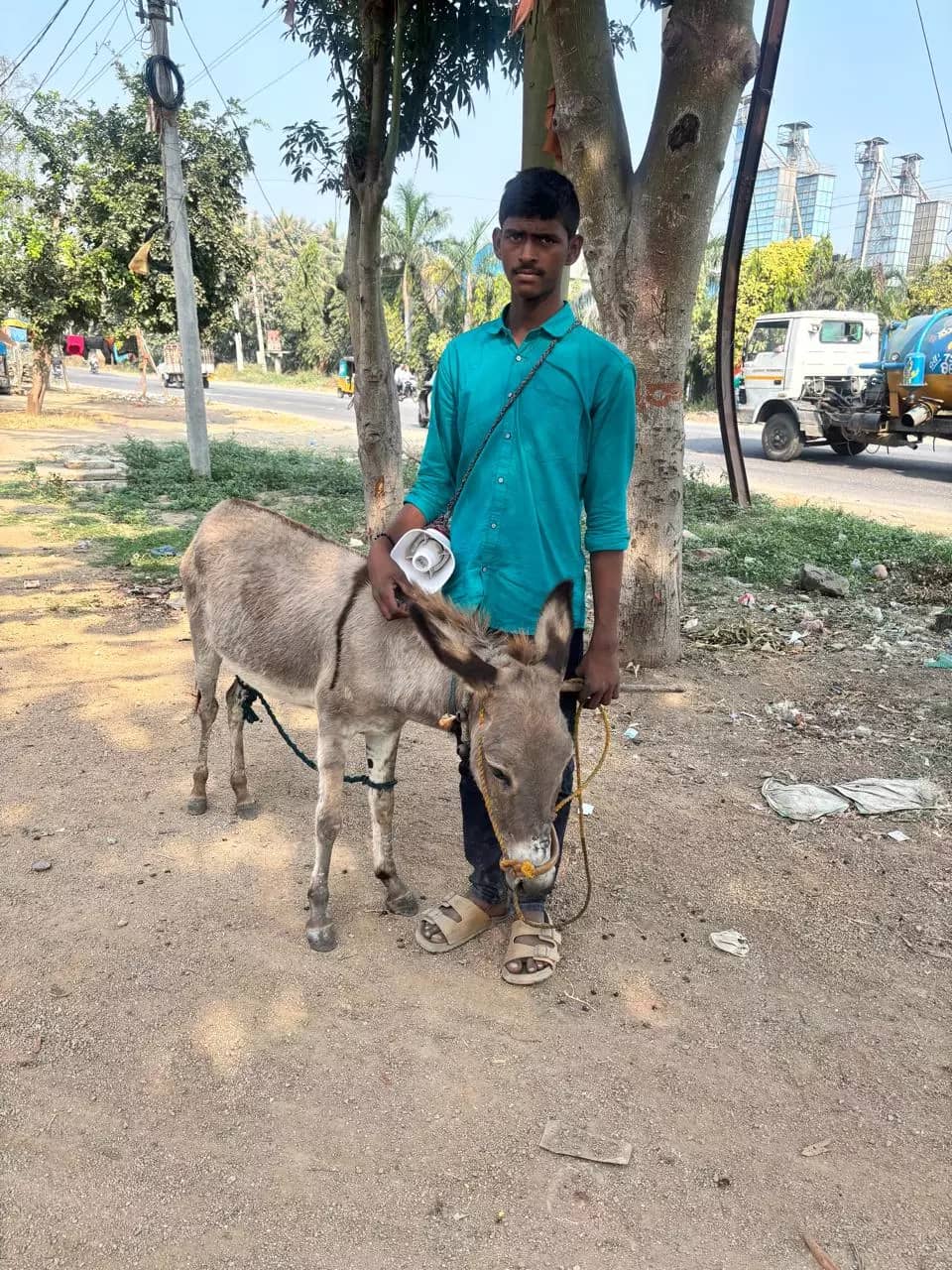
Donkey milk continues to find a market in North Telangana, where consumers across generations purchase it for its perceived health benefits. According to a report by Deccan Chronicle, local vendors sell 50 ml for ₹50 and deliver the milk directly to customers in villages and residential areas.
A Traditional Market With a Premium Price
The practice of consuming donkey milk has continued for generations across the former undivided districts of Nizamabad, Adilabad, Karimnagar and Medak, as well as neighbouring Nanded district in Maharashtra.
Members of the Vaddera community are among those involved in rearing donkeys and selling their milk. Vendors travel through villages and residential colonies in the early morning, using loudspeakers to inform potential customers of their arrival.
Local vendor Pallapu Shravan told Deccan Chronicle that demand fluctuates with the season. He also reported that the price of a donkey had increased from ₹50,000 to ₹1 lakh. The selling price of 50 ml of milk, he said, had risen from ₹20 to ₹50.
These figures illustrate the economics of a specialised local market, although they do not establish the profitability of donkey-milk production as a commercial business.
Nutritional Interest Versus Medicinal Claims
Donkey milk has attracted attention because of its nutritional composition and potential applications in alternative dairy products. It contains proteins, lactose, vitamins and minerals, including calcium and phosphorus, and is relatively low in fat compared with whole cow's milk.
However, the reported nutritional characteristics should not be confused with proof that donkey milk treats specific illnesses. Some consumers in North Telangana believe it helps with conditions such as coughs, colds, fever and pneumonia, but these are traditional claims rather than established evidence of treatment.
The Indian Council of Agricultural Research (ICAR) has also recognised donkey farming as an area of potential entrepreneurial interest. Its National Research Centre on Equines has conducted training on donkey rearing, breeding, milking and value addition, reflecting broader interest in non-bovine dairy opportunities.
Animal Care Remains a Concern
Vendors interviewed by Deccan Chronicle said they took their animals for health check-ups at government and private veterinary hospitals and provided medication when donkeys appeared ill or weak.
They also appealed to the Telangana government for free veterinary care.
For anyone considering this market commercially, animal health, appropriate milking practices, hygiene, storage and safe handling would be important considerations. A premium selling price alone does not guarantee that a product is safe or that a business is commercially viable.
What This Means for the Dairy Industry
The demand reported in North Telangana highlights the diversity of India's milk economy. Alongside established cow, buffalo and other milk markets, traditional consumer practices can sustain demand for less conventional animal-derived products.
For dairy entrepreneurs, researchers and policymakers, this raises questions about how niche milk markets can be assessed for nutritional value, consumer safety, animal welfare and commercial sustainability.
Any expansion beyond informal local sales would also need clarity on the applicable food-safety and regulatory requirements. Businesses should verify current requirements with the relevant authorities rather than assume that traditional use alone establishes regulatory compliance.
Donkey milk has a longstanding customer base in parts of North Telangana, but its future as a wider commercial dairy product will depend on more than consumer interest. Reliable evidence, safe handling, animal welfare and regulatory clarity will matter just as much as demand.
Source: Read full story here 22 Oct, 2026 Edited and Reported by
#DairyIndustry #AlternativeDairy #FoodSafety #LivestockFarming #DairyInnovation
Never miss an important dairy update
Follow DairyNews7x7 on Google to get live milk prices, policy alerts, and daily headlines directly in your feed.