FSSAI Cold Chain Advisory: A Welcome Start, but 6 Urgent Steps Remain
By Kuldeep Sharma, Chief Editor, DairyNews7x7
For thirty years I have asked one simple question, and I will ask it again. If FSSAI registers every shop that sells milk, curd, paneer and khoya, why has it never required that shop to own a refrigerator? The new FSSAI cold chain advisory is the closest the regulator has come to an answer.
I have not raised this only in my blogs. I personally put this point before the CEO of FSSAI at a meeting, urging that FSSAI cold chain rules be enforced at the retail level, with refrigeration made mandatory for every seller.
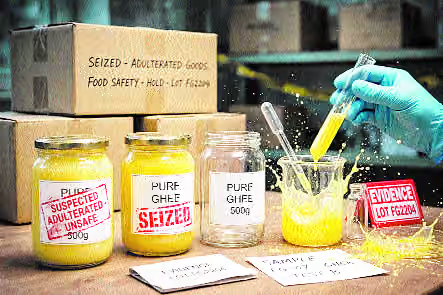
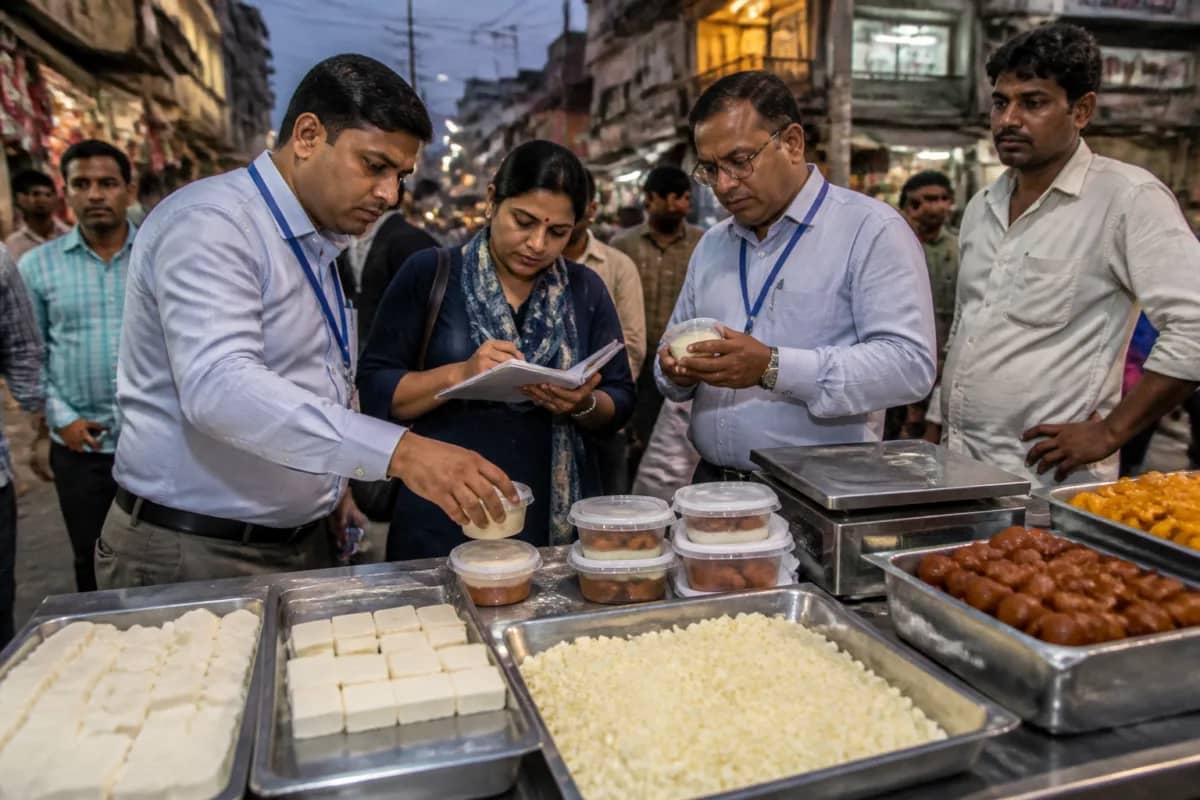
On 15 October 2026, FSSAI directed food businesses to strictly maintain prescribed temperatures while manufacturing, storing, transporting, distributing and selling perishable foods, including dairy products, meat and fish. It warned that non-compliance may lead to seizure and destruction of food products.
I welcome it. But let us be honest about what it is, and what it is not.
FSSAI Cold Chain Advisory: A Reminder, Not a Reform
The FSSAI cold chain advisory creates no new law. Under the Food Safety and Standards (Licensing and Registration of Food Businesses) Regulations, 2011, food business operators are already required to maintain prescribed temperatures from procurement to delivery to the final consumer. The FSSAI cold chain rule has been on paper for fifteen years. What has been missing is the will to enforce it.
The trigger for this FSSAI cold chain push was the festive season, after concerns that khoya, paneer, meat and fish were "sometimes" handled, stored or transported without temperature control. "Sometimes" is generous. Anyone who has walked through a mandi, a sweet shop's back room or a kirana store at 2 pm in May knows that the cold chain in Indian dairy often ends at the chilling centre or the plant gate.
The Plant Passes. The Pouch Fails.
Every few years the same story repeats. An independent lab buys milk from the market, tests it and finds high bacterial counts. The brands protest that their product meets FSSAI standards. Both are telling the truth.
When the independent testing programme Trustified reported market samples of Amul, Mother Dairy and Country Delight milk failing quality parameters, the numbers were alarming. Mother Dairy cow milk showed a Total Plate Count of 2,40,000 CFU/ml, nearly eight times the 30,000 CFU/ml limit. Amul Taaza showed 980 CFU/ml of coliforms. Amul refuted the findings, saying its products meet FSSAI standards.
I wrote then, as I did in August 2023 when Amul recalled 131 kg of curd in Kutch after consumer complaints, that the fault lay less in the dairy and more in the unrefrigerated journey of the dairy products.
In that case the dairy's own statement said curd quality depends on how it is stored and whether the required temperature is maintained right up to consumption. That is the cold chain, described in the producer's own words.
Here is the regulatory gap in one line. As Consumer Voice has pointed out, the aerobic count and coliform limits for milk apply at the processing plant only. We test milk where it is coldest and cleanest, and we stop testing exactly where the danger begins: in the open pickup, at the distributor's godown, on the shopkeeper's counter.
Pasteurisation is not a permanent shield. Milk that leaves the plant at 4°C with a few thousand surviving bacteria per ml is a living product. At 35–40°C, many common bacteria can double every 20–30 minutes. A few hours on a hot shelf can turn a compliant pouch into a failed sample. No brand, however reputed, can fight thermodynamics.
India's Summer Is the Real Test of the FSSAI Cold Chain
The FSSAI cold chain advisory is timed for Diwali. The real stress test comes six months later.
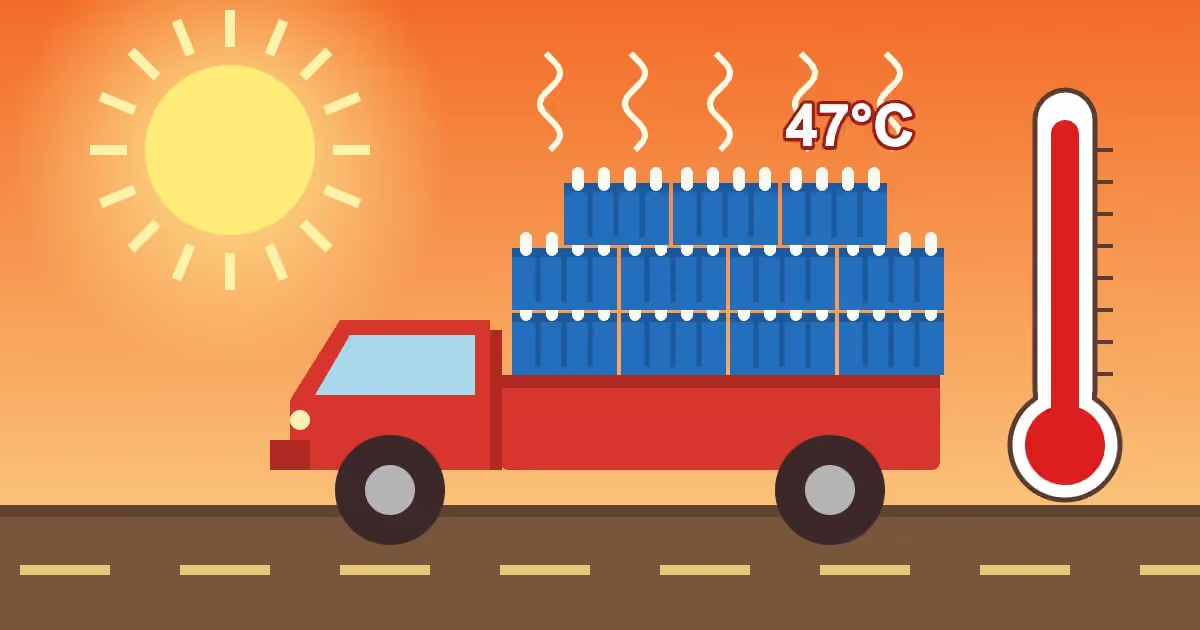
India's highest recorded temperature is 51°C at Phalodi in Rajasthan. This year was no gentler. On 25 April 2026, Banda in Uttar Pradesh touched 47.4°C, with daytime highs across most of the country between 40°C and 45°C. In late May, Brahmapuri in Vidarbha hit 47.2°C. Night temperatures also stayed above normal across much of central and northern India, so milk got no relief even after sunset.
Now picture how milk and curd actually move in this heat. Crates stacked on open tempos and three-wheelers. Paneer slabs wrapped in cloth on a scooter. Khoya in gunny bags on the roof of a bus. Curd cups sitting in the sun at a delivery point at 5 am, waiting for a shop that opens at 8. A closed, uninsulated metal body is no better; it becomes an oven.
Weak Cold Chain, Strong Chemicals
This is the part we rarely say aloud. Adulteration in Indian milk is very often a symptom of a broken cold chain, not just greed.
When raw milk travels warm, acidity rises and the milk risks rejection or curdling during heating. The quick fix is a neutraliser such as caustic soda or sodium bicarbonate to mask that acidity. When milk must survive hours without cooling, some add hydrogen peroxide or formalin to arrest bacterial growth. Each of these is a chemical answer to a temperature problem.
Even the Rajahmundry tragedy earlier this year, which I examined in Rajahmundry Milk Incident: Accident or Adulteration?, traced back to refrigeration, where an industrial coolant appears to have been used in place of a food-grade one. Enforcing the FSSAI cold chain is not just a logistics question. It is the central food safety question of Indian dairy.
If we want farmers, collectors and vendors to stop reaching for chemicals, we must make cold milk the easier option.
The Cost Argument, and Why It Fails
Small vendors and retailers will say refrigeration is expensive, electricity is unreliable and margins are thin. I accept that a corner shop is not a modern dairy plant, and that any mandate must be phased and supported.
But consider the alternative cost: hospital visits for gastroenteritis, products seized and destroyed, and a slow erosion of trust that pushes households towards loose milk, where there is no control at all. FSSAI registration costs barely ₹100 a year. A business that earns its living from perishable dairy cannot argue that keeping it cold is optional.
6 Steps to Turn the FSSAI Cold Chain Advisory Into Law
An advisory reminds. A regulation compels. I urge the regulator to convert the FSSAI cold chain advisory into binding conditions:
- Make refrigeration a condition of registration and licence. No FSSAI registration or licence for retailing milk, curd, paneer, khoya or cream without a working refrigerator or visi-cooler, verified at inspection.
- Insulated vehicles as the minimum standard. The FSSAI cold chain advisory asks only for clean, covered and hygienic vehicles. That is not enough. For short-distance distribution, insulated (PUF-panelled) vehicles or insulated crates should be mandatory. For longer routes, and for paneer and khoya, refrigerated transport should be required. Open vehicles for dairy must be banned outright.
- Retail-level microbial standards. Set TPC and coliform limits at the point of sale, not only at the plant gate, so responsibility follows the product.
- Temperature logging for organised players. Low-cost data loggers on milk tankers and distribution vehicles, with records available to food safety officers.
- Enforce in summer, not only at Diwali. April to June should be FSSAI's peak dairy enforcement season.
- Finance the transition. Use AHIDF and cheap working-capital credit to help small vendors and village collection centres buy coolers, insulated crates and solar-powered chillers.
The Bottom Line
For decades we have blamed the milkman, the farmer, the brand and the media. We have rarely blamed the missing refrigerator. The FSSAI cold chain advisory is the first official acknowledgement that temperature is the thread that holds Indian dairy safety together.
Now the FSSAI cold chain regime must move from advice to mandate. Cold milk is safe milk. Warm milk invites bacteria first and chemicals next.
Source: Editorial by Kuldeep Sharma, Chief Editor, DairyNews7x7 — October 20, 2026
#DairyNews7x7 #FSSAI #ColdChain #FoodSafety #MilkQuality #MilkAdulteration #Paneer #Khoya #DairyIndustry #Heatwave
Never miss an important dairy update
Follow DairyNews7x7 on Google to get live milk prices, policy alerts, and daily headlines directly in your feed.