U.S. Milk Production Rises 2.7% in September as Butterfat Levels Reach Historic Highs
U.S. milk production continued to expand in September 2026, with output across the 24 major dairy states reaching 18.7 billion pounds, a 2.7% increase compared with September 2025. The latest figures highlight the combined impact of dairy herd expansion and improved productivity, while rising butterfat and protein demand is changing how the industry measures milk's value.
According to the September Milk Production Report from the U.S. Department of Agriculture (USDA), production growth is being driven by both a larger herd and increased milk output per cow. The trend is significant for dairy farmers, processors and ingredient manufacturers as demand for cheese, butter, whey and other dairy products places greater emphasis on milk components.
A Larger Herd and Higher Productivity Drive Growth
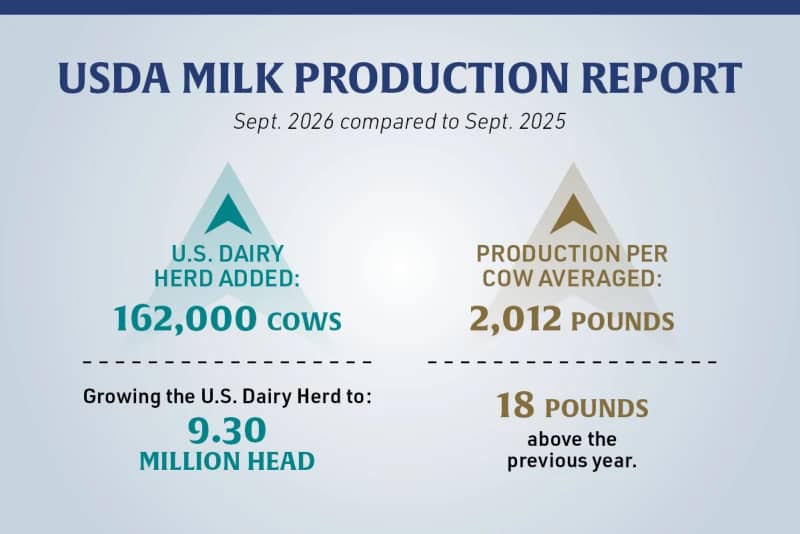
The 24 major dairy states had approximately 9.30 million milk cows in September, an increase of 162,000 head from a year earlier. Average production per cow reached 2,012 pounds for the month, up 18 pounds year over year.
Nationally, U.S. milk production totalled approximately 19.44 billion pounds, up 2.6% from September 2025. The July–September quarter recorded 59.5 billion pounds of production, an increase of 2.3% compared with the same period last year.
These figures indicate that U.S. dairy supply growth is not simply the result of adding cows. Improved output per animal is also contributing to the increase.
State-Level Production Trends Show Regional Differences
Production gains varied significantly across the country.
Kansas recorded the strongest percentage increase among the major dairy states, with September output rising approximately 14.7% to 492 million pounds. South Dakota production increased 7.9% to 494 million pounds, while Indiana rose 7.4% to 404 million pounds. Georgia and Oregon also posted year-over-year gains.
California, the country's largest dairy-producing state, remained broadly stable at approximately 3.29 billion pounds. Arizona, by contrast, recorded a decline of about 4.9%, reflecting a reduction in its dairy herd.
The differences underline how regional herd numbers, productivity and operating conditions can shape the national production picture.
Why Butterfat and Protein Matter More Than Ever
The headline figure is only part of the story. Milk composition is becoming increasingly important to dairy economics.
Dairy Herd's report highlights U.S. butterfat levels reaching 4.32%, a historic milestone in the industry's longer-term improvement in milk components. CoBank analysis has also documented the financial value of higher-component milk: herds producing more butterfat and protein can receive higher milk payments under component-based pricing systems.
This shift is closely linked to the use of milk in manufactured dairy products. Cheese, butter, whey and other ingredients rely on milk solids, meaning processors increasingly value not only how much milk arrives at the plant, but also how much useful fat and protein it contains.
For producers, genetics, nutrition, herd management and breeding decisions can influence component levels. For processors, a more component-rich milk supply can help meet manufacturing requirements, although the balance between butterfat and protein remains important.
More Milk Does Not Automatically Mean Higher Returns
Higher production can support processing capacity and ingredient supply, but volume growth alone does not guarantee stronger margins for farmers or processors.
The financial outcome also depends on milk prices, feed and labour costs, processing capacity, product mix and demand across domestic and export markets. If supply grows faster than demand for particular dairy products, prices and margins may come under pressure.
At the same time, stronger demand for protein-rich dairy ingredients can create opportunities for producers and processors able to deliver the components buyers need.
What the Trend Means for the Global Dairy Industry
The U.S. production figures offer a useful signal for international dairy markets. Sustained growth in milk volume and component output can influence the availability of dairy ingredients and the competitive position of U.S. suppliers.
For dairy businesses in other markets, including India, the broader lesson is that milk productivity and milk composition are distinct but connected measures of performance. As processing and value-added dairy products expand, reliable quality data, component testing and production efficiency can become increasingly important.
U.S. milk production is growing, but the industry's evolving economics are about more than volume. The ability to produce the right balance of butterfat and protein—and convert it efficiently into products consumers want—will remain a key competitive factor.
Sources: Read full story here 23 Oct, 2026 Edited and Reported by
#DairyIndustry #MilkProduction #DairyFarming #Butterfat #MilkProtein #DairyProcessing #GlobalDairyMarket #DairyNews
Never miss an important dairy update
Follow DairyNews7x7 on Google to get live milk prices, policy alerts, and daily headlines directly in your feed.