USDA's 2027 carabeef forecast shows India's buffalo herd under pressure, and milk prices feeling it. Dairy policy hasn't noticed.
By Kuldeep Sharma,
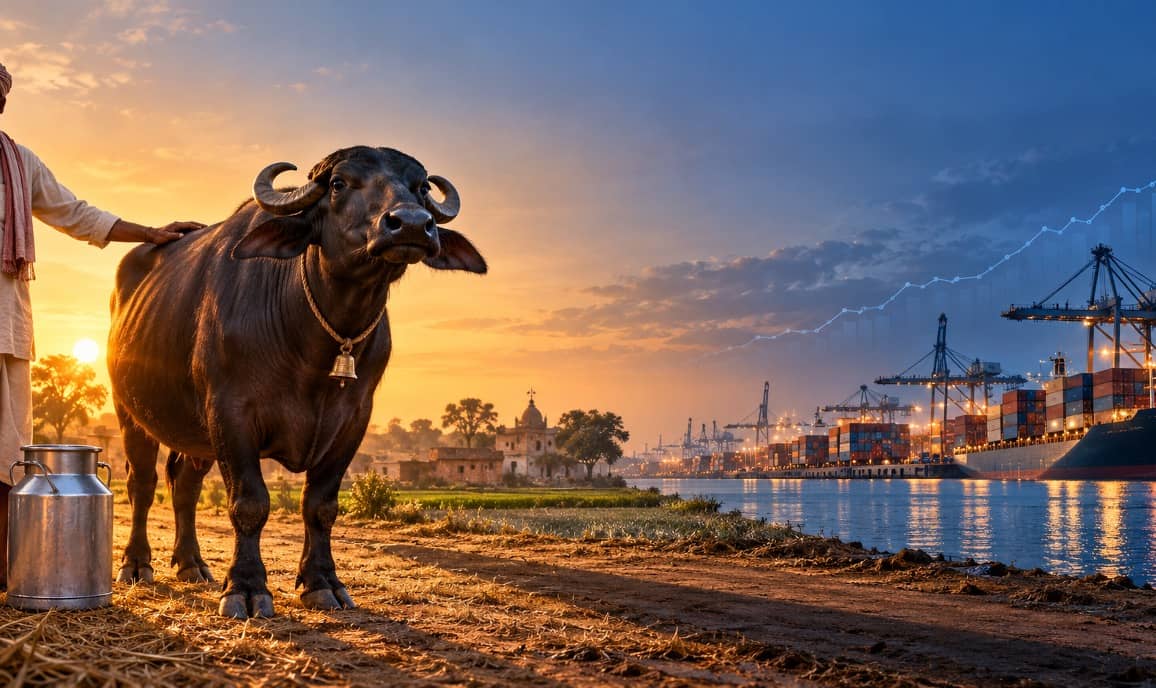
Here is a number the dairy establishment rarely says out loud. India earned $5.1 billion from buffalo-meat exports in FY2025-26, up 25.6% in a single year. That is several times what we earn from all our milk powders, butter, ghee and cheese put together. India's most successful dairy export is not a dairy product. It is the dairy animal, after the milk stops.
The USDA's latest Livestock and Products Annual for India, released on September 23, makes this impossible to ignore. India's bovine herd is flat at about 307 million head. Slaughter, however, has jumped from 41.6 million head in 2025 to a forecast 44.2 million in 2027. Carabeef output is heading to 5 million tonnes, and nearly two-fifths of it now leaves the country. In the first half of 2026 alone, exports rose 22%, and realisation per tonne rose 18%.
Let me first concede the discomfort. Bovine slaughter is a matter of deep religious sensitivity in most of India, and cow slaughter is effectively prohibited in 27 of 36 states and UTs. No government will build a "carabeef policy," and I am not asking for one. But we should be honest about what is happening economically. The meat economy is now underwriting the milk economy. Pretending otherwise is costing us clarity.
The salvage-value revolution
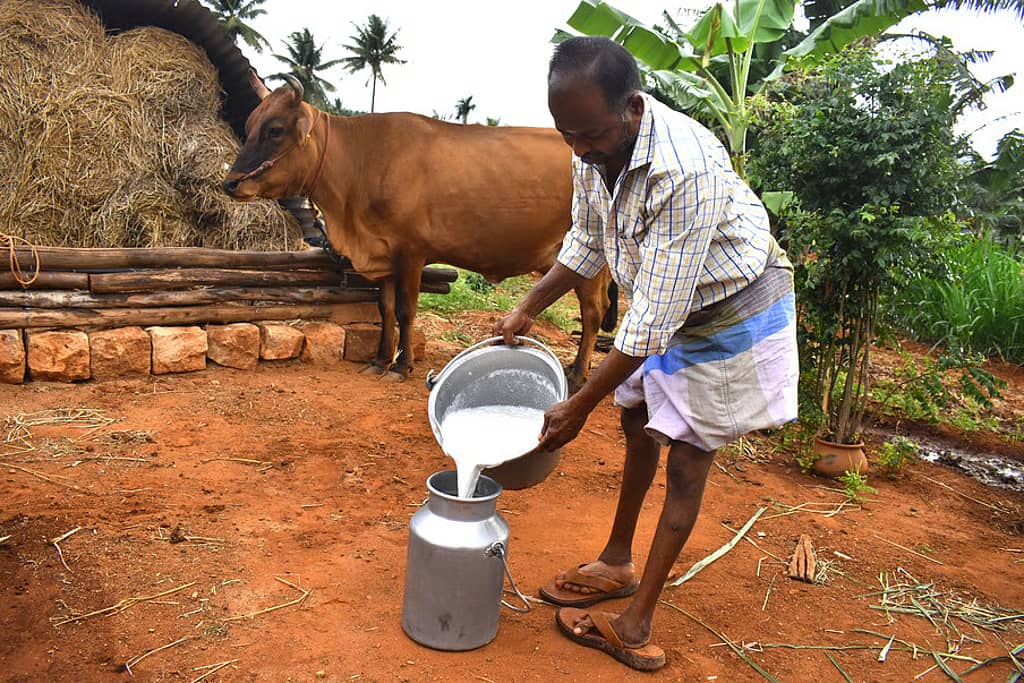
Think about how a dairy farmer looks at a buffalo. She is a 12–15-year asset. Her milk pays for the feed. At the end of her productive life she used to be a liability, and too often she ended up on the road as a stray.
Today, a farmer can sell a culled buffalo through an APEDA-registered abattoir for roughly ₹50,000. Against the replacement cost of a good milch buffalo, around ₹1.5 lakh, the salvage value now covers a third or more of the next animal.
USDA's own numbers show the welfare dividend. "Loss and residual" is the animals that die, disappear or are abandoned. It falls from 29.5 million head in 2025 to 28.8 million in 2027. Every animal that goes to a regulated abattoir instead of starving on a highway is, whatever one's beliefs, a better outcome than the alternative.
Now the warning
Read the USDA tables more carefully and a tension appears. Total inventory is flat, while slaughter is rising 6% in two years. USDA's 2026 export estimate implies a second half barely higher than last year's, after a 22% surge in the first half. Its 2027 forecast grows only 2.7%. That is not a forecaster expecting demand to cool. That is a forecaster who suspects the pipeline of slaughter-ready animals is running out.
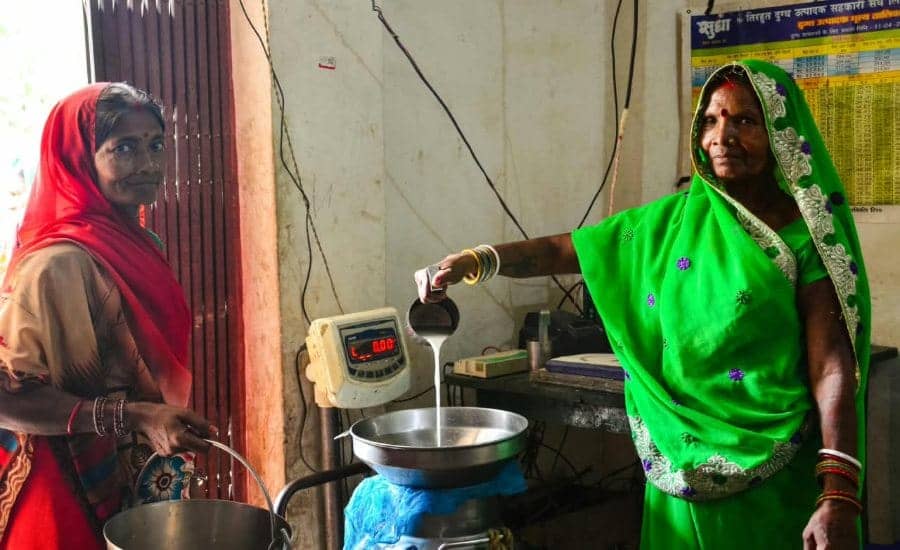
Milk is telling us the same story from the other side. In Uttar Pradesh procurement areas, processors are paying ₹880–920 per kg of milk fat, about ₹60 a litre for raw buffalo milk. Mumbai's wholesale buffalo milk hit ₹102 a litre on September 1, the steepest single hike in 70 years, and Tamil Nadu raised procurement by ₹6 a litre the same day. Feed is the common thread, with key ingredient costs roughly 25% higher. Maize offers no relief: kharif acreage is down 4.1%, and USDA expects output to fall to 50 million tonnes from 55.1 million. Farmers in Haryana and Punjab are also demanding Rs 100 per liter price for their buffalo milk.
Put the two together. When a spent buffalo fetches ₹50,000 and feeding a marginal one costs 25% more than last year, the rational farmer culls earlier. Some of those early culls will be animals with a lactation or two still left in them. That is a slow erosion of milk supply, and it hits buffalo milk hardest. Buffalo milk is the fat engine of Indian dairy: indigenous and non-descript buffaloes together account for over 43% of national output.
This is not a new hypothesis. In 2015, researchers at IIM Bangalore modelled India's milk prices against SMP, butter, income and beef prices. Beef prices showed a statistically significant long-run influence on milk prices, working through the slow attrition of adult female animals. At the time, buffaloes produced 53% of India's milk. Today the figure is closer to 43%. The abattoir has been quietly pricing our milk for over a decade; only the size of the cheque has changed.
It is also why I read the Q1 FY27 numbers of Heritage, Dodla, Parag and Hatsun as structural, not seasonal. Procurement costs are now set by a market that includes the abattoir and the feed mill. Consumer prices are still set by political sensitivity.
We are flying blind
The single most damaging fact in the USDA report is buried in one paragraph. The 21st Livestock Census, enumerated between October 2024 and March 2025, has still not been published. Results were "delayed by technical issues."
Every milk forecast in India, including my own bottom-up FY27 estimate built on milch animals multiplied by yield, rests on a milch-animal denominator extrapolated from 2019. That is seven years and one Lumpy Skin Disease epidemic ago. Early signals were not reassuring: a DAHD north-zone review deck in April 2025 flagged declining cattle and buffalo counts in several states.
In my 2014 Dairy Industry Vision 2030 paper, the second "I" of the 5-I model was Inventorization. You cannot integrate, institutionalise or invest in what you have not counted. Twelve years later, we are exporting $5 billion worth of animals from a herd whose size we cannot confirm.
What policy should do, without touching religion
- Release the 21st Livestock Census, with species, sex and age structure. Even a provisional bovine table would transform every procurement and capacity decision in the sector.
- Put buffalo salvage value into cost-of-milk models. It is now a material line in the farmer's economics; leaving it out distorts both procurement pricing and subsidy design.
- Protect the productive buffalo. Export rules already require certification that meat comes from buffaloes not used for breeding or dairy. Link that certificate to Pashu Aadhaar tag data and lactation records, so early culling of productive animals becomes visible rather than anecdotal.
- Turn "loss and residual" into income. A structured programme for rearing male buffalo calves would convert 28.8 million head of annual losses into farmer earnings, without adding a single milch animal to the slaughter line.
- Price the feed–fuel trade-off. Grain diversion to ethanol is a legitimate national goal, but a milk-and-meat economy worth several lakh crore is absorbing its costs. That belongs in the decision.
The buffalo has always been the quiet backbone of Indian dairy. She is now also the backbone of a $5 billion export trade. We can keep treating these as two unrelated stories, or recognise that it is one animal, one farmer and one balance sheet. The USDA has already done the arithmetic. It is time we did too.
The author is Chief Editor of DairyNews7x7.
Sources
- USDA FAS GAIN Report IN2026-0049, India: Livestock and Products Annual, September 23, 2026
- Rajeshwaran, Naik & Garud, Determinants of Milk Price in India: An Exploratory Study, IIM Bangalore, AICPPM 2015
- APEDA export data; DAHD Basic Animal Husbandry Statistics 2025; trade press reports on Mumbai, Tamil Nadu and UP milk prices (September 2026)
Never miss an important dairy update
Follow DairyNews7x7 on Google to get live milk prices, policy alerts, and daily headlines directly in your feed.