By Kuldeep Sharma | Dairynews7x7
I have no sympathy for anyone who deliberately adulterates food, cheats consumers or compromises public health. Food safety must never be compromised. But I am increasingly concerned about the way milk and dairy are being portrayed in India's food-safety narrative. Somewhere between the laboratory report, the enforcement action and the headline, scientific precision appears to be getting lost.
Take Maharashtra. According to the state FDA's own numbers for its three-month drive between June and August 2026, food stock worth ₹67.20 crore was seized statewide. Milk and dairy products accounted for ₹5.4 crore — roughly 8% of that total (India Today; UNI India). The drive covered a much wider range of foods — hotels, edible oil, gutkha and pan masala among them — yet the public conversation often makes it appear primarily as a dairy crackdown. The question is not whether the FDA should act. It should. The question is whether our food-safety narrative is being driven by risk and evidence — or by the visibility and emotional importance of milk.
A second problem is the tendency to put every regulatory failure into the same basket. Unsafe food, sub-standard food, mislabelled food, an unauthorised ingredient, poor hygiene and deliberate adulteration are not necessarily the same thing. A century-old, well-known dairy brand had its licence suspended this season over an absent effluent treatment plant, cracked flooring and missing "Best Before" labels — not over any chemical adulterant found in its milk (Free Press Journal). That is a hygiene and documentation failure, and it needs correcting. It is not the same category of offence as detergent-and-urea-laced milk, and reporting them in the same breath, often the same bulletin, blurs a distinction the public deserves to have made clear for them. If a product fails a standard, tell us which parameter failed. If it is unsafe, tell us why. If it is adulterated, establish what was added. Food safety needs scientific evidence, not adjectives.
This brings me to the curious reference to "synthetic milk powder" in some old enforcement reports from Odissha , including cases out of Maharashtra this year (Free Press Journal; The Print). I have a simple question: how did the authorities establish that the powder recovered was itself "synthetic"? Was it chemically analysed? What exactly was its composition? Which substance made it synthetic, as opposed to being ordinary skimmed milk powder or whey/dairy permeate powder that was then misused to dilute or extend genuine milk with water? Finding bags of powder at a premises where synthetic milk was allegedly being prepared does not, by itself, establish the identity of the powder.
There is also an obvious economic question. Who would manufacture synthetic milk, convert it into powder at considerable cost, transport it in bags and then add water to make milk again? If the material recovered was genuinely a synthetic formulation, the laboratory should tell us what it contained. If it was ordinary dairy-derived milk powder or whey permeate being misused to bulk up diluted milk — which is what most of this year's Maharashtra cases actually describe — say so. The laboratory report should lead the headline, not the other way round.
Skimmed milk powder , whey powder and permeate powders are not unsafe
And this is where skimmed milk powder needs to be understood properly. SMP is not an adulterant. It is a legitimate dairy product recognised under FSSAI standards. This confusion is not new — in 2013, Delhi's own health minister had to publicly clarify in the state assembly that most milk samples which had "failed" a national survey had done so only because the packaging didn't declare the presence of SMP, not because any harmful adulterant was present (Deccan Herald); a WhatsApp-era hoax once claimed the WHO had warned 87% of Indians would have cancer by 2025 from milk adulteration, a claim FSSAI itself confirmed the WHO never issued (The Better India). Its use in an unauthorised formulation, an unsafe process, or a deceptive product may certainly be a regulatory violation. But the ingredient itself does not become an adulterant merely because somebody has misused it — any more than sugar becomes a poison because someone once used it to adulterate honey.
We should also remember that milk is a seasonal biological product. During the flush season, surplus milk has traditionally been converted into storable dairy commodities such as milk powder and butter. During lean periods, these dairy ingredients can be used in legitimate dairy processing to manage seasonal and regional availability. This is not a new adulteration technique. It is fundamental dairy technology.
Indeed, India's own dairy revolution was built around solving this very problem. Operation Flood and the National Milk Grid were designed to reduce seasonal and regional imbalances in milk supply. Skimmed milk powder and butter oil were central to the programme's early commodity arrangements. Domestic fresh milk availability expanded substantially during the programme. So did milk-powder capacity. Together, these gains made us the world's largest milk producer in around 1997-98.
So what is the problem today?
The problem is not the technology. The problem is compliance.
If the SMP does not meet FSSAI standards, act. If the water used for reconstitution is unsafe, act. If the fat and SNF composition is wrong, act. If the finished product fails physical, chemical or microbiological requirements, act. If a product is fraudulently represented as something it is not, act firmly.
But do not convert a legitimate dairy technology into a food-safety scare.
India also needs to look beyond the factory gate. The country produced 247.87 million tonnes of milk in 2024-25, growing at 3.58% against a 2% world average (Dataful/Factly) — hardly the profile of a sector in crisis. Yet farmers in several regions, particularly in the north , west and south are struggling with feed, fodder, labour and other production costs even as procurement realisations stay under pressure. We cannot demand safe and affordable milk tomorrow while ignoring the economics of producing it today.
There is a more immediate cost, and it is showing up on the ground right now, not in a data release six months from now. In several states, this wave of raids, licence suspensions and loose-milk restrictions is disrupting established procurement chains — chilling centres shut pending paperwork, vendors wary of buying from producers who haven't yet completed registration, established milk runs suspended while compliance is sorted out. That is opening up a void between the farmer and the town he has always sold to. Normally, this would be the moment procurement prices rise, not fall — we are at the peak of the lean season, and the festive season, when demand for milk, khoya, paneer and sweets typically firms up farmgate rates, has only just begun.
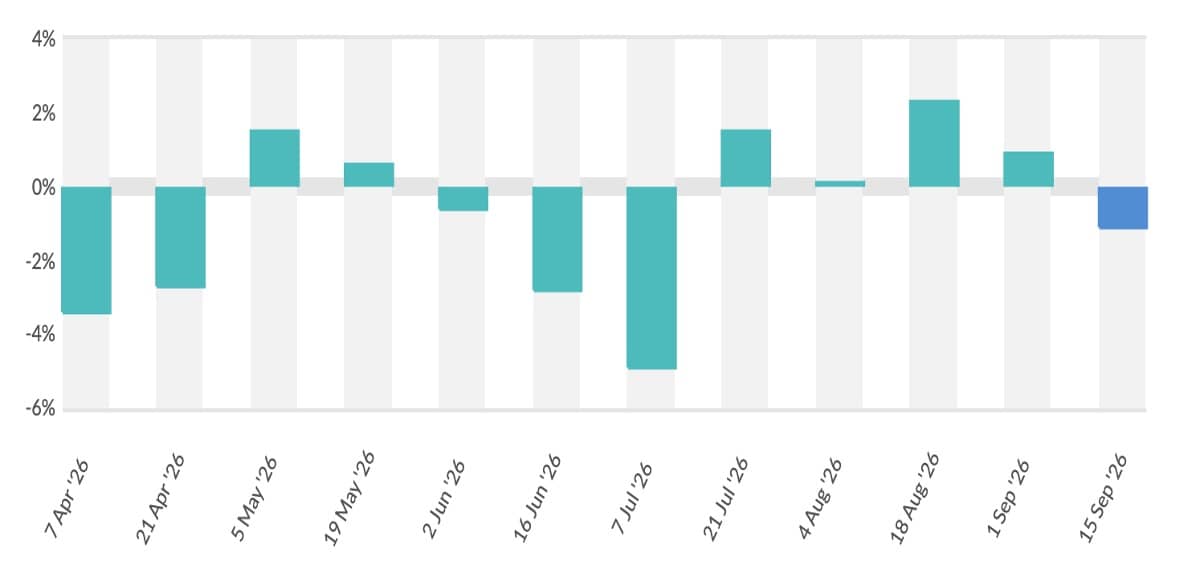
Instead, I am hearing that raw milk prices in parts of north India have actually been cut by Re 1 a litre this week — moving in precisely the wrong direction for the calendar we are in. That is not a market responding to genuine oversupply. It is a market responding to fear: buyers pulling back because they cannot be sure which collection point or chilling centre will be the next one to lose its licence, and farmers left holding milk with fewer people willing to take the risk of buying it. If enforcement itself is now distorting farmgate prices in the wrong season, that is a cost the compliance conversation cannot keep treating as incidental.
This brings me to the larger question: What should be the purpose of a food-safety inspection?
FSSAI's own Manual for Food Safety Officers is unambiguous that, as a general rule, inspections should aim at bringing about improvement rather than being conducted as raids, reserving the raid posture for cases where there is a definite lead concerning unsafe adulteration (FSSAI; FoodSafetyHelpline). The law also provides an improvement-notice mechanism through which an FBO can be required to correct identified deficiencies before stronger action is taken in appropriate cases.
This philosophy needs to become the centre of our regulatory approach.
Cancelling a licence is sometimes necessary — but licence cancellation is not the solution to food safety.
If an entrepreneur does not understand HACCP, sanitation, water quality, pest control, temperature management, personnel hygiene or documentation, cancelling his licence does not teach him any of these things. It closes one business. It does not necessarily make the next business safer. And the contrast with how other food categories have been treated this very season is instructive: when Maharashtra's own edible-oil sampling showed a non-conformance rate under 9%, the state's Chief Minister still put a proposed loose-oil ban on hold for a year after traders objected, and ordered a joint committee with the industry to work out the guidelines (Drishti IAS; Free Press Journal). Milk's own loose-sale ban, by comparison, took effect immediately, with no comparable grace period for the doodhwalas it put out of business overnight (Free Press Journal). If a joint committee and a year's runway are reasonable for one food category, I do not see why they are unreasonable for another.
What we need is capacity building and hand-holding of FBOs to process food hygienically and safely. The regulator should identify the risk, explain the deficiency, prescribe the corrective action, verify implementation and then take stronger action against those who deliberately or repeatedly refuse to comply.
I would put the difference very simply:
In a mature food-safety system, the food-safety professional is not merely an inspector; he is also a mentor. In India, the Food Safety Officer is still perceived primarily as an inspector.
We need to change that.
A good Food Safety Officer should be able to say to an FBO: This is where you are failing. This is the risk. This is the standard. This is what you need to change. Now demonstrate that you have corrected it.
That is not weak enforcement.
That is intelligent enforcement.
The ultimate objective of food regulation should not be to close food businesses. It should be to ensure that food businesses can consistently produce safe food.
So yes — raid the deliberate adulterator, punish the fraudster and shut down the genuinely dangerous operator. The detergent-and-urea rackets busted this year deserve exactly the force of law they are getting, and I have argued that in this very column before.
But where the problem is capability, build capability.
Where the problem is knowledge, provide knowledge.
Where the problem is process, help correct the process.
And where the FBO still refuses to comply, enforce without hesitation.
India does not need a weaker food-safety regulator.
It needs a Food Safety Officer who can be an inspector when necessary — and a mentor when possible.
That is how we move from catching unsafe food to building a safer food system.
Source : Editorial by Kuldeep Sharma Chief Editor Dairynews7x7
Never miss an important dairy update
Follow DairyNews7x7 on Google to get live milk prices, policy alerts, and daily headlines directly in your feed.