Mawa Seized in Ahmedabad: Huge 40,500 kg Stock Sparks Alarming Diwali Concerns
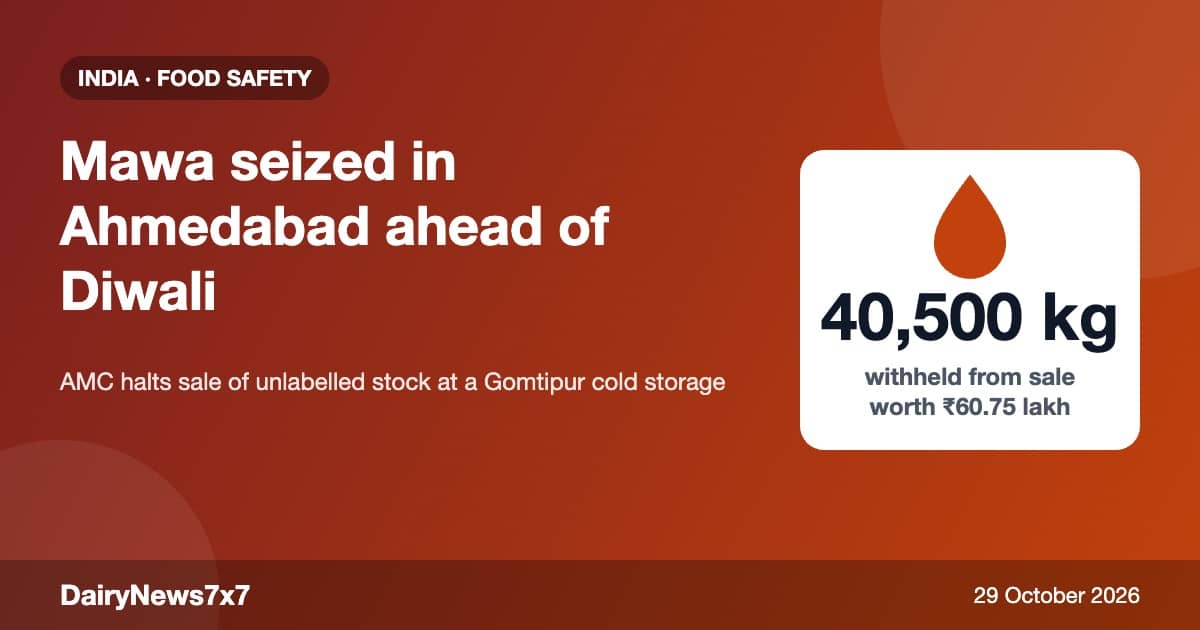
About 40,500 kg of mawa seized in Ahmedabad has been withheld from sale after the Ahmedabad Municipal Corporation (AMC) found the stock stored without batch numbers or expiry dates at a cold storage facility in Gomtipur. The civic body valued the consignment at roughly ₹60.75 lakh. The action comes days before Diwali, when demand for mawa-based sweets peaks across Gujarat.
The AMC's Health and Food Department carried out the inspection as part of a city-wide drive to check the quality and safety of festive foods. Laboratory reports are still awaited, and officials have stressed that no conclusion on adulteration can be drawn until test results arrive.
How the Mawa Seized at Gomtipur Came to Light
According to AMC food official Tejas Shah, inspectors found around 1.02 lakh kg of mawa belonging to about 60 traders stored at the Gomtipur facility. Roughly 80% of that stock was held by 15 large vendors who supply sweet shops in the city.
Inspectors collected samples from the stock of six vendors. They also found a large lot of 30 kg bags carrying the names of two sweet brands and supplied by a confectionery maker, Radhika Food Products. Because these bags carried neither batch numbers nor expiry dates, the entire lot was stopped from sale. Samples have been sent to a central laboratory.
Traceability Is the Core Issue
Missing batch and expiry details make it impossible to trace when a product was made, how long it has been stored, or which unit produced it. For a perishable milk product such as mawa, traceability is the first line of defence against spoiled or adulterated stock entering the festive supply chain.
The AMC also warned traders that selling sweets described as mawa-based when they are made without mawa misleads consumers about what they are buying. Officials cited provisions of the Food Safety and Standards Act, 2006, covering the duties of food business operators, the sale of food not of the nature demanded by the buyer, and misbranded food.
Part of a Wider Festive Crackdown
The mawa seized in Ahmedabad follows earlier recoveries of suspected spurious paneer and counterfeit tomato sauce in the city. Similar drives are under way in other states, including the recent khoya adulteration cases in Delhi and the festive-season checks ordered by FSSAI on dairy products.
Food safety officers say adulteration risk rises every festive season as demand for mawa, paneer, ghee and sweets outstrips the supply of genuine milk solids. Analogue products made with vegetable fat and starch are cheaper to produce, and some reach the market labelled as dairy.
Why the Mawa Seized Matters for Festive Supply
Mawa, also called khoya, is made by slowly reducing whole milk until most of the water evaporates. It takes roughly five litres of milk to make one kilogram, which makes genuine mawa expensive and the trade vulnerable to shortcuts when demand surges before Diwali.
Cold storages in Gomtipur serve as a hub for traders who stock mawa weeks before the festival. A stockpile of more than one lakh kilograms in a single facility shows how concentrated the city's festive supply has become, and why a single lapse in labelling can affect many sweet shops at once.
If the laboratory confirms that the mawa seized is substandard or adulterated, the traders involved could face prosecution under the Food Safety and Standards Act. If the samples pass, the stock may be released once it is correctly labelled.
What the Rules Say About Mawa Labelling
Under India's food safety framework, packaged dairy products must carry key details on the label, including the name of the food, the manufacturer's name and address, the FSSAI licence number, a batch or lot number, and a date marking that tells the buyer how long the product remains safe to eat. These requirements apply to bulk packs sold to traders as well as to retail packs.
Mawa sold loose by small halwais has historically escaped such scrutiny, but bulk bags moving through cold storages and supply chains are expected to carry this information. The absence of batch and expiry details on the mawa seized in Gomtipur is therefore a compliance failure in its own right, regardless of what the laboratory finds.
How Consumers Can Spot Suspect Mawa
Food safety officials generally advise buyers to be cautious about mawa and mawa sweets priced well below the market rate, because genuine mawa needs a large quantity of milk to produce. Other warning signs include an unusually rubbery or sticky texture, an oily residue, or a sour or chemical smell.
Simple home checks, such as adding a few drops of iodine solution to a small sample to check for starch, can raise suspicion but are not conclusive. Only an accredited laboratory test can confirm adulteration, which is why the AMC has sent samples for analysis before taking further action.
Festive Enforcement Is Becoming Routine
Pre-Diwali inspections of mawa, paneer, ghee and sweets have become an annual exercise for city food departments and state food safety commissioners. Recent seizures across Gujarat, Madhya Pradesh, Maharashtra and Uttar Pradesh suggest enforcement agencies are now targeting cold storages and wholesale hubs rather than only retail sweet shops.
For the organised dairy sector, tighter enforcement is broadly welcome. Branded producers of khoya and dairy sweets argue that adulterated and mislabelled products undercut genuine milk-based products on price and erode consumer trust during the most important selling season of the year.
What It Means for the Dairy Industry
For organised dairies and sweet makers, the mawa seized in Ahmedabad is another reminder that labelling and cold-chain records are now under close scrutiny. Batch coding, expiry dates and supplier documentation are basic compliance steps, but gaps remain common in the loosely regulated mawa trade.
Consumers can reduce risk by buying sweets from licensed outlets, checking FSSAI licence numbers and asking whether a product is made with mawa or a substitute. Industry bodies have long argued that clear labelling of analogue products, rather than blanket bans, offers the most practical protection.
The key takeaway: The 40,500 kg of mawa seized in Ahmedabad has not yet been proven adulterated, but the missing labels alone were enough to halt its sale. Laboratory results will decide the next step.
Read the original report on Gujarat Samachar.
Source: Gujarat Samachar, IANS | DairyNews7x7
Never miss an important dairy update
Follow DairyNews7x7 on Google to get live milk prices, policy alerts, and daily headlines directly in your feed.