Baladna Algeria: Massive 30,000-Cow Airlift Set as Cattle Imports Paused
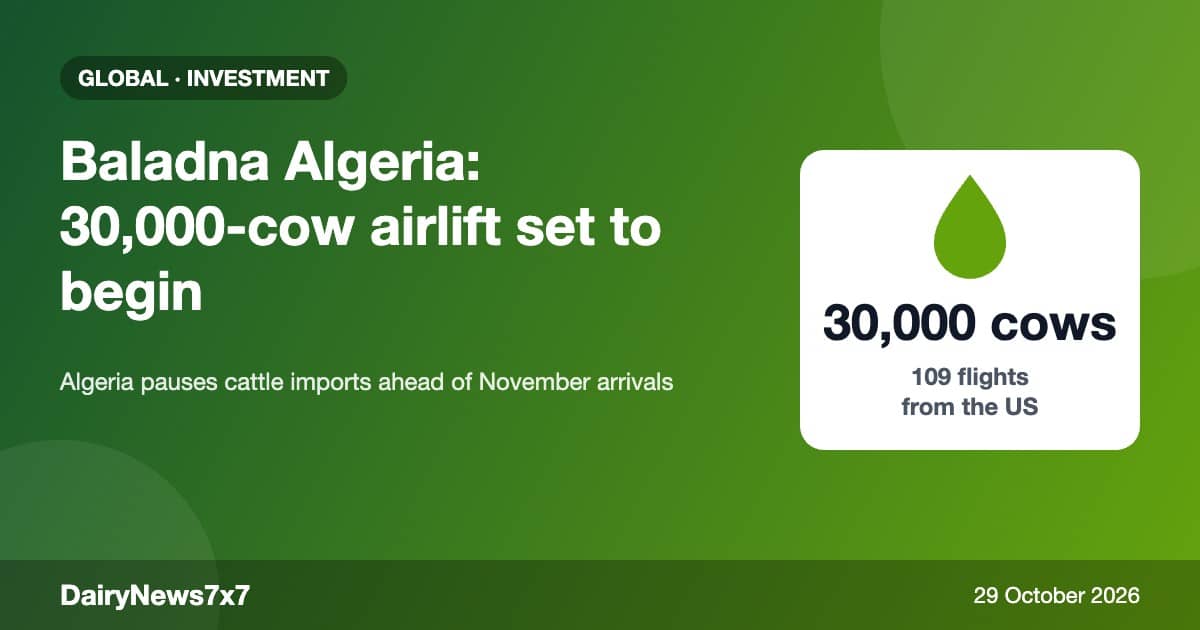
Algeria has temporarily closed its market to cattle imports ahead of the first livestock arrivals for the Baladna Algeria dairy project, according to Agriland. The closure was understood to be in place from 27 October, with Qatari dairy company Baladna scheduled to begin receiving cattle in November 2026.
Inside the Baladna Algeria Airlift
For the project's second phase, Baladna plans 109 flights carrying more than 30,000 Holstein cows from the United States to Algeria. The company has described it as one of the largest coordinated movements of livestock by air anywhere in the world.
Deliveries are expected to run over ten months, with about ten consignments a month and roughly 300 animals per flight. The cattle are being sourced from nine US states: Arizona, California, Colorado, Idaho, Indiana, Iowa, Kansas, Texas and New Mexico.
Baladna chose air transport despite its higher cost, citing closer veterinary oversight, stronger biosecurity and the need to integrate the animals into the operation on schedule.
A US$3.5 Billion Joint Venture
Baladna signed agreements just over a year ago to build an integrated dairy farming and milk powder operation in Algeria. It formed a joint venture with the Algerian government through the National Investment Fund, with total investment reported at US$3.5 billion.
Spending on the first phase had already passed US$500 million when Baladna signed second-phase contracts worth more than US$635 million earlier this year. Plans envisage more than 270,000 cows on 117,000 hectares, supplying a milk powder plant being built by GEA. Construction of the powder plant is well advanced.
Why Baladna Algeria Matters for Food Security
Algeria is one of the world's largest importers of milk powder, relying heavily on imports to supply subsidised milk to its population. Once complete, the Baladna Algeria powder plant is expected to meet up to half of the country's milk powder demand, reducing its dependence on world markets.
That shift could have wider effects. Algeria is a major buyer of whole and skim milk powder from New Zealand, Europe and South America, and changes in its import demand can move global prices. Our recent report on how Algeria is tightening the global WMP market explains this link.
Jobs and Economic Impact
Baladna expects the Algerian project to create 15,000 jobs in surrounding communities. It also expects around 1,200 jobs in the United States linked to sourcing and transporting the herd, with procurement and logistics contributing an estimated US$250 million to US$300 million to the US economy.
From Qatar's Blockade to a Regional Dairy Player
Baladna rose to prominence after 2017, when it airlifted thousands of cows into Qatar during the blockade by neighbouring states, helping the country become self-sufficient in fresh milk within about a year. The Algeria venture applies the same playbook – large-scale imported herds, intensive farming and integrated processing – on a much bigger scale.
Earlier coverage of the Qatar–Algeria US$3.5 billion dairy project outlines the original plan.
Challenges Ahead
Moving tens of thousands of high-yielding Holsteins into a hot, dry climate brings challenges in heat stress management, feed supply, water use and animal health. Fodder production on the project's large land bank will be critical, as will veterinary systems to manage disease risk in such a large imported herd.
The temporary closure of Algeria's cattle import market suggests authorities want to manage biosecurity and logistics carefully as the Baladna Algeria herd arrives.
The key takeaway: The Baladna Algeria airlift of 30,000 US cows marks a major step in one of the world's largest dairy projects, which aims to supply half of Algeria's milk powder needs.
Read the original report on The DairyNews.
Source: Agriland, The DairyNews | DairyNews7x7
Never miss an important dairy update
Follow DairyNews7x7 on Google to get live milk prices, policy alerts, and daily headlines directly in your feed.