The festive season brings a surge in demand for khoya, paneer and traditional Indian sweets. But recent food-safety inspections in Delhi and neighbouring production hubs have raised concerns about suspected adulteration, unhygienic handling and gaps in dairy supply-chain oversight.
The issue extends beyond individual sweet shops. Products can travel through several districts, wholesalers and retailers before reaching consumers, making coordinated inspections and laboratory testing essential.
1. Delhi Destroys More Than 4,100 kg of Suspected Adulterated Products
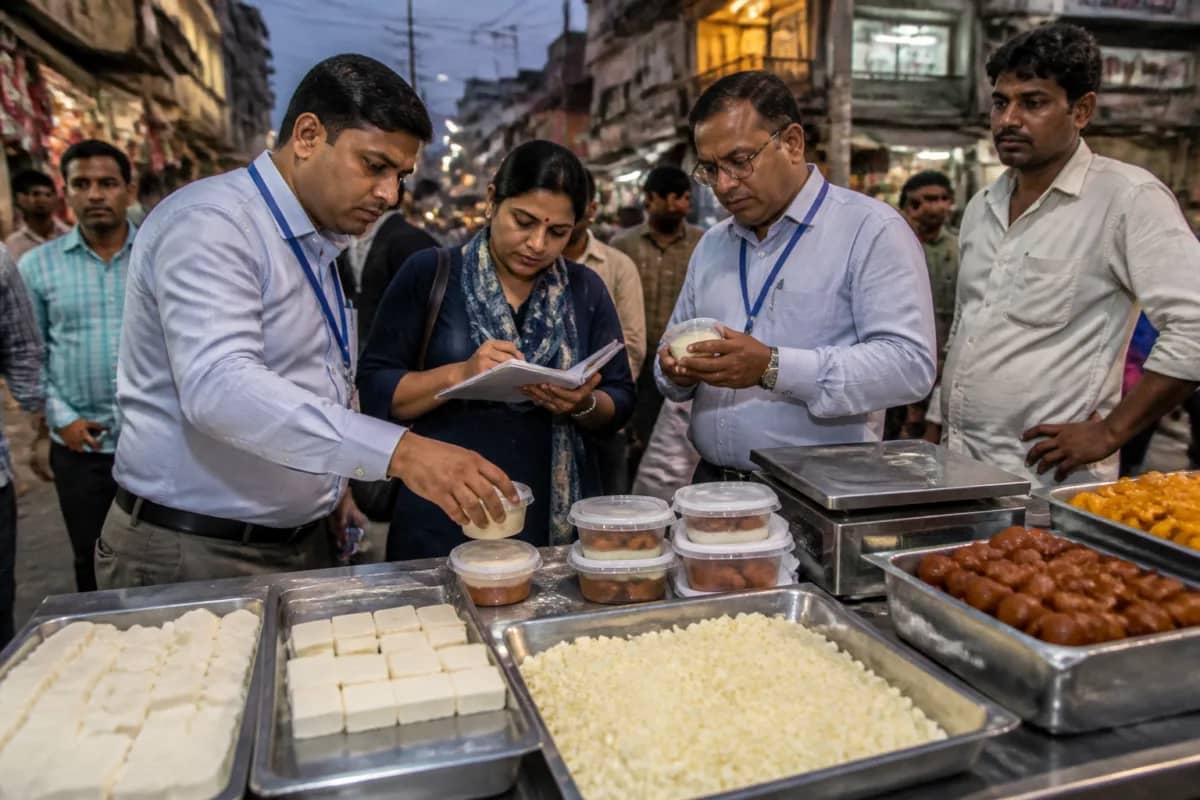
Delhi’s food-safety teams destroyed more than 4,100 kg of khoya, paneer and related products during a month-long enforcement drive ahead of the festive season, according to reports.
Officials also collected samples of khoya, paneer, chhena and ghee from markets for examination.
The action highlights the importance of monitoring dairy-based products during periods of heightened demand, when production and distribution networks face additional pressure.
2. Uttar Pradesh Inspections Raise Concerns About Khoya Production
Food-safety officials in Uttar Pradesh reported suspected adulteration at units in Kanpur Dehat.
According to the inspection report, officials recovered skimmed milk powder, refined soybean oil and other materials, including hydrogen peroxide, at inspected premises. Around 100 kg of prepared khoya was reportedly destroyed at one unit, and samples were collected for laboratory testing.
These findings raise concerns about possible attempts to imitate the composition, texture or appearance of traditional khoya using lower-cost ingredients.
Important: The allegations concerning specific substances remain subject to laboratory results and the relevant regulatory process. The materials recovered do not, by themselves, establish that every product from the units was adulterated.
3. Why Khoya Quality Matters
Khoya is a concentrated milk product widely used in Indian sweets, including peda, barfi, gulab jamun and kalakand.
Its quality depends on the milk solids, fat content, preparation process and hygienic handling. Under Food Safety and Standards Authority of India (FSSAI) standards, khoya must meet prescribed composition requirements, including at least 55% total solids and at least 27% milk fat on a dry-matter basis.
Suspected substitution with non-compliant ingredients can undermine product authenticity and may create food-safety risks, depending on the substances involved and the level of exposure.
Appearance alone cannot establish whether khoya meets the required standards. Proper sampling and laboratory analysis are essential.
4. The Supply Chain Extends Beyond Delhi
The reported inspections point to a wider network connecting production centres and consumption markets across northern India.
Khoya and paneer may be produced in one location, transported to wholesale markets and then supplied to sweet manufacturers and retailers in another city.
This creates an enforcement challenge: a suspicious product identified at a retail outlet may have originated several stages earlier in the supply chain.
Effective monitoring therefore requires coordination between state food-safety departments, production hubs, transporters, wholesalers and retailers. Traceability records can help authorities identify suppliers, follow suspect batches and prevent further distribution where violations are confirmed.
5. Enforcement Must Go Beyond Seasonal Raids
Inspections and product seizures are important, but long-term improvement also depends on timely laboratory results, follow-up investigations and appropriate action against businesses found to be violating food-safety requirements.
In the reported Uttar Pradesh cases, officials initiated action concerning the registrations of three food businesses. The final outcomes of those proceedings were not established in the report.
Digital recording of inspections and sampling, consistent documentation and coordination across jurisdictions can help authorities identify recurring problems and monitor compliance.
6. What Consumers Can Do
Consumers can take practical precautions when purchasing khoya and festive sweets:
- Buy from reputable sellers who maintain appropriate hygiene and sourcing practices.
- Prefer properly labelled, traceable products where available.
- Avoid products with visibly poor handling or storage conditions.
- Report suspected adulteration to the relevant food-safety authority.
- Do not rely on appearance or a home test alone to declare a product safe.
FSSAI describes a preliminary iodine test that can indicate the possible presence of starch in khoya. However, this is only a screening indicator; it cannot detect every adulterant or replace laboratory testing.
What This Means for the Dairy Industry
The reported cases underline a key challenge for India’s dairy and sweets sectors: protecting consumer trust requires more than inspections at the point of sale.
Producers must maintain product standards, businesses must preserve traceability, and enforcement agencies need reliable testing and coordinated follow-up.
Source: Dairynews7x7 20 Oct, 2026 Read full story here
#DairyNews7x7 #FoodSafety #KhoyaAdulteration #DairyIndustry #FoodAdulteration #FSSAI #DairyQuality #MilkSafety #Paneer #IndianDairyIndustry #FoodTesting #SupplyChainTraceability #FestiveFoodSafety
Never miss an important dairy update
Follow DairyNews7x7 on Google to get live milk prices, policy alerts, and daily headlines directly in your feed.