Global Dairy Prices Keep Sliding in July — But EU Spot Data Hint the Bottom Is Near
The global dairy market may be closer to a turning point than the latest FAO headline suggests.
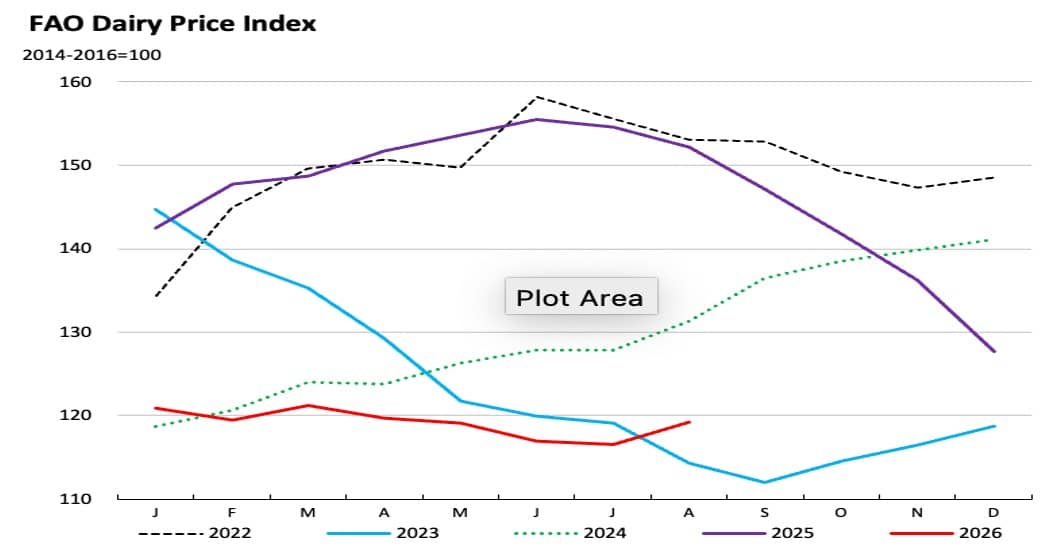
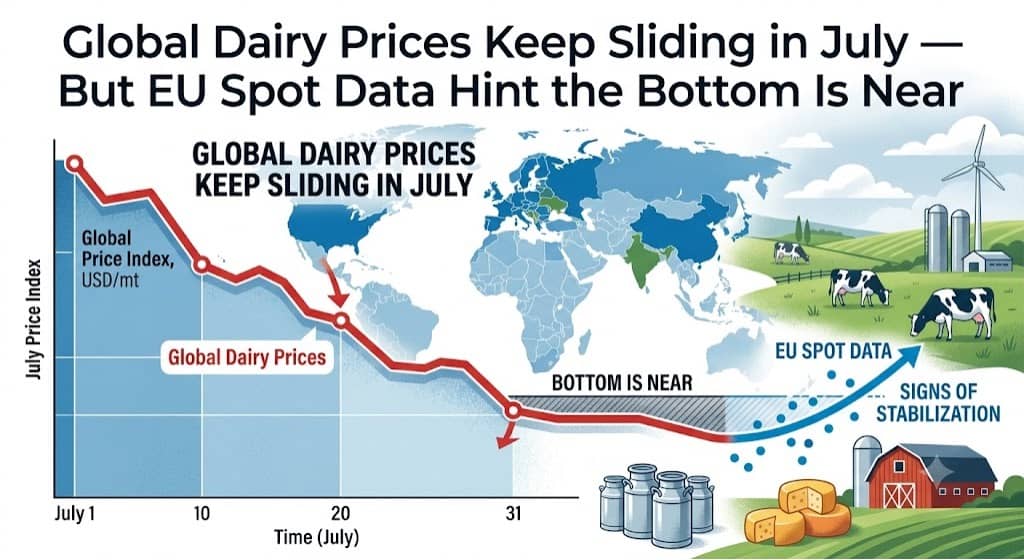
The FAO Dairy Price Index averaged 116.2 points in July 2026, declining 0.7% from June and falling a steep 24.8% compared with July 2025. It was the fourth consecutive monthly decline since April and marks a remarkable unwinding of the global dairy price rally that had taken the index to a multi-year high of 155.5 points in June 2025.
On the surface, the message is clear: global dairy prices are still under pressure. But a closer look at the individual commodities, the latest Global Dairy Trade (GDT) auctions and European spot markets tells a more nuanced story. The market may be shifting from a broad-based decline towards stabilisation, with some products already showing early signs of recovery.
The July numbers illustrate this divergence. Butter declined 2.4%, SMP fell 3.3% and WMP dropped 3.1%, while cheese moved in the opposite direction, increasing 1.7%. The cheese increase is particularly significant because it is the first monthly rise in a year.
Butter continues to be the biggest casualty of the correction. Its FAO index has fallen from 226.1 points in June 2025 to 131.5 in July 2026 — a decline of more than 40%. Improved milk-fat availability and greater export supplies, particularly from Europe, have gradually released some of the tightness that had characterised the butter market during the earlier part of the cycle.
SMP and WMP tell a slightly different story. Both commodities experienced substantial declines during the second half of 2025, but neither followed a straight downward trajectory. SMP, for example, recovered from its December 2025 low through April 2026 before turning lower again. WMP followed a broadly similar pattern. This suggests that the apparent continuous decline in the headline FAO index masks a much more volatile underlying market, with prices responding differently to changes in supply, demand and regional trade flows.
The most interesting development, however, is coming from the latest GDT auctions.
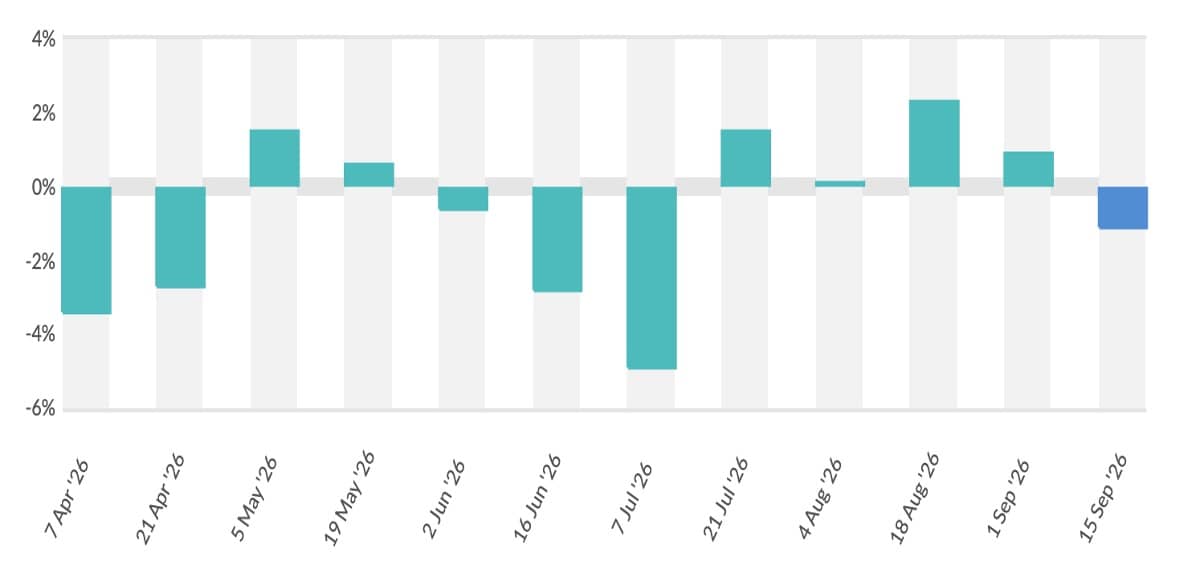
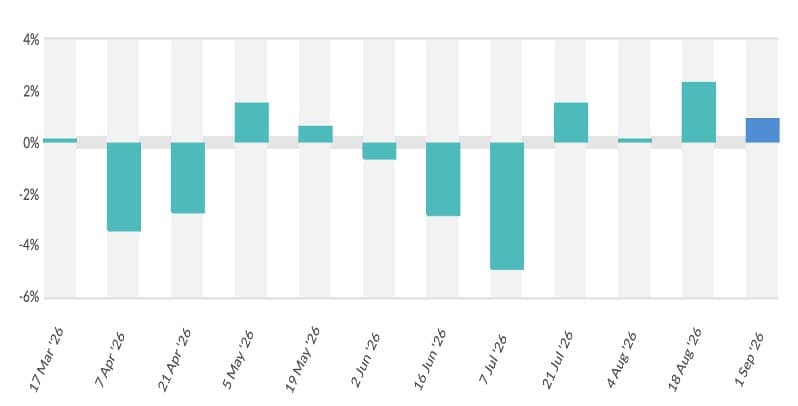
The GDT auction of 21 July produced a 1.5% increase in the overall GDT Price Index. SMP rose 2.8%, WMP 1.6% and AMF 1.1%, although cheese fell sharply by 6.5% and butter declined marginally. At the subsequent GDT Event 409 on 4 August, the overall index increased again. Cheddar jumped 3.8%, mozzarella increased 1.0%, while SMP and WMP also firmed.
Two consecutive increases do not constitute a new bull market. But they are significant because they suggest that the sharp downward momentum seen during much of the past year may be losing steam.
There is an important distinction here. The FAO index is essentially a rear-view mirror, whereas GDT provides one of the more immediate signals of where international dairy commodity prices are heading. The July FAO numbers incorporate quotations from earlier weeks when market sentiment was weaker. The latest GDT auctions, by contrast, are beginning to reflect current buying interest.
European markets provide another reason to be cautious about extrapolating the FAO decline indefinitely. EU butter prices were around EUR 386/100 kg on 25 June and EUR 388/100 kg on 16 July, showing remarkable stability and remaining roughly 14% above year-ago levels. SMP prices remained broadly around EUR 270–273/100 kg, while WMP stayed close to EUR 324–325/100 kg.
This does not look like a market in free fall.
Instead, it looks increasingly like a market searching for a floor.
There are, however, powerful forces that could prevent any sharp recovery. China remains the biggest question mark, particularly for WMP. Chinese import demand continues to be subdued, keeping pressure on Oceania-origin WMP prices. Some of this weakness is being offset by stronger buying from Southeast Asia and the Near East, but China remains too important to ignore.
On the supply side, Europe is moving towards its seasonally tighter milk availability period. This is already beginning to show up in cheese prices. If European milk supplies tighten further during the coming months, cheese could receive additional support, while butter may also benefit from some seasonal tightening after the earlier improvement in milk-fat availability.
But there is an important counterweight: Oceania is approaching its spring production build-up. New Zealand's milk production typically strengthens through September-November, and this seasonal increase in supply could put a ceiling on any sharp rally in WMP and butter. The same applies to SMP, where export supplies from both Europe and Oceania remain relatively comfortable.
Cheese could therefore emerge as the most interesting commodity to watch. European supply tightening is providing support, but strong US competition and abundant Oceania export availability could make the global cheese market highly volatile rather than consistently bullish. The sharp swing between the two latest GDT auctions is itself a reminder that the market is not yet moving in a clean direction.
So where does this leave the global dairy market over the next two to three months?
The most likely scenario is stabilisation rather than a major price recovery.
SMP appears to have the potential for mild upside, particularly if the recent GDT gains continue, although ample export availability should prevent a runaway rally. WMP could gradually firm if Southeast Asian and Middle Eastern demand continues to improve, but China's subdued buying and New Zealand's spring flush remain significant constraints.
Butter is likely to remain range-bound. The improvement in milk-fat availability and global supplies makes a rapid return to the extraordinary price levels of 2025 unlikely. Cheese, on the other hand, could remain firm but volatile as European seasonal tightening competes with US and Oceania supply.
Taken together, these factors suggest that the FAO Dairy Price Index could broadly stabilise around the current 113–120 range during August–October, with a modest upward bias possible towards October if the recent GDT strength persists.
For India, this transition could be particularly important.
Indian dairy companies operate in a predominantly domestic market, but global SMP, butter, milkfat and cheese prices increasingly influence the economics of processing, exports, imports and inventory decisions. A continued fall in global commodity prices can put pressure on Indian commodity realisations, while a stabilising international market changes the risk equation for processors holding inventories.
For Indian dairy companies, therefore, the important question is not simply whether international dairy prices are low. It is whether they have stopped falling.
If the GDT gains continue through August and September and European spot prices remain stable, the opportunity for aggressive commodity buying at progressively lower prices could begin to disappear. Conversely, a stronger-than-expected New Zealand milk flush or another deterioration in Chinese demand could reopen the downside.
This makes the next few months particularly important.
The global dairy market has travelled a long way from the extraordinary highs of mid-2025. The FAO Dairy Price Index has fallen almost 25% in a year, with butter leading the correction and powders experiencing significant volatility.
But the latest signals are beginning to change.
GDT has risen twice. European spot prices are broadly stable. Cheese has finally turned upward. And the steep monthly declines seen earlier in the cycle are no longer evident.
The market may therefore be entering a new phase — not yet a bull market, but perhaps no longer a straightforward bear market either.
The real question for the dairy industry is now changing.
It is no longer simply “How much further can global dairy prices fall?”