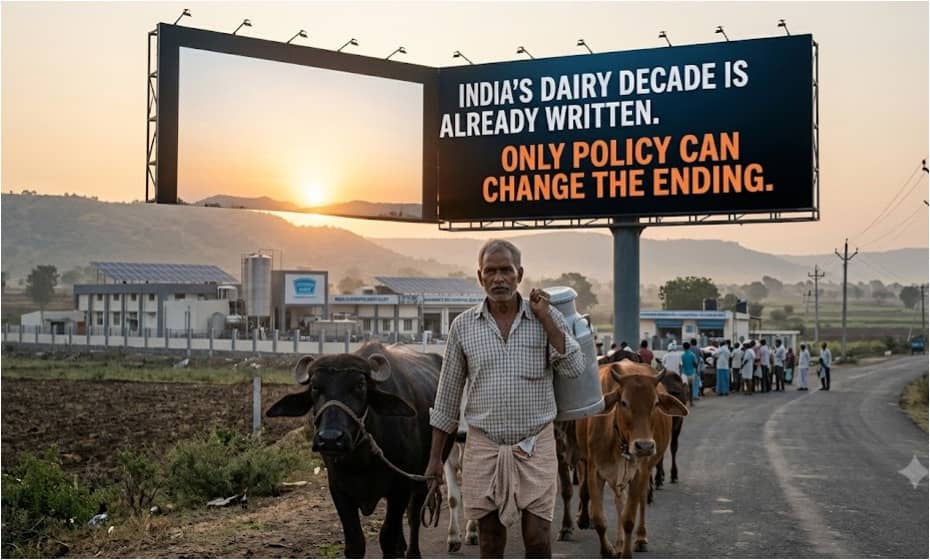
Climate-related production risks could widen India’s milk demand-supply gap in the coming years as milk production growth slows while demand continues to rise, according to a working paper released by the
CII Food and Agri Centre of Excellence and the Environmental Defense Fund (EDF).
The paper noted that India’s annual milk production growth has declined from around
6–7% to 3.5–3.7%, while milk demand continues to increase. It warned that climate stress could further affect production, procurement costs and the profitability of dairy businesses.
A key concern highlighted in the paper is the impact of rising temperatures on animal productivity.
A 1°C increase in temperature can result in a loss of 1.5–2 litres of milk per animal per day, according to the paper.
The climate impact is also expected to extend beyond milk volumes. Heat stress can affect milk composition, including fat and protein levels, potentially creating challenges for companies producing value-added dairy products such as
cheese, paneer and curd. The paper also noted that higher procurement costs during heatwaves could put pressure on company margins when higher input costs cannot be fully reflected in milk prices.
Data and Fodder Security
The working paper has called for the creation of a
national dairy data platform to improve the availability of animal and productivity information. It also recommends a
national fodder security strategy to strengthen resilience against climate-related disruptions.
Another recommendation is the establishment of
climate-resilient dairy skilling institutes, along with a national indigenous-dairy certification standard. The paper also proposes sector-wide emissions reporting and export-ready quality standards.
EDF Chief Advisor-India Hisham Mundol highlighted the limited availability of structured animal data, noting that
less than 1% of India’s milk animals are covered by any form of structured milk recording. According to him, better animal-level data would help producers and other stakeholders target interventions, assess risks and demonstrate the viability of dairy businesses to lenders.
Productivity and Emissions
ICRIER Distinguished Professor Ashok Gulati also highlighted the relationship between animal nutrition, productivity and methane emissions. He said unbalanced diets are one factor contributing to methane emissions from cattle and buffaloes.
Gulati cited research from Australia suggesting that including seaweed in animal diets could reduce methane emissions by
30–40%, while noting that methane traps nearly 28 times more heat in the atmosphere than carbon dioxide. Most livestock emissions in India are associated with methane generated during feed digestion, according to his comments.
He also pointed to low productivity among Indian cattle, putting average output at around
7–8 litres per animal per day. He further observed that indigenous breeds have greater tolerance to heat and humidity, while crossbred animals can experience substantially larger milk-production losses when temperatures rise.
The working paper’s recommendations place climate resilience, animal productivity, fodder availability, data collection and emissions measurement alongside traditional dairy-sector priorities. For processors and cooperatives, the implications could extend from milk procurement and quality management to value-added product planning and supply-chain resilience.
India milk demand supply gap, climate resilient dairy farming, CII dairy report 2026, climate risk dairy India, milk production India, dairy farmers climate change, milk productivity, fodder security, dairy industry India, heat stress dairy cattle
Source: Dairynews7x7 25 Sep, 2026
Read full story here
#DairyIndustry #ClimateResilientDairy #DairyNews7x7