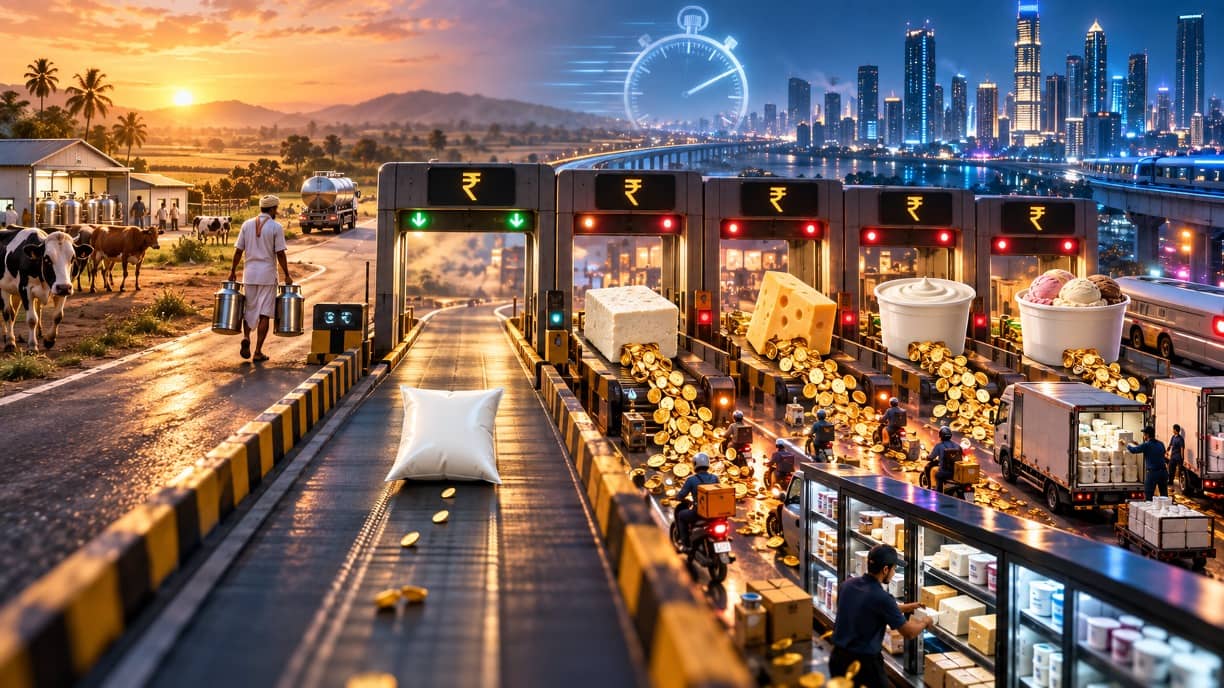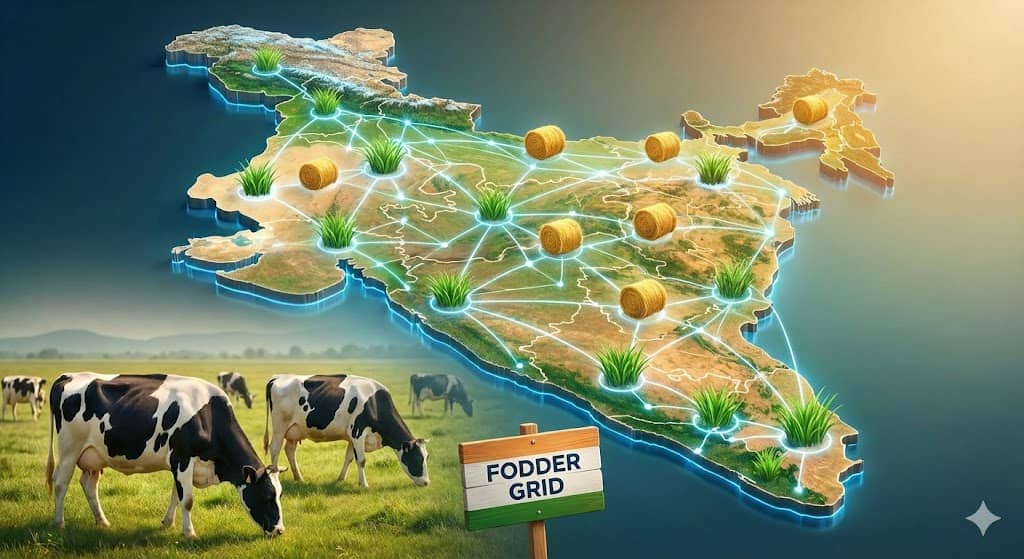
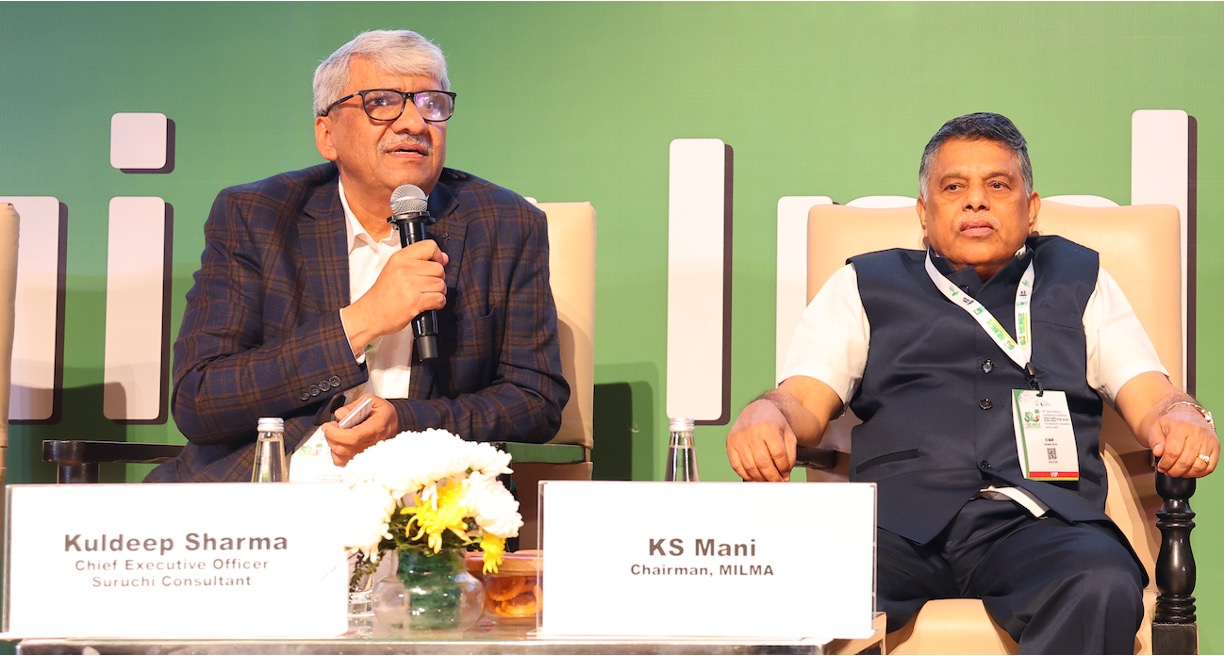
Recently, I moderated the Farmer's session at 52nd DIC. While deliberating on pathways for Kerala to move towards milk self-reliance, K S Mani, Chairman of Milma, articulated a compelling thought: just as the National Power Grid allows surplus electricity to flow to deficit states, India needs a National Fodder Grid so that fodder surplus regions can support fodder-deficit states like Kerala. This insight provides the strategic anchor for reimagining fodder policy as a national, interconnected system rather than a state-bound constraint. The idea of a National Fodder Grid emerged during a discussion on the long-term sustainability of dairying in Kerala — a state where dairy farming is structurally challenging due to climate, fragmented landholdings, and limited fodder availability. Yet Kerala’s dairy farmers are among the most educated, institutionally organised, and technology-ready in the country.
The Background
India today stands at the top of the global dairy pyramid. With milk production at ~247 million tonnes, contributing over 5.5% to GDP and supporting nearly 8 crore rural households, dairying has become the backbone of India’s agrarian economy. Yet, beneath this success lies a deep and persistent structural weakness — fodder availability.
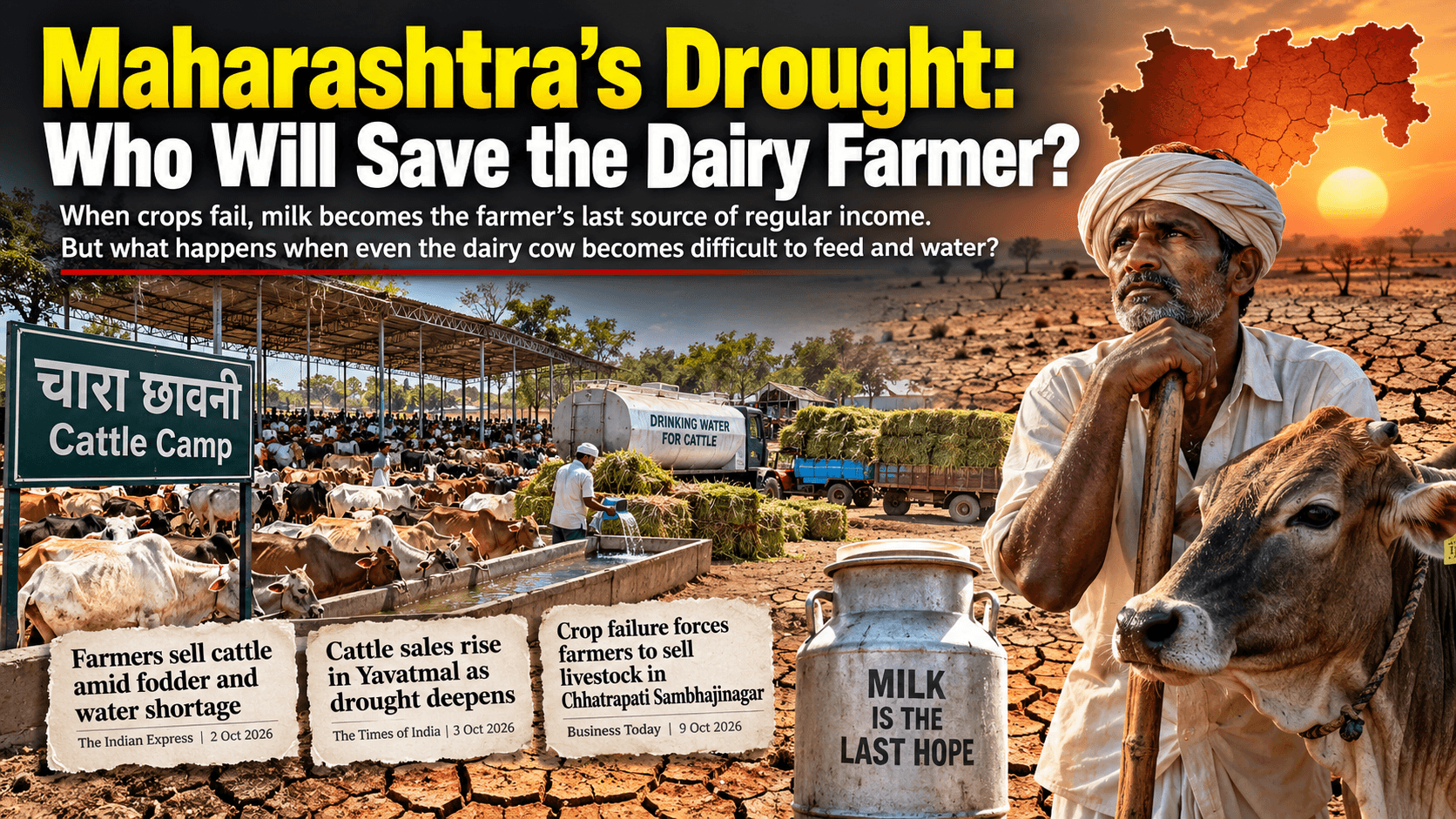
India grows fodder on barely 4% of its gross cropped area, while the scientifically assessed requirement is close to 10–11%. This mismatch has translated into a national green fodder deficit of 30–35%, dry fodder deficit of 20–25%, and concentrate deficit of 10–15%. As dairying intensifies and milk yields rise, this gap is widening — pushing up costs, depressing margins, and increasing vulnerability to climate shocks.
This challenge is not new. What is new is the scale at which it now threatens the sustainability of India’s dairy growth.
From Early Vision to Policy Fragmentation
Post-Independence India understood the importance of livestock nutrition. Dedicated fodder farms, grassland development programmes, pastures (Gochar Land) and research institutions were created. The establishment of the Indian Grassland and Fodder Research Institute (IGFRI), Jhansi, provided India with a strong scientific foundation in fodder varieties, silage technologies, and grassland management.
However, policy evolution took a different trajectory. The White Revolution institutionalised milk sheds, procurement systems, and cooperative governance, but fodder remained largely a farm-level responsibility. While milk movement was organised nationally, fodder planning was never integrated into the dairy value chain.
Subsequent initiatives such as the National Fodder Mission, and later its merger into the National Livestock Mission (NLM), brought fodder into policy discourse but as a sub-component, not as a strategic pillar. Today, fodder interventions exist across schemes — NLM, RKVY, state plans, and Animal Husbandry Infrastructure Development Fund (AHIDF) — yet they operate in silos, without a unifying national architecture.
India’s Fodder Map: Surplus Exists, But Not Where Needed
India’s fodder crisis is not uniform. It is geographically uneven.
States such as Punjab, Haryana, western Uttar Pradesh, Rajasthan, Gujarat, and parts of Madhya Pradesh and Karnataka generate significant surpluses of green or dry fodder due to irrigation, cropping intensity, and cereal residue availability.
In contrast, Kerala, West Bengal, North-Eastern states, and several coastal and hilly regions face chronic fodder deficits. Kerala alone imports an estimated 60–70% of its fodder requirement from other states. High livestock density, competing land use, and agro-climatic constraints make local self-sufficiency unrealistic for these regions.
In essence, India has enough fodder potential — but it is spatially misaligned with demand.
Area Constraint: Why Farm-Level Solutions Are Not Enough
The structural limitation is land. Expanding fodder area from ~9 million hectares to over 20 million hectares is neither economically nor politically feasible at the farm level. Food security crops, commercial crops, and climate risks dominate farmer choices.
Therefore, expecting individual farmers or states to solve the fodder deficit in isolation is unrealistic. The solution must lie in system-level coordination, not incremental schemes.
Learning from the Power Sector: The Case for a National Fodder Grid
India once faced a similar challenge in electricity — surplus generation in some states, chronic shortages in others. The answer was not forcing deficit states to generate power at any cost, but building a National Power Grid, enabling surplus electricity to flow seamlessly across regions.
The dairy sector now needs an analogous intervention: a National Fodder Grid.
What a National Fodder Grid Would Do
A National Fodder Grid would be a coordinated national framework enabling structured movement of fodder from surplus regions to deficit regions, supported by institutions, infrastructure, markets, and data.
At the supply end, fodder surplus nodes would be anchored around fodder-focused FPOs, cooperatives, and large producers. Here, the National Dairy Development Board (NDDB)’s NDS and Fodder Plus FPO models provide a ready foundation. These FPOs are already aggregating fodder, producing silage and bales, and supplying fodder across districts and states.
Under the Government of India’s designated programme, 100 Fodder Plus FPOs have been established across 19 states with NDDB’s support and are actively engaged in fodder production, silage making, dry fodder securing and allied activities, along with fodder seed distribution and farmer training. These FPOs form an institutional foundation for future organised fodder supply chains linking surplus production to deficit demand areas.
On the demand side, fodder deficit nodes would aggregate requirements from dairy cooperatives, commercial farms, and FPOs, enabling seasonal forecasting and long-term contracting.
Between the two, fodder corridors would be created — not transmission lines, but silage plants, balers, warehouses, rail-linked logistics, and bulk transport systems. Funding support for much of this infrastructure already exists under AHIDF; what is missing is national coordination.
A digital fodder exchange platform would enable price discovery, quality differentiation, and forward contracts, reducing volatility and uncertainty for both producers and buyers.
Cost effective integration of Fodder in dairy value chain
A critical constraint in operationalising a National Fodder Grid is the high cost of inter-state fodder logistics. Unlike milk or power, fodder is bulky, low in value density, and highly sensitive to transportation costs. Even where fodder surplus exists, logistics often render inter-state movement commercially unviable, particularly for green fodder and silage over long distances. This is the principal reason why private markets for organised fodder trade have remained underdeveloped.
In the initial phase, targeted public support for fodder transportation can act as a market-enabling intervention rather than a permanent subsidy. The Government may consider partial reimbursement of fodder transport costs — limited by distance, season, or volume — until sufficient scale is achieved and private logistics efficiencies emerge. Such support could be channelled through FPOs, dairy cooperatives, or registered fodder aggregators, and gradually tapered as volumes stabilise. Strategically deployed, this intervention would unlock surplus fodder flows, stabilise milk production in deficit regions like Kerala, and accelerate the transition towards a self-sustaining National Fodder Grid.
Amul's initiative for better Fodder availability
Alongside public programmes, India’s cooperative sector has demonstrated practical and scalable innovation in fodder security. Amul, through the Gujarat Cooperative Milk Marketing Federation in the Anand–Kheda milk shed, has gone well beyond advisory support to address one of the most critical pain points in dairy farming—year-round availability of quality fodder and silage. In 2017–18, Amul collaborated with Indian Space Research Organisation to establish a satellite-based remote sensing facility for scientific estimation of fodder acreage and production, enabling better planning and risk mitigation at the milk-shed level.
Building further on this foundation, as highlighted by Ashok Chaudhary, Chairman, GCMMF, during the farmers’ session, Amul is now establishing three major fodder and silage production hubs across Gujarat. These hubs are designed to ensure assured, year-long supply of fodder and silage to needy farmers across the state, while significantly reducing on-farm storage challenges. This initiative marks an important shift—from fodder planning to organized fodder entrepreneurship and decentralized supply models—and reinforces the cooperative’s role as a complete dairy ecosystem enabler, not merely a milk procurer.
Institutional Framework and Policy Ask
This does not require a new subsidy-heavy scheme. What is required is a light but authoritative coordination mechanism, possibly under DAHD with strategic guidance from NITI Aayog, to:
- Map annual fodder surplus and deficit by state
- Align existing schemes and funding instruments
- Enable inter-state movement and contracting
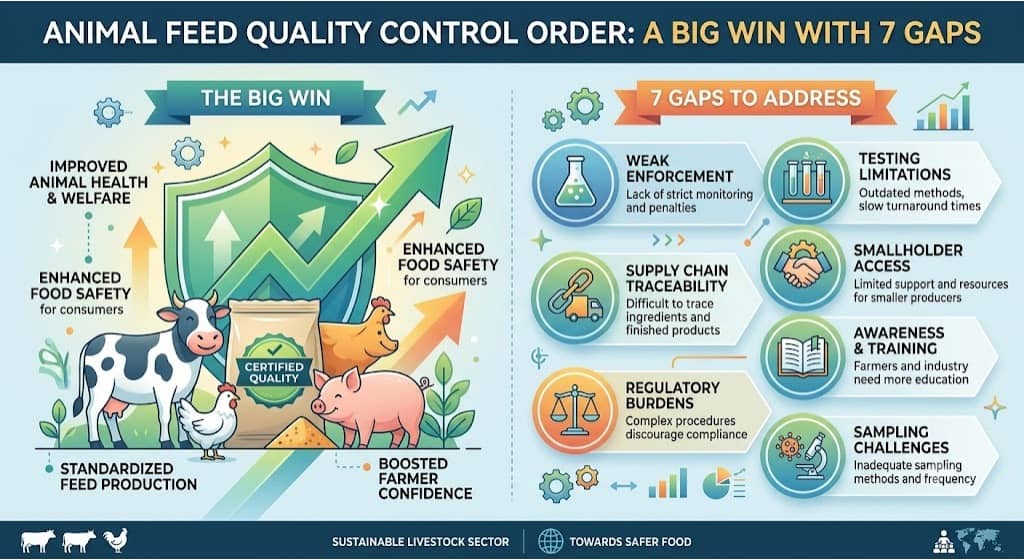
- Set quality and safety standards
Conclusion: From Milk Sheds to Fodder Sheds
India successfully built milk sheds in the last century. The next reform frontier is to build fodder sheds — connected nationally.
The science exists.
The institutions exist.
The funding instruments exist.
What is missing is a systems vision.
A National Fodder Grid is not an additional scheme — it is a structural reform essential for sustaining India’s dairy leadership in the decades ahead.
Source : Blog by Kuldeep Sharma Chief Editor Dairynews7x7.com. Feb 15th 2026
Image credit : Gemini
#NationalFodderGrid #DairySustainability #FeedSecurityForDairy #MilkSelfReliance #FodderPolicyReform
#CooperativeLedGrowth
Never miss an important dairy update
Follow DairyNews7x7 on Google to get live milk prices, policy alerts, and daily headlines directly in your feed.