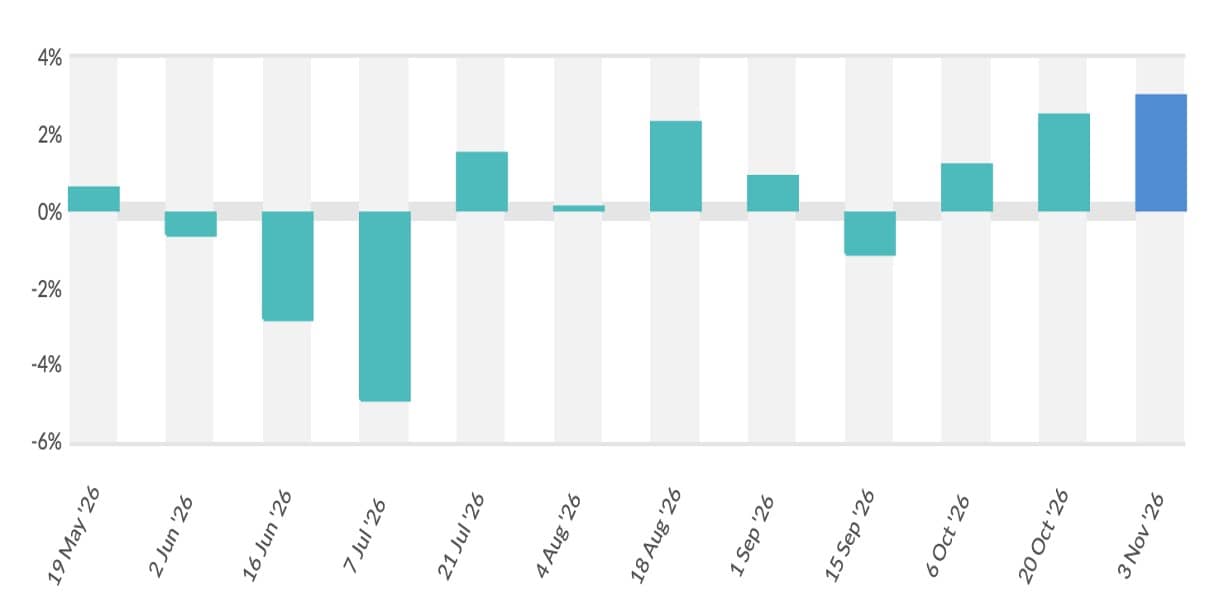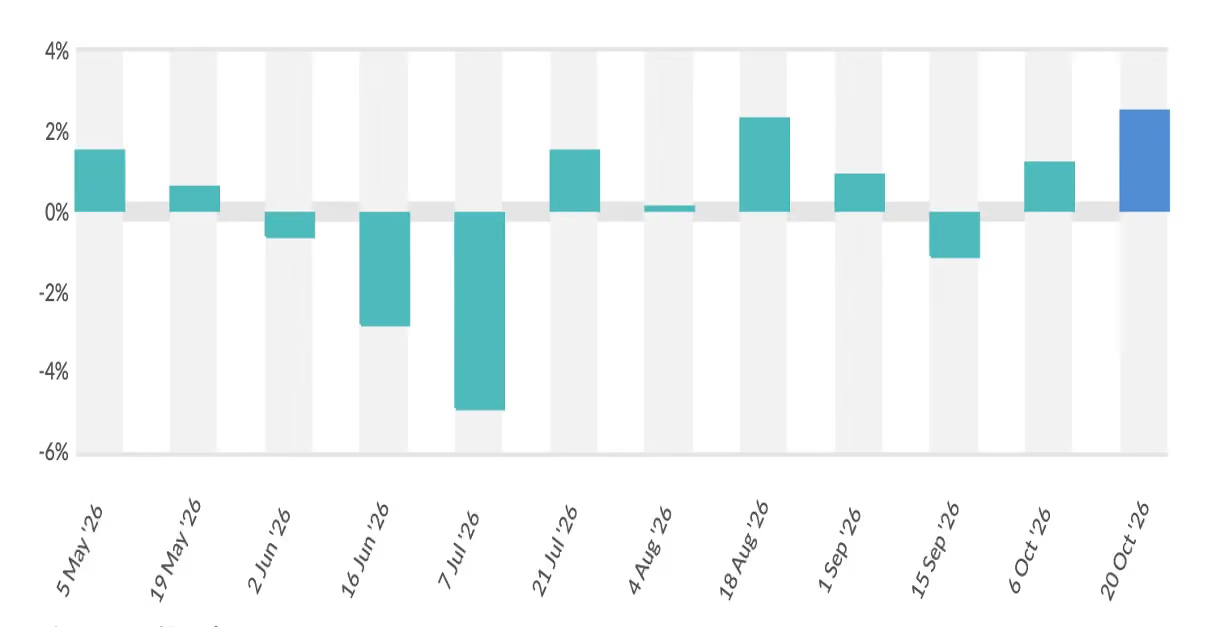
Whey protein prices are cooling—but global demand for protein remains strong. After nearly three years of price increases, US whey protein concentrate (WPC 80) fell from a summer peak of approximately $13/lb to $9.20/lb by October 21, 2026.
Despite the correction, prices remain significantly higher than a year earlier, when WPC 80 traded near $5.70/lb. The decline reflects inventory accumulation and reduced purchasing activity rather than a collapse in consumer demand.
Inventory Correction, Not Demand Collapse
The recent price rally encouraged manufacturers to purchase additional volumes in anticipation of further increases and potential shortages.
However, some buyers accumulated inventories beyond their immediate requirements. As additional product became available during the third quarter, purchasing activity slowed sharply.
According to Joshua White, vice president of dairy ingredients at T.C. Jacoby & Co., buyers who previously ordered 12 units began ordering only six.
The resulting slowdown in procurement contributed to the price correction, even as demand for protein-enriched foods and beverages remained healthy.
US Buyers Outbid International Markets
Strong domestic protein demand has allowed US buyers to compete aggressively for whey ingredients, redirecting supplies that historically flowed into export markets.
International demand, however, has not disappeared. Buyers in traditional importing markets have reduced purchases in response to elevated prices, while Europe is experiencing a sharper price correction.
Lower prices could encourage previously sidelined buyers to return and create opportunities for additional product development across international markets.
Milk Proteins Gain Ground as Whey Prices Correct
The price correction has not affected all dairy protein ingredients equally.
Whey protein isolate (WPI), widely used in sports nutrition and high-protein beverages, has demonstrated greater price resilience. Meanwhile, milk protein concentrates and isolates have gained momentum.
Vesper reported the following US price movements:
- MPC 85: Prices increased 8.5% between September and early October.
- Milk Protein Isolate 90: Prices rose 5% during the same period.
These ingredients are increasingly used in protein-fortified beverages, nutritional supplements and other high-protein foods, expanding beyond traditional sports nutrition applications.
Whey Protein Is Becoming a Profitability Driver for Cheese Plants
High whey protein returns are increasingly influencing the economics of cheese manufacturing.
According to White, whey protein has become a leading contributor to cheese-facility profitability, even when cheese prices face downward pressure.
With additional US cheese-processing capacity entering production, attractive whey returns could encourage manufacturers to maximise output, potentially increasing whey ingredient availability in a market already adjusting to changing purchasing patterns.
Working Capital Becomes a Critical Industry Challenge
The biggest pressure for manufacturers may not be consumer demand but the financial cost of carrying expensive raw-material inventories.
Higher ingredient prices increase working-capital requirements, making inventory management and purchasing discipline increasingly important for processors and food manufacturers.
As companies negotiate first-quarter 2027 contracts, buyers and sellers remain divided over pricing expectations. Seasonal demand from sports nutrition manufacturers preparing holiday promotions and New Year launches could support renewed purchasing.
What This Means for the Global Dairy Industry
The whey protein market highlights four important developments:
- Protein demand remains structurally strong: Consumer interest in protein-enriched foods continues to support ingredient demand.
- Purchasing strategies are changing: Inventory accumulation and subsequent buying reductions can trigger significant price movements.
- Alternative dairy proteins are gaining relevance: MPC and milk protein isolates offer formulation opportunities as manufacturers manage whey costs.
- Whey economics are reshaping cheese processing: Protein ingredient returns increasingly influence production and profitability decisions.
The bigger takeaway: Whey protein's recent price correction may represent a market adjustment rather than the end of the protein growth story. For dairy processors, the challenge is balancing strong demand, ingredient availability, processing capacity and working-capital exposure.
Source: Read full story here 05 Nov, 2026 Edited and Reported by
#WheyProtein #DairyIngredients #DairyIndustry #ProteinMarket #DairyProcessing
Never miss an important dairy update
Follow DairyNews7x7 on Google to get live milk prices, policy alerts, and daily headlines directly in your feed.