Costlier milk at home, dearer powder abroad. The months after Diwali will reward the dairy players who plan, and punish those who wait.
By Kuldeep Sharma, Chief Editor, DairyNews7x7
Every year, Diwali marks a turning point for Indian dairy, and this year the Indian dairy outlook after Diwali deserves closer attention than usual. Festive demand peaks, the sweet shops go quiet, and the winter flush begins to fill chilling centres across the country. Dairies stock up on skimmed milk powder and butter for the lean summer ahead, and procurement prices usually soften.
This year will not follow the script.
The Indian dairy outlook for the post-Diwali season is shaped by three forces pulling at once: a sharp reset in milk prices in the south, rising feed costs from drought and El Niño, and a global market that is suddenly paying a premium for milk powder. Read together, they add up to a rare window of opportunity, and a real risk of mistiming it.
Indian dairy outlook at a glance
- Milk prices: southern cooperatives have reset milk prices; a Karnataka farmer now realises about ₹47 per litre.
- Feed and fodder: drought in six states and El Niño threaten the winter flush.
- SMP exports: global skim milk powder prices are at a four-year high, and Indian SMP export realisation rose 25%.
- Stocks: SMP and butter stocks are thin, so the Indian dairy outlook for summer depends on calibrated SMP exports this winter.
- What to do: seven moves for decision makers, from a national stock register to a fodder grid.
The south has reset the price of milk
On 29 October, Karnataka approved an increase of ₹8 per litre in Nandini milk from 1 November, taking toned milk from ₹46 to ₹54. Of this, ₹7 goes to farmers, lifting the procurement price from ₹35 to ₹42 per litre. The state's existing incentive of ₹5 per litre continues on top, so a KMF farmer will now realise about ₹47 per litre. The reason the government gave is telling: drought had cut daily procurement by the unions by about 10 lakh litres.
Tamil Nadu raised its procurement price by ₹6 per litre earlier in two tranches to ₹44, and Aavin revised prices across 23 product categories, including butter, ghee and curd, from 28 October, citing higher raw material and procurement costs.
This is not a festive blip. It is a cost reset. When the most price-conscious cooperatives in the country raise prices by double digits, it tells us that the cost of producing a litre of milk has moved permanently higher, and that farmers will move their milk to whoever pays it.
Drought and El Niño: the feed bill arrives
The southwest monsoon closed about 15% below normal, with the southern peninsula hit hardest. Forecasters expect El Niño to persist through the winter, raising the risk of warmer months and weaker rabi fodder.
The drought is no longer a Maharashtra story. Six states across southern and western India have now declared drought for the 2026 kharif season. Karnataka has declared 226 of its 240 taluks drought-hit, after what has been called its second-worst southwest monsoon since 1971. Andhra Pradesh has declared 388 mandals across 21 of its 28 districts, and Telangana 365 mandals across 31 districts. Gujarat and Rajasthan have also declared drought in parts of their territory. The southern milkshed, which supplies a large share of India's cow milk and powder, is under simultaneous stress.
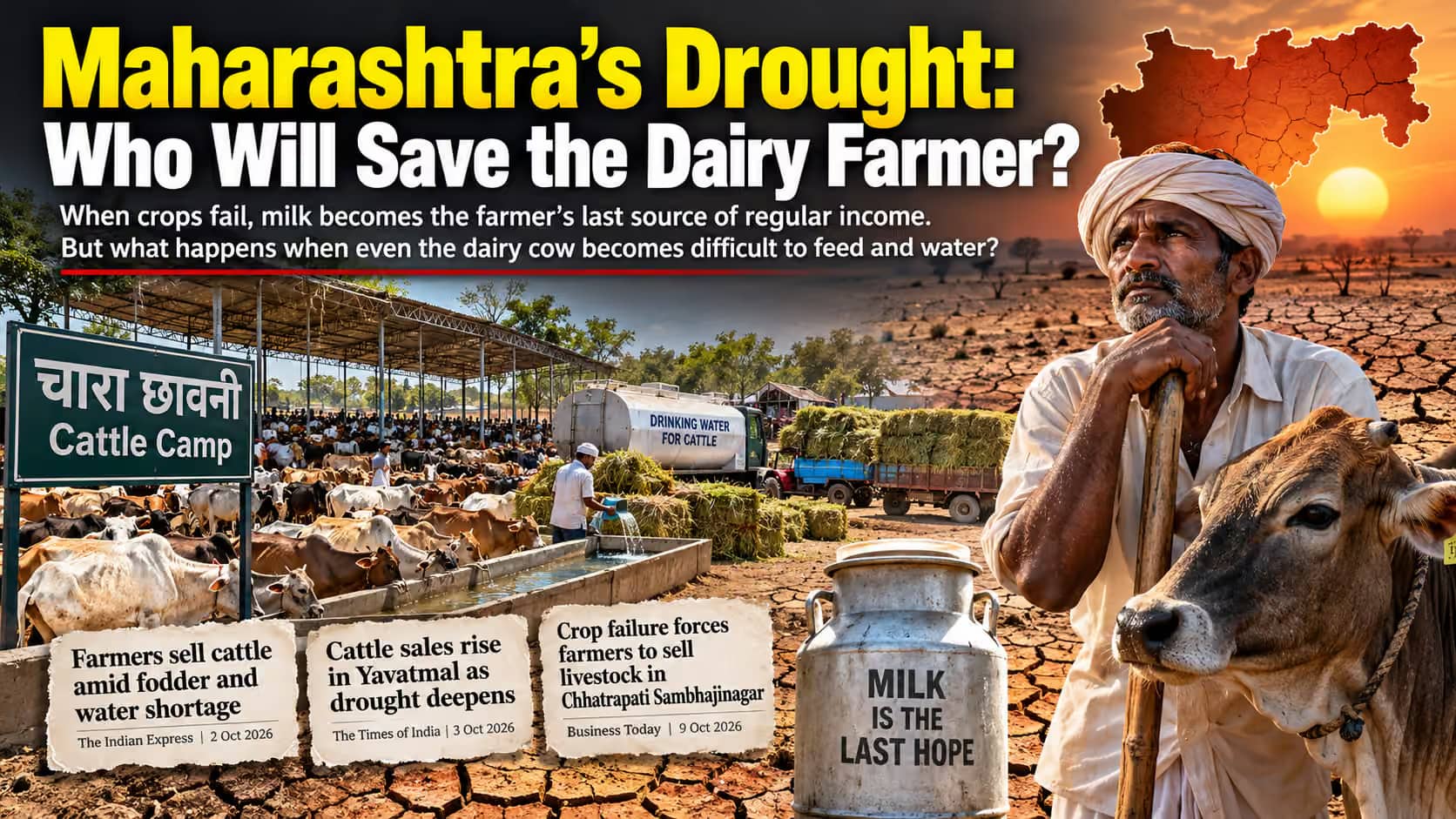
Maharashtra has declared drought in 305 talukas. The state estimates a green fodder shortfall of about 23% and a dry fodder shortfall of about 21%. Farmers report fodder prices doubling and distress sales of cattle with few buyers. The state has responded with a ₹496 crore fodder policy, Mission Murghas for silage and a silage subsidy of ₹3 per kg, all welcome steps.
The market is already pricing this in. In Maharashtra, cow milk is now fetching ₹42 to ₹44 per litre at 3.5% fat and 8.5% SNF, levels that would have been unthinkable at the start of a flush season only a few years ago.
The implication for the months ahead is clear. The flush may arrive thinner than usual, milk solids per animal may fall where feeding is compromised, and the powder and butter stocks India builds this winter may be smaller than the summer will need.
The world wants protein, not fat
Abroad, the signals point the other way, and decisively so.
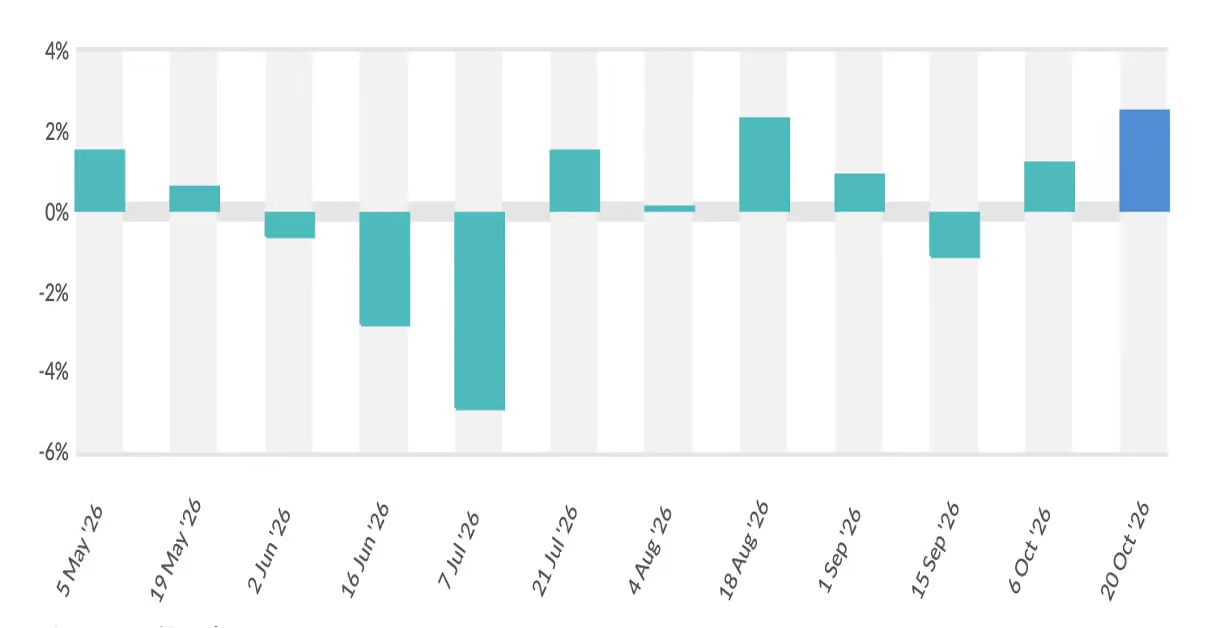
At the Global Dairy Trade auction on 20 October, skim milk powder cleared at US$3,975 per tonne, up 3.4%. SMP prices have climbed about 22.5% over six auctions, reached their highest level in four years, and stand roughly 55% above a year ago. For four consecutive auctions, SMP has traded above whole milk powder, an inversion rarely seen in the past decade. Chinese buyers have been booking powder forward into the first half of 2027, while Southeast Asia and the Middle East keep buying steadily.
Fat tells a different story. Anhydrous milk fat fell 3.4% to US$5,488 per tonne at the same auction, and butter slipped too. The global market is paying for dairy protein and discounting dairy fat.
As the New Zealand spring flush peaks, these prices will be tested. But the structural message is unlikely to change soon: buyers of nutrition, recombination and processed food want skim solids, and they want reliable suppliers.
India's export window is open for SMP exports
For SMP exports, India enters this market from a position of strength. Livestock product exports rose 44% to US$3.13 billion in April to August 2026, with ghee, skimmed milk powder, cheese and Paneer among the contributors.
India’s dairy export basket is quietly changing shape. In April–August 2026, skimmed milk powder earned US$27.1 million abroad, more than all Indian cheese exports combined (US$23.4 million). A year ago, cheese earned four times as much as SMP. SMP volumes nearly quadrupled to 8,842 tonnes, and realisation jumped 25% to ₹291/kg.
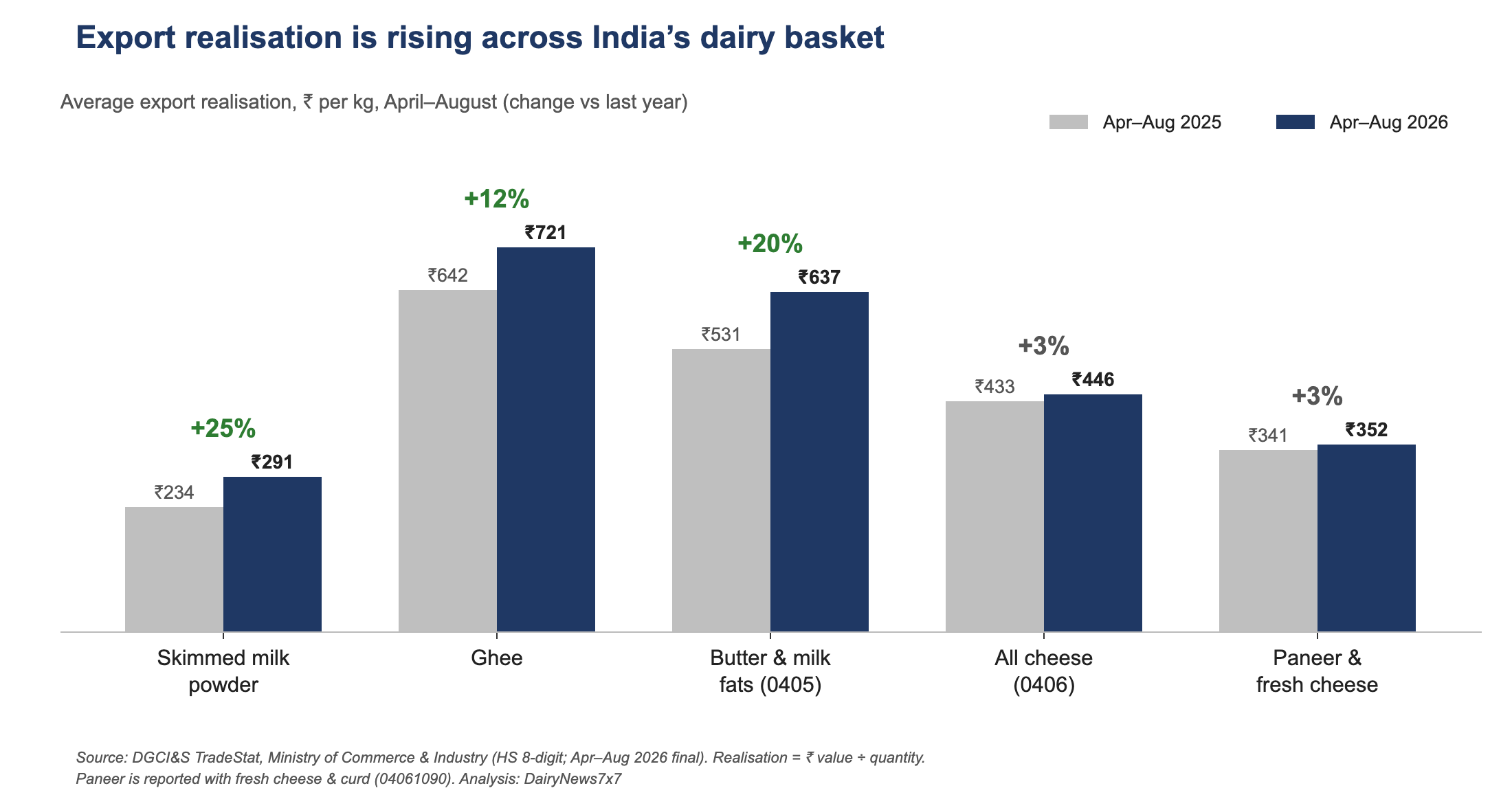
Milk fats tell the same price story. Butter volumes fell after last year’s one-off bulk lots, but average realisation for butter, ghee and milk fats (HS 0405) rose 20% to ₹637/kg. Ghee earned ₹462 crore, up 12%, at ₹721/kg. That is a strong result at a time when world butter prices are falling.
Cheese and paneer are the untapped opportunity. Cheese earns ₹446/kg, 53% more than SMP, and already reaches 58 countries, led by the USA, UAE and Bhutan. Paneer goes to 23 markets, with the UAE and Qatar dominant, and shipments to the US rose tenfold. With volumes of only 675 tonnes, it has plenty of room to grow.
The momentum continues: as per provisional DGCI&S data, dairy exports rose a further 24% in September 2026 to US$55 million.
| Apr–Aug 2026 | Value | Realisation | Change in realisation |
|---|---|---|---|
| Skimmed milk powder | ₹257 cr | ₹291/kg | +25% |
| Butter, ghee and milk fats (0405) | ₹986 cr | ₹637/kg | +20% |
| of which ghee | ₹462 cr | ₹721/kg | +12% |
| All cheese (0406) | ₹222 cr | ₹446/kg | +3% |
| Paneer and fresh cheese | ₹24 cr | ₹352/kg | +3% |
Source: DGCI&S TradeStat, Ministry of Commerce & Industry
Earlier this year, Amul's SMP shipments to the Gulf more than doubled during the West Asia supply crunch, proving that Indian powder can win when buyers need dependable supply.
The currency is on our side. With the rupee around 96 to the dollar, every tonne of Indian SMP priced in dollars earns more at home, and Indian powder is more competitive against Oceania and Europe in Bangladesh, the Gulf and Southeast Asia.
This is precisely the moment I argued for in April, when I wrote that India's dairy exports are opportunistic rather than planned. The opportunity has arrived. The question is whether we plan for it this time.
The winter dilemma: export now or stock for summer?
Here lies the central decision of the coming months. The flush is when India converts surplus milk into powder for the lean season. If drought and El Niño thin that flush, every tonne of SMP exported in December is a tonne not available in May.
And India enters this flush with thin buffers. Stocks of skimmed milk powder, and of butter in particular, are weak at both cooperatives and private dairies. The cushion that normally absorbs a poor flush or a hot summer is smaller than it has been in years.
We have seen this film before. Exports that look profitable in winter can turn into imports, panic and price spikes by summer. Equally, holding back powder that the world is paying record prices for would waste an opportunity that comes perhaps once in five years.
The answer is neither a blanket push nor a blanket brake. It is calibration, and calibration needs data India does not yet publish.
The challenges to watch
Five pressures will shape the Indian dairy outlook and how the industry behaves after Diwali.
- Consumer resistance. At ₹54, Karnataka's toned milk will still be below many states, but consumers are already stretched. Value-added products such as curd, paneer, ghee and flavoured milk may see slower volume growth even as prices rise.
- Margin squeeze for processors. Procurement costs are rising faster than consumer prices can follow, and weak global fat prices cap what dairies can earn from butter and ghee. Processors who carried high-cost fat inventory will feel it first. The September-quarter results already show the squeeze: Heritage Foods grew revenue 19% but saw net profit fall 39%, and Dodla Dairy grew revenue 17% while net profit fell 44%, both citing higher milk procurement costs. Even Hatsun, with revenue up 19%, grew operating profit by just 2%. Milky Mist, whose Q1 profit was carried by yogurt, cheese and ice cream, reports its September quarter in December; the lesson so far is that a value-added mix is the best cushion against costly milk.
- Milk moving across borders. Price gaps between states pull milk towards the highest bidder. Karnataka's hike was partly to stop milk leaving for neighbouring states; others may now have to respond.
- Farmer distress in drought zones. Distress sale of cattle in Maharashtra (if it continues) destroys productive capital that took years to build and will take years to rebuild.
- Quality under stress. When fodder is scarce and costs climb, the temptation to adulterate rises. Enforcement must target deliberate fraud precisely, without tarring honest producers.
The opportunities to seize
The same forces that cloud the Indian dairy outlook also create real openings.
- Higher farmer realisation can revive interest in dairying, slow the exit from cattle rearing and support investment in better animals and feed.
- A protein-led export push. With the world paying more for skim solids than whole milk powder, Indian dairies can sell SMP, and move up to milk protein concentrates and whey proteins, where the value lies. Even Paneer and Cheese again take the lead and follow milk powders in value.
- Fodder as an enterprise. Silage, hydroponic and dry-fodder businesses can scale quickly with the state support now on the table.
- Cooperative credibility. Karnataka passing ₹7 of an ₹8 hike to farmers is a model of transparent pricing that others can follow.
An indicative path for decision makers
For a healthier Indian dairy outlook, India does not need dramatic interventions this winter. It needs seven sensible moves, made early.
- Publish the stock position. Require monthly disclosure of SMP, butter and ghee stocks from cooperatives and private dairies alike. Without it, every export or import decision is a guess. (I wrote about it two years back and requested a National Stock register with DAHD publicly sharing the data on stocks).
- Open a calibrated export window. Encourage SMP exports through the flush, linked to a national stock trigger reviewed in February. If stocks fall below the trigger, slow down; if the flush is strong, go further.
- Treat fodder as a national supply chain. Enable inter-state fodder and silage movement, scale up silage in deficit districts, and track feed prices weekly alongside milk prices. I wrote about National Fodder grid also in line with National Power Grid a few months back.
- Protect the herd, not just the harvest. Give dairy the agriculture status that would let drought losses in livestock be compensated like crop losses, and stop distress sales before they hollow out the herd.
- Cheaper credit over subsidies. Lower interest on cattle loans and extend Kisan Credit Cards to cover cow purchase and dairy working capital, so farmers can feed through the drought without selling.
- Price transparently. Encourage cooperatives to index procurement prices to feed costs and to show farmers exactly how much of every consumer price hike reaches them.
- Make standards predictable. Exporters and domestic processors alike need rules they can plan around, from clear and scientifically logical contaminant limits for milk-fat products such as ghee to mandatory refrigeration across the dairy cold chain.
Indian dairy outlook: the road beyond Diwali
India is the world's largest milk producer, yet its share of global dairy trade remains tiny. This winter offers something rare: a world short of the very product we can make in surplus, a currency that favours exporters, and farmers ready to produce more if the price is right.
The risks are just as real: a thinner flush, costlier feed and a summer that could catch us short. The difference between opportunity and crisis will be decided in the next ninety days, by whether we act on data or on habit.
If policymakers, cooperatives and private dairies plan together, this can be the winter Indian dairy stopped exporting by accident and started exporting by design.
That would be the brightest lamp of all this Diwali.
Happy Diwali to you and your loved ones from Team DairyNews7x7.
Further reading on DairyNews7x7: India's Dairy Export Moment: Opportunity or Illusion in FY26? (April 2026) and Why Should Ghee Be Judged by Milk's Lead Limit? (October 2026).
Source: Editorial by Kuldeep Sharma, Chief Editor | DairyNews7x7
References
Never miss an important dairy update
Follow DairyNews7x7 on Google to get live milk prices, policy alerts, and daily headlines directly in your feed.