Maharashtra Changes Cooperative Law as Gokul Dairy Election Intensifies
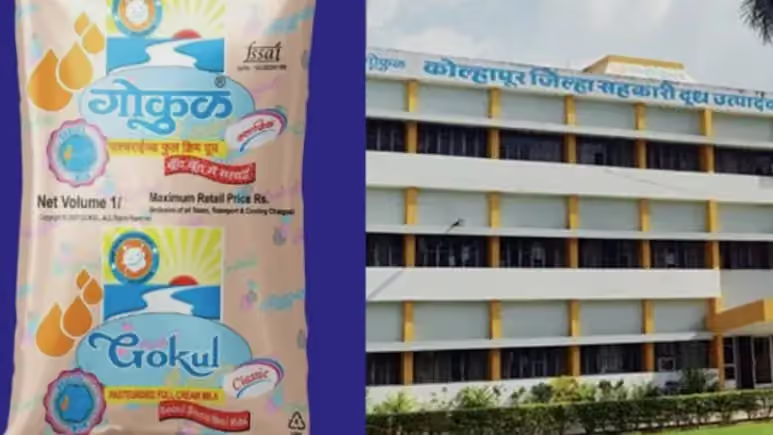
Maharashtra's proposed cooperative law amendment has intensified the political battle over Gokul Dairy, potentially changing the balance of power after the Congress-backed panel won the board elections.
The state Cabinet has approved an amendment to the Maharashtra Cooperative Societies Act, 1960, allowing four government-appointed expert directors to exercise voting rights in eligible large cooperatives. The decision could influence Gokul's chairman election scheduled for November 10, 2026.
Maharashtra Approves Voting Rights for Four Expert Directors
The Maharashtra Cabinet approved changes to Section 73AAA(2) of the Maharashtra Cooperative Societies Act, 1960.
The amendment provides for five government-nominated directors in eligible cooperative institutions with annual turnover exceeding ₹500 crore that receive government assistance.
The proposed composition includes:
- Four nominated experts with voting rights in board proceedings.
- One government officer, at least Assistant Registrar rank, without voting rights.
- Restrictions preventing nominated members from contesting chairman or other office-bearer positions.
District Central Cooperative Banks have been excluded from the provision.
Gokul Dairy's Board Majority Could Change
The amendment directly affects Kolhapur District Cooperative Milk Producers' Union, popularly known as Gokul Dairy.
The October 19 board election produced the following results:
| Panel | Elected Seats |
|---|---|
| Satej Patil-led Congress-backed panel | 13 |
| Mahayuti-backed panel | 12 |
| Total | 25 |
With four additional voting nominees potentially appointed by the state government, the Mahayuti-backed side could increase its effective strength to 16 against 13 elected directors from the opposition-backed panel.
This would significantly alter the existing board arithmetic without changing the elected-seat results.
Chairman Election Stalled Over Quorum
The controversy began after the newly elected board failed to elect its chairman on October 29.
Gokul's bylaws require at least 14 directors to be present for the meeting. All 12 Mahayuti-backed directors remained absent, leaving only 13 directors and preventing the required quorum.
The opposition-backed panel subsequently declared Shashikant Patil Chuyekar chairman at a separate meeting, but the cooperative administration did not recognise the election.
On November 2, the Bombay High Court directed Gokul to convene a fresh chairman-election meeting on November 10 and issue notices to all 25 elected directors.
Government Defends Amendment as Governance Reform
The Maharashtra government has defended the amendment, arguing that large cooperative institutions require professional expertise, transparency and stronger financial accountability.
Officials say the provision is intended to prevent administrative deadlocks, ensure effective functioning and protect public funds in institutions receiving government assistance.
Chief Minister Devendra Fadnavis has also argued that the board's 13–12 electoral split created a deadlock that could otherwise result in fresh elections or administrative intervention.
Opposition Calls the Amendment Anti-Democratic
Congress leader Satej Patil has criticised the amendment, arguing that government nominations after the election could undermine the mandate of milk producers.
Rahul Gandhi also accused the BJP-led government of changing the rules after losing the Gokul board election.
The Opposition has indicated that the amendment may be challenged in court, raising questions about cooperative autonomy, nominated directors' voting rights and the validity of changing board composition after elections.
Gokul Dairy: Why the Governance Battle Matters
Gokul recorded turnover of ₹3,966.28 crore in FY2024–25 and operates through more than 8,000 village-level dairy societies, representing approximately 4.41 lakh milk producers.
Its governance has substantial implications for milk procurement, farmer representation, cooperative administration and regional dairy economics.
The controversy therefore extends beyond a chairman's election to the broader question of who controls India's large farmer-owned dairy institutions.
What This Means for India's Dairy Cooperatives
- Cooperative democracy: The amendment raises questions about the relationship between elected representation and government nominations.
- Board governance: Expert appointments may strengthen institutional management but can also change voting arithmetic.
- Political influence: Large dairy cooperatives remain important economic and political institutions in rural India.
- Legal implications: The amendment could establish a precedent for government intervention in other large cooperatives.
- Farmer interests: The ultimate impact will depend on how governance changes affect milk producers and cooperative operations.
The bigger takeaway: Maharashtra's Gokul Dairy controversy has become a national debate over cooperative governance. The November 10 chairman election will be a critical test of how the amendment interacts with elected representation and judicial directions.
Source: Read full story here 06 Nov, 2026 Edited and Reported by
#GokulDairy #IndianDairy #DairyCooperatives #Maharashtra #CooperativeGovernance
Never miss an important dairy update
Follow DairyNews7x7 on Google to get live milk prices, policy alerts, and daily headlines directly in your feed.