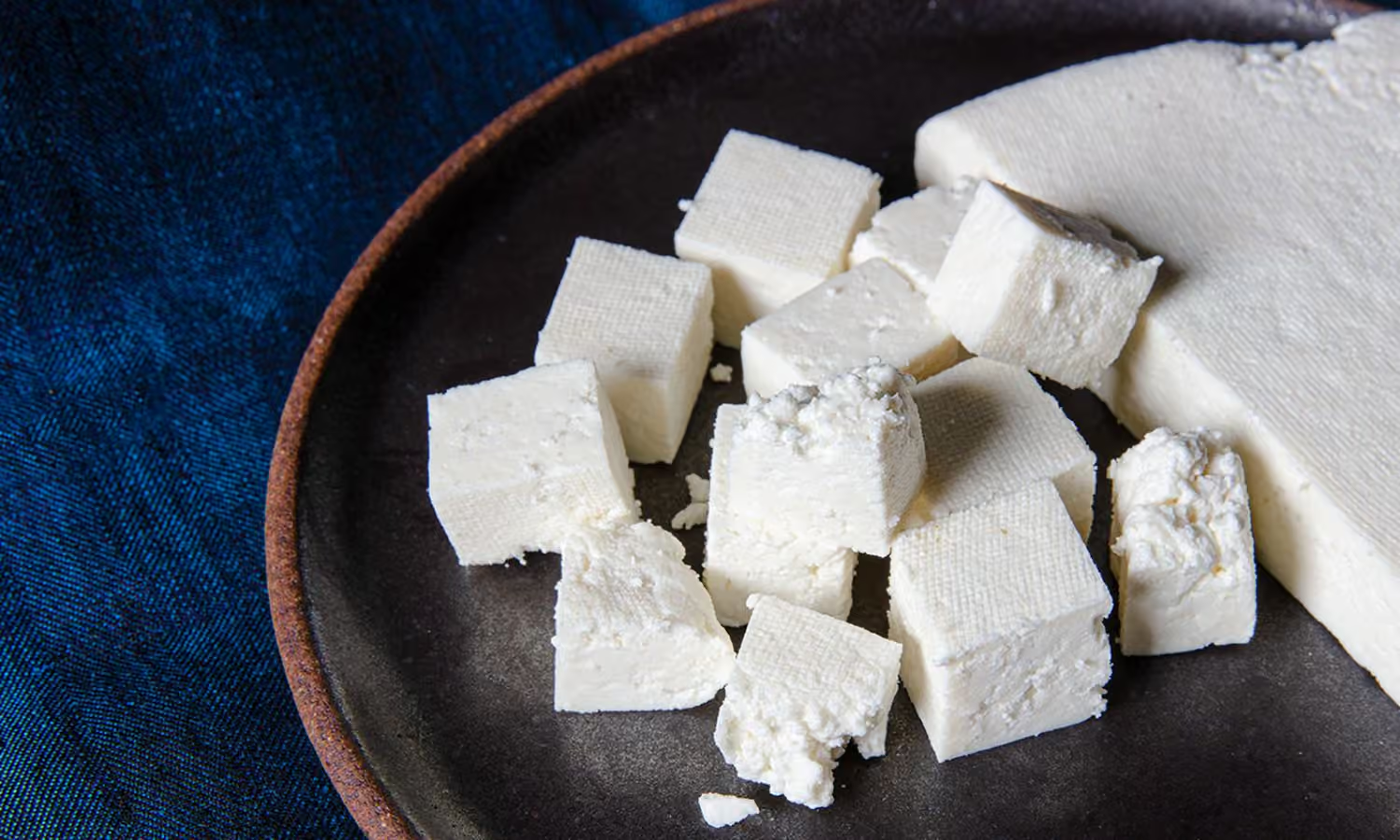
The Food Safety and Standards Authority of India (FSSAI) has proposed regulatory changes that could reshape how dairy-analogue products are named and marketed in India. The draft amendment seeks to prevent products made from non-milk constituents from using the commercial identity of “Paneer”, bringing product labelling and consumer transparency into sharper focus.
The draft Food Safety and Standards (Prohibition and Restrictions on Sales) Amendment Regulations, 2026, was notified on September 22, published in the Gazette of India on September 23, and listed on FSSAI’s website on September 24. It remains a draft proposal open to objections and suggestions for the statutory 60-day period, rather than a final nationwide regulation.
Paneer and Dairy Analogues Have Different Identities
Under existing food standards, paneer is made from milk, with or without added milk solids, through specified coagulation processes using permitted acidulants and heating. Dairy analogues, by contrast, use ingredients not derived from milk to replace some or all milk constituents while producing a product that resembles a milk product in appearance, taste or function.
The proposed amendment would require products already licensed or registered under the “Analogue in Dairy Context” category to discontinue the use of “Paneer” in their nomenclature, labelling or marketing.
The distinction is important: a dairy analogue is not automatically unsafe or adulterated simply because it contains non-milk ingredients. The regulatory concern includes whether a product is represented in a way that misleads consumers about its identity or composition.
Restaurants and Online Food Platforms Also Face Questions
Packaged products are only one part of the issue. Restaurants, caterers and online food platforms may describe a dish as paneer-based even when the ingredient supplied is a dairy analogue.
FSSAI had considered clearer disclosure of dairy analogues in food-service establishments in a 2025 consultation paper. The issue also arose in August 2026 proceedings involving Udupi Swaad Restaurant and the Maharashtra Food and Drug Administration, where the Bombay High Court declined interim relief against the suspension of the restaurant’s licence and questioned the serving of analogue paneer without adequate disclosure to customers.
The Consumer Protection Act, 2019, may also be relevant where food descriptions misrepresent a product’s quality, standard or composition. Depending on the facts, misleading representation can raise consumer-protection concerns in addition to food-law compliance issues.
What the Draft Could Mean for Dairy Businesses
If the amendment is finalised, affected manufacturers and food businesses may need to review product names, packaging, labels, menus, procurement practices and marketing materials.
Key areas requiring attention include:
- Product identity: Ensuring the name used accurately reflects the product’s ingredients and applicable food standards.
- Labelling and marketing: Avoiding descriptions that imply a non-milk product is conventional paneer.
- Food-service disclosure: Reviewing how ingredients are represented on restaurant menus and online platforms.
- Regulatory readiness: Monitoring the final notification and any transition or implementation requirements.
For conventional dairy processors, clearer product identity rules could help distinguish milk-derived paneer from non-milk alternatives. For analogue manufacturers, the challenge will be to communicate their products’ actual composition and identity while continuing to serve consumers seeking alternatives.
Consultation Will Shape the Final Framework
The proposed amendment raises practical questions about partially substituted products, restaurant terminology, online menus, transition periods for existing businesses and how enforcement should distinguish deliberate misrepresentation from technical labelling errors.
FSSAI’s consultation process provides an opportunity for manufacturers, dairy cooperatives, food-service businesses, consumer groups and other stakeholders to submit reasoned comments within the prescribed period. The final impact will depend on the regulation ultimately adopted and its implementation.
The wider principle is that food regulation protects consumers not only from unsafe products, but also from descriptions that materially misrepresent what they are buying. Alternative products may have a legitimate place in the market, but their identity should be clear to consumers.
Source: Dairynews7x7 13 Oct, 2026 Read full story here
#DairyIndustry #FoodSafety #FSSAI #DairyRegulations #DairyBusiness #DairyNews7x7
Never miss an important dairy update
Follow DairyNews7x7 on Google to get live milk prices, policy alerts, and daily headlines directly in your feed.