Cockroach Milk: Amazing Crystals With 3.5x the Energy of Cow's Milk Win Ig Nobel
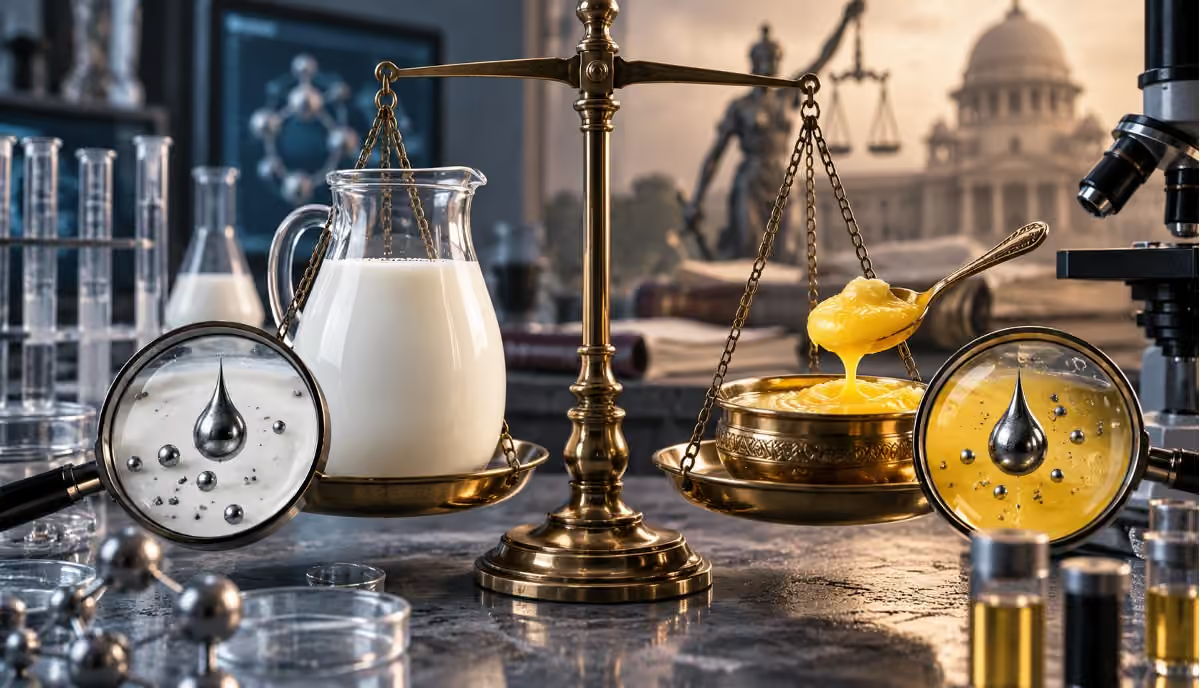
Cockroach milk has earned its discoverers a 2026 Ig Nobel Prize. The team that worked out how the Pacific beetle cockroach feeds its unborn young received the Ig Nobel Prize in Chemistry on 3 September in Zurich, Switzerland, according to a report by Ecoticias. The research shows that the insect's milk forms protein crystals carrying far more energy, by weight, than cow's milk.
What Is Cockroach Milk?
The Pacific beetle cockroach (Diploptera punctata) is the only cockroach known to give birth to live young. Instead of laying eggs, the mother carries her embryos in a brood sac, where they are fed a protein-rich fluid secreted by the sac wall. Scientists call this fluid cockroach milk.
Once inside the embryos' midguts, the milk proteins form solid crystals that act as a concentrated food store for the developing young.
How Much Energy Does Cockroach Milk Contain?
A supplementary table cited in the report lists about 232 kcal per 100 g for the cockroach milk crystals, compared with 66 kcal per 100 g for cow's milk. That is roughly 3.5 times the energy by weight. Water buffalo milk, the richest of the five mammal milks listed, contains about 110 kcal per 100 g.
The figure for the crystals is a calculation based on their protein, fat and sugar content, not a direct measurement, and it compares a dense crystal with a liquid milk.
The Science Behind the Prize
The research was published in 2016 in the journal IUCrJ. The authors described it as the first protein structure determined directly from a crystal that grew naturally inside a living organism. Crystals were taken from embryos of a 54-day-old female, and the sharpest X-ray data, at 1.2 angstroms, came from the Swiss Light Source in Villigen, Switzerland.
The project began at the Photon Factory in Tsukuba, Japan, run by KEK. Leonard Chavas, a former Nagoya University professor, later ran tests at two synchrotrons in central Japan. Nathan Coussens started the work as an undergraduate about 25 years ago in Ramaswamy Subramanian's lab at Purdue University. The final paper had 11 authors from five countries.
The Ig Nobel Prizes, organised by Improbable Research, honour research that first makes people laugh and then makes them think.
Is Cockroach Milk the Next Superfood?
Not yet, and possibly never. The study examined an insect embryo's food store. It did not test whether cockroach milk crystals are digestible or safe for humans, or whether they could be produced in bulk. The authors also note that the role of the mixed proteins, sugars and fats inside the crystals is still unclear.
Headlines calling cockroach milk a "superfood" therefore go well beyond the evidence. For now, the interest is scientific: how a living organism packs nutrients so densely, and what that could teach researchers about protein design.
How Cockroach Milk Compares With Mammal Milk
Cockroach milk differs from cow's milk in almost every way. Mammal milk is a liquid emulsion of fat, protein, lactose and minerals, produced by mammary glands to be drunk after birth. Cockroach milk, by contrast, is secreted inside the mother's body and fed to embryos before birth, where it hardens into crystals in the gut. The crystals combine proteins with attached sugars and fats in a compact, slow-release package.
That density is what makes the energy figure so striking. A crystal packed with protein, sugar and fat will naturally contain more energy per gram than a liquid that is mostly water. Cow's milk is around 87% water, which is why its energy value per 100 g looks modest by comparison.
Protein Science and the Future of Nutrition
Interest in dense, functional proteins is growing across the food industry, from high-protein dairy to sports nutrition. Researchers are exploring how natural protein structures release nutrients over time, a question with clear links to dairy proteins such as whey and casein. Our report on how weight-loss drugs are fuelling demand for protein-rich whey shows how central protein has become to the dairy market's growth story.
Why It Interests the Dairy World
For the dairy sector, cockroach milk is a curiosity rather than a competitor. Its real value lies in protein science. Understanding how nature builds stable, nutrient-dense protein crystals could inform future work on protein ingredients, encapsulation and nutrition, fields where dairy proteins such as whey and casein already play a central role.
The story also shows how widely the word "milk" is used, a debate familiar to the dairy industry from labelling disputes over plant-based drinks.
The key takeaway: Cockroach milk crystals hold about 3.5 times the energy of cow's milk by weight and won their discoverers an Ig Nobel Prize, but they remain a scientific discovery, not a food.
Read the full report on Ecoticias and the announcement from Purdue University.
Source: Ecoticias | DairyNews7x7
Never miss an important dairy update
Follow DairyNews7x7 on Google to get live milk prices, policy alerts, and daily headlines directly in your feed.