The recent editorial “Bitter Milk” published by The Hindu raises important concerns about food safety in India. The editorial deserves appreciation for attempting to broaden the conversation and underline the need for stronger governance and enforcement in the food sector.
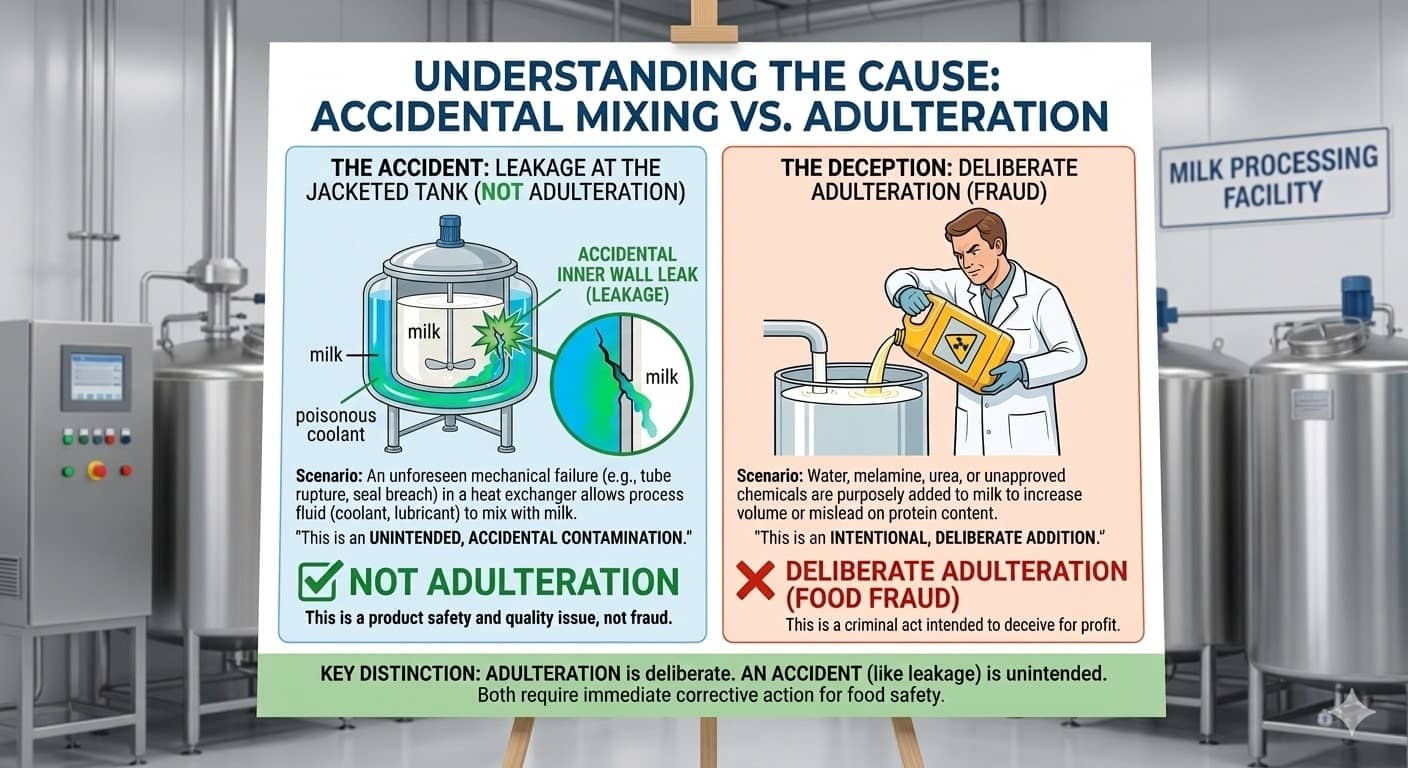
The tragedy reported in Rajahmundry, where milk contaminated with ethylene glycol reportedly led to several casualties, is deeply unfortunate. Any loss of life due to food safety failure is unacceptable and must be investigated thoroughly. However, it is equally important that we distinguish between deliberate adulteration and an operational accident caused by negligence or lack of awareness.
From the reports available so far, the contamination appears to have occurred because ethylene glycol was used in a refrigeration system instead of propylene glycol. This distinction is critical. Ethylene glycol is widely used as an industrial coolant but is toxic if ingested, whereas propylene glycol is the food-grade alternative used in cooling systems associated with food processing.
This raises an important question: Was this a case of deliberate adulteration, or a tragic accident caused by inadequate awareness and weak regulatory communication around the use of cooling chemicals in food systems?
The Real Question of Accountability
If ethylene glycol is known to be toxic, several systemic questions arise.
Why is there no clear warning or restriction governing the sale of such chemicals when they may be used in food-related environments? Are chemical dealers required to inform buyers about the difference between food-grade and industrial coolants? Has any structured awareness programme been conducted for small dairy operators on safe refrigeration practices?
Across many small dairy operations in India, refrigeration systems are often maintained by local technicians who may not be fully aware of the distinction between industrial and food-grade chemicals. Without clear regulatory guidance and training, the possibility of such errors increases.
Learning from Past Regulatory Action
India has faced similar situations before. A few years ago, serious injuries occurred when dry ice was served in beverages at restaurants and bars. In response, the regulator, Food Safety and Standards Authority of India (FSSAI), acted swiftly by prohibiting the practice and issuing nationwide advisories.
That example shows how timely regulatory intervention can prevent future incidents. A similar proactive approach is now needed in relation to industrial coolants used in refrigeration systems associated with food.
A Larger Governance Issue
Another troubling aspect emerging from reports is that the dairy involved may have been operating without a valid licence for several years. If this is indeed the case, the issue goes beyond the negligence of a single operator and raises questions about regulatory oversight.
Were periodic inspections conducted by local food authorities?
Were licensing requirements verified?
Has accountability been fixed where enforcement systems failed?
Food safety governance must ensure accountability not only for operators but also within the regulatory system.
Strengthening Preventive Systems
Instead of viewing the Rajahmundry tragedy merely through the lens of adulteration, it should prompt a broader effort to strengthen preventive safeguards across the dairy value chain.
First, India needs a well-defined Code of Clean Milk Production at the primary production level.
Second, all vendors selling raw or loose milk should be required to register under the Food Safety and Standards Authority of India. Registration costs barely ₹100 per year, yet many vendors continue to operate outside the formal regulatory framework.
Third, retailers and dealers handling milk and dairy products must maintain basic refrigeration facilities to preserve the cold chain.
Fourth, industrial chemicals used in environments connected with food must be better regulated and clearly labelled. Substances such as ethylene glycol should carry prominent warnings indicating their toxic nature and unsuitability for food-related applications.
Fifth, stronger governance and enforcement are essential across the entire value chain. Regular inspections, compliance monitoring and coordination between food safety and consumer authorities are necessary to ensure a safe environment from farm to table.
Protecting Public Trust in Milk
Milk remains one of the most essential foods in Indian households and the backbone of rural livelihoods. Millions of farmers depend on the dairy sector, and the country’s organised dairy supply chains have built a strong reputation for safety and quality over decades.
Isolated incidents like this one, arising from negligence or regulatory gaps, should therefore not be allowed to undermine public confidence in the entire dairy ecosystem.
A Responsibility for All Stakeholders
Media plays a vital role in highlighting food safety issues and prompting corrective action. At the same time, public discourse must carefully distinguish between systemic adulteration and accidental contamination.
The Rajahmundry tragedy should lead to better chemical handling guidelines, stronger cold-chain oversight, improved training for small operators and clearer regulatory communication.
Ultimately, the lesson from this tragedy is not to cast suspicion on milk itself, but to strengthen the systems that safeguard it.
Source : Editorial by Kuldeep Sharma, Chief Editor, Dairynews7x7 — March 10, 2026
Image credit : Gemini
Never miss an important dairy update
Follow DairyNews7x7 on Google to get live milk prices, policy alerts, and daily headlines directly in your feed.