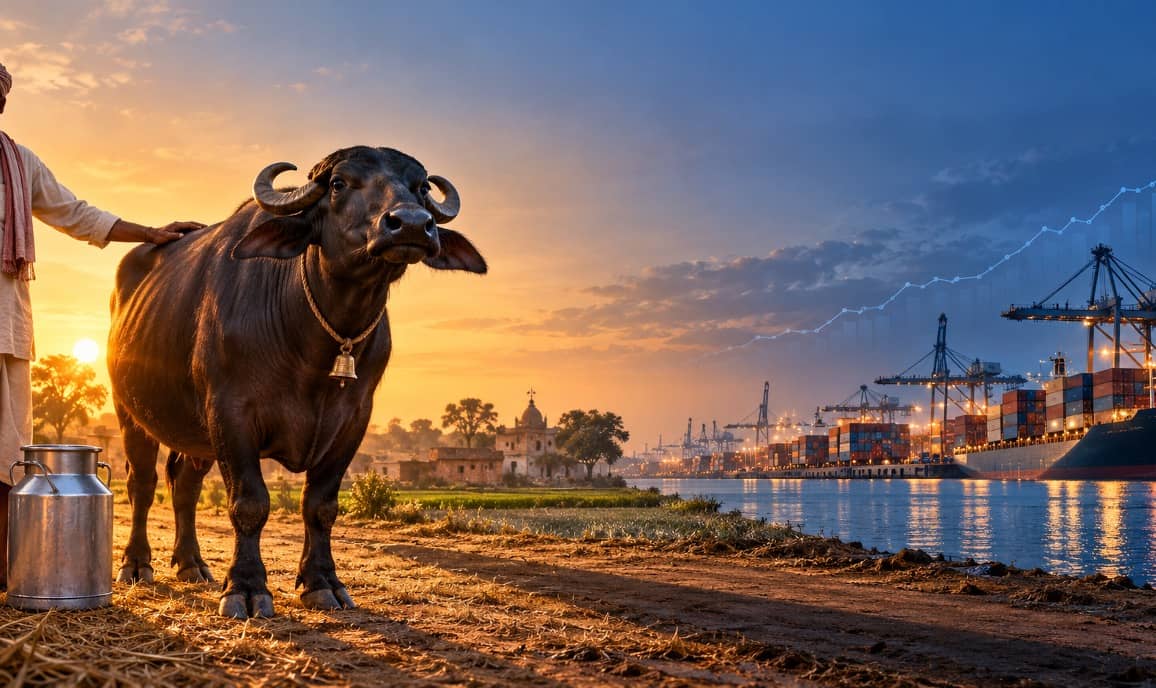
Banas Dairy is set to increase its cattle dung processing capacity by 51%, from 340 tonnes to 515 tonnes per day, through the expansion of its bio-compressed natural gas (Bio-CNG) infrastructure in Gujarat. The initiative aims to generate additional income for livestock farmers while converting cattle waste into clean fuel and organic fertilisers.
According to The Hindu BusinessLine, the cooperative plans to expand its processing network with new Bio-CNG plants in Tharad and Radhanpur, in Gujarat's Banaskantha district. The expansion highlights the growing role of dairy cooperatives in developing circular-economy models that connect livestock farming, renewable energy and sustainable agriculture.
Turning Cattle Waste into Economic Value
Banas Dairy's model treats cattle dung as a valuable resource rather than agricultural waste. The cooperative purchases dung from farmers at approximately ₹1 per kg, with payments deposited directly into their bank accounts every fortnight alongside their milk payments.
The dung is processed to produce Bio-CNG for vehicles and organic fertilisers for agricultural use. The fertilisers, marketed under the Bhoomi Amrut brand, are supplied to farmers through local dairy cooperative societies.
Affordable Fuel and Additional Farmer Income
Bio-CNG produced by the existing plants is sold to motorists at approximately ₹75–80 per kg, compared with around ₹92 per kg for conventional CNG in Gujarat, according to the report. This creates an alternative fuel option while adding value to a resource generated by dairy farms.
For livestock farmers, selling dung provides an additional revenue stream alongside milk production. The model also supports local employment through dung collection, transportation and plant operations.
Expansion Potential Remains Significant
Banaskantha district has an estimated 28 lakh livestock animals and generates approximately 24,000 tonnes of cattle dung daily. Banas Dairy's current processing capacity therefore represents only a portion of the district's available resource.
The cooperative has outlined an ambition to establish around 200 plants across the district. Government projections indicate that this proposed network could produce 1,168 lakh kg of compressed biogas annually and generate direct annual returns of ₹875 crore for livestock farmers. These figures are projections for the planned expansion, not current production or earnings.
What This Means for the Dairy Industry
Banas Dairy's expansion demonstrates how dairy cooperatives can diversify beyond milk procurement and processing to create additional value from livestock waste.
By integrating dung procurement, renewable fuel production and organic fertiliser distribution, the model offers a potential pathway to diversify farm income, support rural energy needs and promote resource efficiency.
The key takeaway: Dairy cooperatives can strengthen rural livelihoods by developing business models that generate value from both milk and livestock waste.
Source: Read full story here 28 Oct, 2026 Edited and Reported by
#DairyNews7x7 #BanasDairy #DairyIndustry #DairyFarmers #BioCNG #CircularEconomy #SustainableDairy #RenewableEnergy #OrganicFertilizer #DairyCooperatives #LivestockManagement #RuralDevelopment
Never miss an important dairy update
Follow DairyNews7x7 on Google to get live milk prices, policy alerts, and daily headlines directly in your feed.