40,000 Farmers Protest Maharashtra Co-op Ordinance as Gokul Dairy Row Intensifies
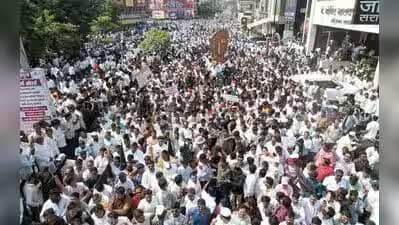
More than 40,000 farmers mobilised in Kolhapur on November 9, 2026, to protest Maharashtra's ordinance granting voting rights to government-nominated directors in large cooperative societies. Led by Congress MLC Satej Patil, the Sangharsh Morcha intensified opposition to the amendment, with dairy farmers warning that the move could weaken elected representation and cooperative autonomy.
Massive Farmers' Mobilisation in Kolhapur
The protest march moved from Dasara Chowk to the Kolhapur district collectorate, drawing participants from Kolhapur and neighbouring districts.
Farmers from Sangli, Satara, Pune, Thane and Dharashiv also participated. Women farmers, cooperative representatives and political leaders joined the demonstration, with participants arriving in bullock carts and bringing livestock.
The rally featured banners calling for the protection of Gokul Dairy and cooperative democracy, reflecting widespread concern over the proposed restructuring of board representation. Former MP Raju Shetti and several MPs and legislators also participated.
What Does Maharashtra's Ordinance Change?
The Maharashtra government promulgated the Maharashtra Cooperative Societies (Amendment) Ordinance, 2026, to provide government nominations to federal cooperative societies with annual turnover exceeding ₹500 crore.
Under the amendment:
- Five government-nominated members can be appointed to eligible cooperative boards.
- Four nominated members receive voting rights.
- One government officer, not below assistant registrar rank, is appointed without voting rights.
- The four voting nominees can participate in board decisions but cannot contest office-bearer positions.
The government has defended the measure as a way to safeguard public funds and improve oversight of major cooperative institutions. Opposition leaders and farmer organisations argue that it risks diluting the authority of elected representatives.
Why Gokul Dairy Became the Centre of the Dispute
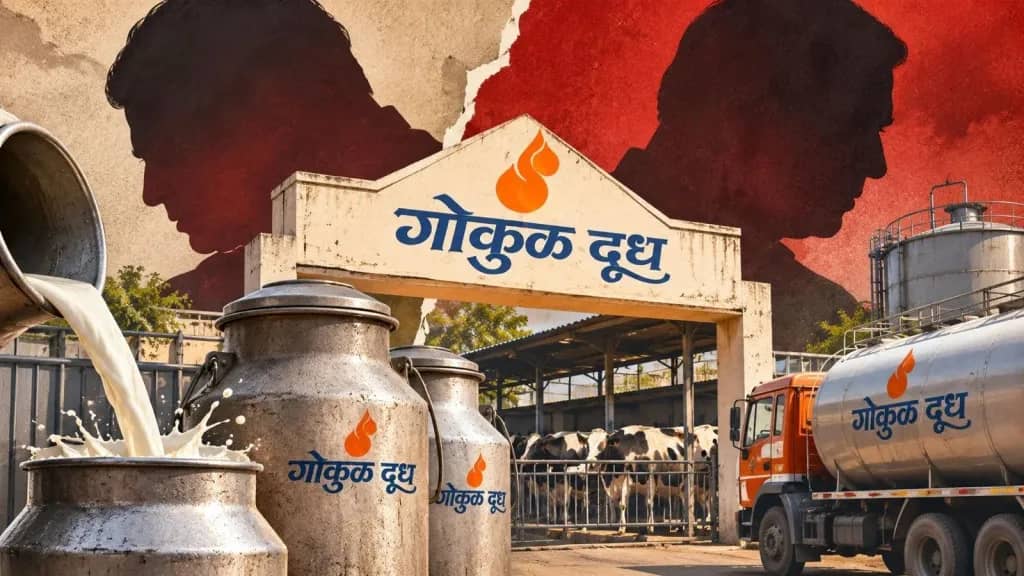
The controversy is closely linked to the leadership election at Kolhapur District Cooperative Milk Producers' Federation, popularly known as Gokul Dairy.
In the October 19 board elections, the Congress-backed Samvichari Aghadi secured 13 of the 25 elected director seats, while the Mahayuti alliance won 12.
The addition of four voting government nominees could change the board's balance of power. The protestors contend that introducing nominated voting members during the leadership-election process undermines the mandate delivered by elected directors.
The dispute has therefore expanded beyond a chairman's election into a broader question about political influence and democratic representation in Maharashtra's cooperative dairy institutions.
High Court Allows Election, Preserves Legal Challenge
The Bombay High Court's Kolhapur bench declined to grant an interim stay on the ordinance on November 9.
However, the court directed that ballots cast by elected directors and government nominees be kept separately and that election records be preserved. The chairman-election proceedings would remain subject to the outcome of the pending legal challenge, with the ordinance's constitutional validity still under consideration.
The court's decision allowed the scheduled election to proceed without finally resolving the dispute over the nominated directors' voting rights.
Gokul Dairy Chairman Election: Political and Cooperative Implications
The controversy subsequently reached the leadership election, where Mahayuti's Rajesh Patil was elected chairman on November 10. Government-nominated directors' votes helped the alliance secure a 16–13 outcome, despite the Congress-backed panel's 13–12 advantage among elected directors.
The result has intensified the debate over whether government nominations can legitimately reshape leadership outcomes in farmer-owned cooperative institutions. The legal challenge remains relevant to the future interpretation and application of the ordinance.
Cooperative Autonomy Under the Spotlight
The Kolhapur mobilisation demonstrates the political and economic importance of dairy cooperatives in Maharashtra.
For farmers, cooperatives are not merely milk procurement organisations; they are institutions through which producers participate in governance, negotiate market access and influence decisions affecting their livelihoods.
The ordinance debate raises a consequential question for India's cooperative dairy sector: How can government oversight of large cooperative institutions be strengthened without weakening the democratic mandate of their farmer-members?
The answer could have implications well beyond Gokul Dairy, particularly for other high-turnover cooperative organisations across Maharashtra.
Source: Read full story here 10 Nov, 2026 Edited and Reported by
#GokulDairy #IndianDairy #DairyCooperatives #Maharashtra #FarmersProtest
Never miss an important dairy update
Follow DairyNews7x7 on Google to get live milk prices, policy alerts, and daily headlines directly in your feed.