WORLD DAIRY NEWS How dairy farmers are cashing in on California’s push for cleaner fuel
California is trying to cut greenhouse emissions from the state’s cars and trucks, and in a controversial twist, its efforts are putting cash in the pockets of dairy farms across the country. It’s the result of an odd but lucrative trade: pollution cuts on farms, in order to satisfy limits on emissions from California’s roadways.
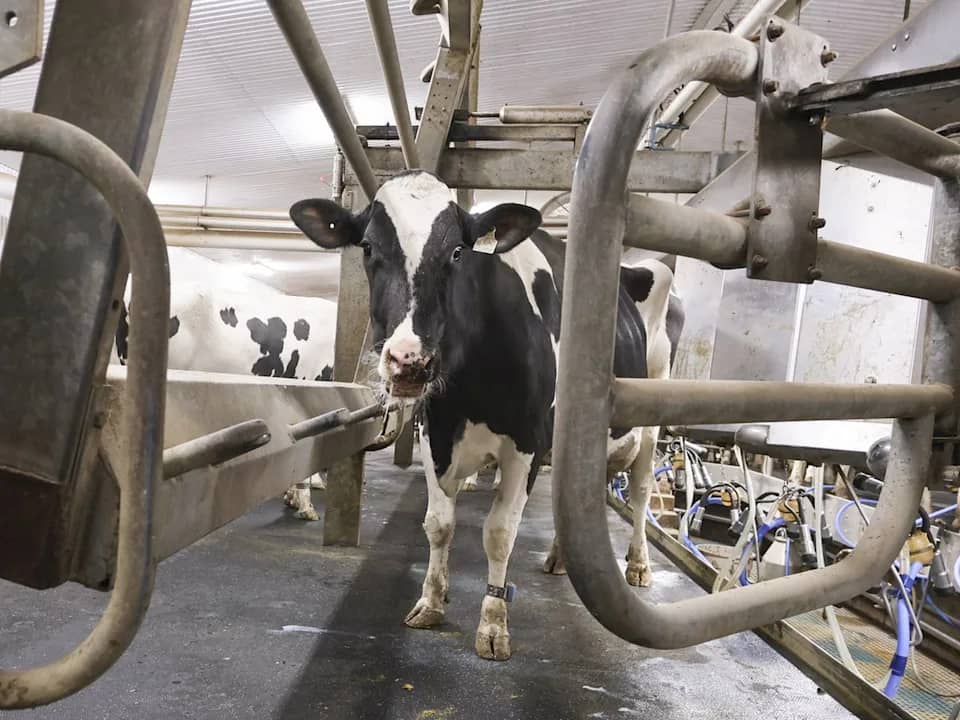
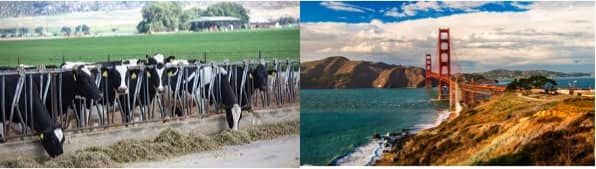
Among those that could reap a windfall is High Plains Ponderosa Dairy, in southwest Kansas. The dairy’s thousands of cows spend their days and nights inside long barns. “They’ve got fans and cooling in the summertime, and they’re warmer in the wintertime, but because of that, when your cows poop, it goes on the concrete, and we can collect it all,” says Greg Bethard, the dairy’s general manager.
Right now, that manure goes into big storage ponds called lagoons where bacteria feed on it and release a gas called methane. Methane is the main ingredient in natural gas, burned in home furnaces and stoves. It’s also a powerful greenhouse gas. It doesn’t persist in the atmosphere as long as carbon dioxide, but while it does, it traps 80 times more heat, helping to drive climate change.
Later this year, though, the dairy’s manure will instead flow into big tanks, called anaerobic digesters, that will capture most of the methane.
The captured methane will go into a natural gas pipeline that’s located just a few miles from the farm. That pipeline is connected to gas pipelines in California, which is essential for it to participate in California’s emission-trading system.
California’s Low Carbon Fuel standard sets increasingly strict limits on greenhouse gas emissions from transportation fuels used by California’s cars and trucks. Oil and gas companies, which sell gasoline and diesel fuel, have to satisfy these caps on emissions. They can satisfy the law by selling less gasoline, but there’s also another option; they can pay for cuts in greenhouse emissions somewhere else.
This is where the methane-capturing equipment at Ponderosa High Plains Dairy comes in. The dairy is building it through a partnership with the oil company Shell. When they capture methane from manure, they’ll be awarded pollution-reduction credits – partly for reducing their methane emissions, and partly for delivering a less-polluting fuel for use in California’s transportation fleet.
California’s oil and gas companies can buy those credits to cancel out their own emissions. The dairy also will earn clean fuel credits through a separate federal program called the renewable fuel standard.
For High Plains Dairy and Shell, these emissions credits could be worth tens of millions of dollars a year, although the value of those credits does go up and down, depending on demand. “If you take today’s value [of the credits] and extrapolate it out, yes, there’s profits to be made,” Bethard says. “But I still think, long term, our primary business is still going to be milk.”
Because its manure ponds release lots of methane, Bethard’s dairy is set up perfectly to take advantage of this opportunity. There’s more pollution to eliminate, which means more profits to be gained by doing so. Dairies or beef cattle operations that keep cows outside, allowing their manure to dry, or those that allow cows to graze on pasture, don’t generate as much methane from manure.
Aaron Smith , an economist at the University of California, Davis, decided to examine the impact of emission credits on such dairy farms. “I had heard people saying this was kind of a big deal, and I sort of put off looking into it for a while, because I was thinking, ‘How big of a deal could it really be?'” he says.
When he calculated the potential revenue from emissions credits, “I was stunned,” he says.
The value of these pollution-cutting credits could amount to a 50% boost in revenue over just selling the cows’ milk. Smith published the result as a blogpost titled “What’s more valuable: A cow’s milk or its poop?” It quickly became the second-most read article on his website, only trailing a taste-test of fast-food chicken sandwiches that Smith and his daughter carried out.
Smith says that the generous subsidies for dairy-derived methane might lead to a paradoxical and unwelcome result. It could persuade dairies to expand, adding more cows, and producing more manure. This is particularly worrisome because cows also release methane by burping it out as they digest grass, and those emissions can’t be captured.
This isn’t what California’s emission-trading system intended. “If you have a program that creates incentives to generate more pollution, then you’re not going to get the benefits that you want,” Smith says.
Smith says he’s not sure that these credits are, in fact, persuading dairies to expand. But considering the potential revenue, he says, it certainly could happen.
A coalition of environmental justice groups is now mobilizing to stop it. Brent Newell, an attorney with one of those groups — Public Justice — wrote a petition to the California Air Resources Board (CARB) demanding that it stop issuing credits to dairy or beef or hog farms for capturing methane. “The solution is not to commodify it, so that cows and hogs are pooping money!” he says.
Newell says these credits mainly benefit the biggest farms, which are the biggest polluters, “and it harms the health and welfare of communities that experience all the air and water pollution that’s associated with the factory farm system.”
According to Michel McCully , a consultant to the dairy industry, farms need at least 3000 cows to produce enough manure to justify building an anaerobic digester. In a 2021 article published in Hoard’s Dairyman, McCulley wrote that the emissions-trading programs could make it harder for small dairy farms to survive, since they have difficulty taking advantage of this new revenue stream..
Last week, California’s environmental regulators denied Newell’s petition. Richard Corey, CARB’s executive director, wrote that the current emissions trading system is working as designed, encouraging farmers to capture methane emissions. In fact, data from another climate-related program in California show that money invested in manure digesters had the greatest impact on greenhouse emissions, at the least cost. However, Corey also said that CARB will take a fresh look at these criticisms and decide whether the program needs tweaking.
Oregon and Washington, meanwhile, are moving forward launching their own emissions-trading systems, which could further boost demand for manure-derived methane.
Never miss an important dairy update
Follow DairyNews7x7 on Google to get live milk prices, policy alerts, and daily headlines directly in your feed.