Sikkim Targets 57 New Dairy Cooperatives Under White Revolution 2.0
₹251.56 Lakh Push to Strengthen Dairy Infrastructure and Farmer Networks
Sikkim is set to expand its dairy cooperative network with plans to establish 57 new Dairy Cooperative Societies (DCSs) under the Government of India's White Revolution 2.0 programme.
The initiatives, worth ₹251.56 lakh, are focused on expanding farmer participation, strengthening milk quality infrastructure, improving livestock development and creating new opportunities for value addition.
Union Minister for Fisheries, Animal Husbandry and Dairying Rajiv Ranjan Singh, also known as Lalan Singh, is undertaking a two-day visit to Gangtok and Mangan districts on November 2–3, 2026, to review dairy development activities and advance these initiatives.
57 New Dairy Cooperative Societies Planned
A major component of the programme is the establishment of 57 new Dairy Cooperative Societies under White Revolution 2.0.
The initiative also includes:
- Launching the formation of 15 additional dairy cooperative societies in North Sikkim.
- Distributing registration certificates to five newly registered societies.
- Bringing more milk-producing farmers into organised cooperative networks.
The expansion is expected to improve access to organised milk procurement, institutional support and marketing opportunities for rural dairy farmers.
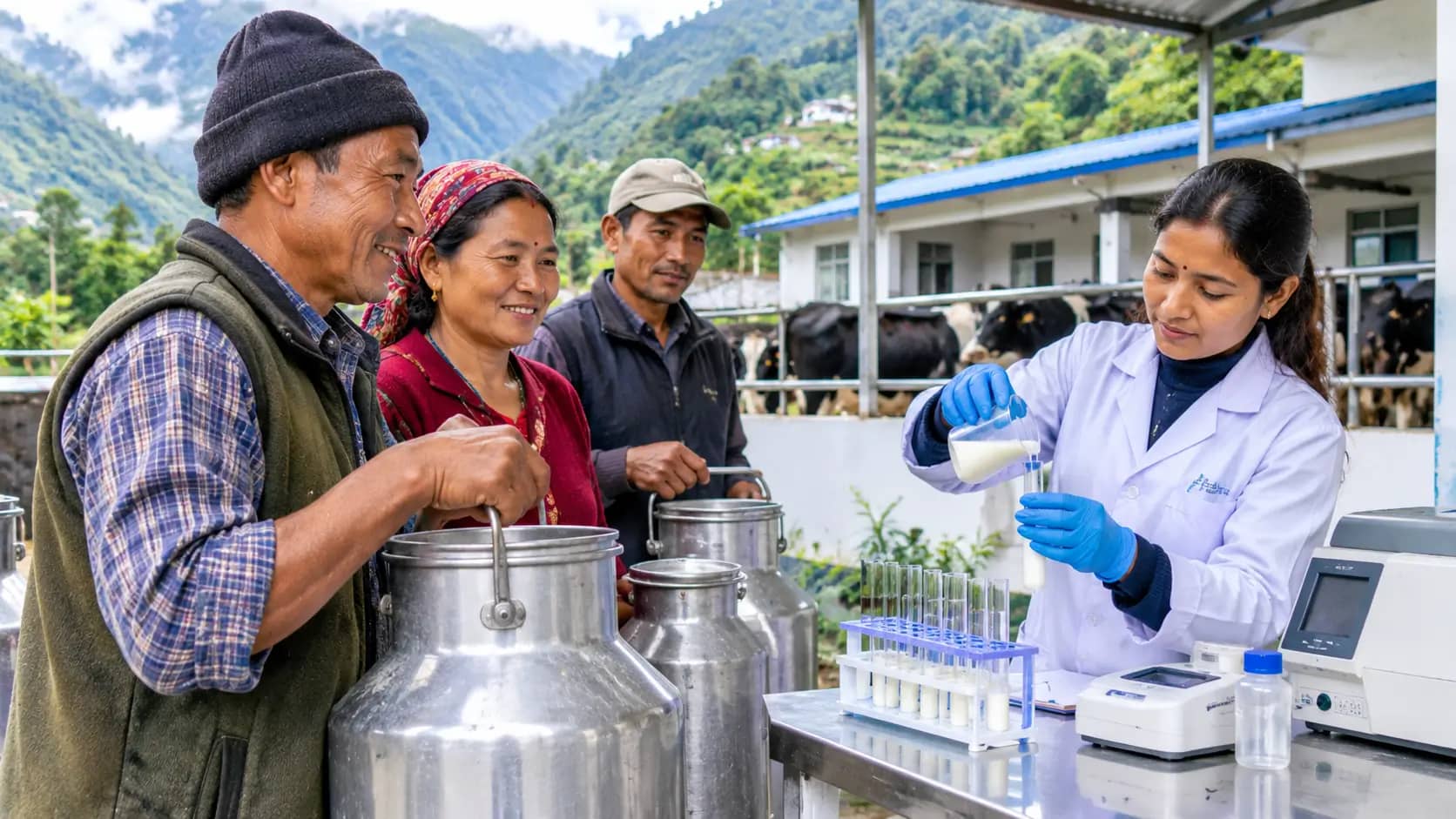
New Microbiology Laboratory to Strengthen Milk Quality
A microbiology laboratory for the Sikkim Milk Union is another important component of the development programme.
The facility is being established under the National Programme for Dairy Development (NPDD) to strengthen laboratory and quality-monitoring infrastructure.
Improved testing facilities can support better quality control and help strengthen confidence in the state's milk procurement and processing systems.
Churpi Cheese Gets a Traceability Initiative
The programme also includes a traceability initiative for traditional Churpi cheese manufactured in Gangtok and Jorethang.
Churpi is a traditional Himalayan dairy product with regional identity and value. A traceability system can help document product origin and supply-chain movement, supporting transparency, quality assurance and stronger market positioning.
For local producers, improved traceability could create opportunities to develop consumer confidence and expand access to premium markets.
Sikkim's Dairy Sector: Production and Government Support
According to the Ministry of Fisheries, Animal Husbandry and Dairying, Sikkim recorded approximately 89.35 thousand metric tonnes of milk production during 2024–25, with per capita milk availability of around 352 grams per day.
Government support for the state's dairy and livestock sector includes:
- Rashtriya Gokul Mission: ₹7,093.99 lakh released since 2014.
- Siri cattle conservation: A special project worth ₹2,763.92 lakh sanctioned for the development and conservation of the indigenous breed.
- National Programme for Dairy Development: Nine projects sanctioned with a total outlay of ₹59.60 crore, including a Central share of ₹54.61 crore.
- Yak development: ₹100 lakh released during 2026–27 for procuring High Genetic Merit yak bulls.
These initiatives reflect the importance of strengthening indigenous livestock resources alongside dairy cooperative infrastructure.
Fodder Development and Product Diversification
The government will also promote two Fodder Plus Farmer Producer Organisations (FPOs) for the Sikkim Milk Union under the national 10,000 FPO Scheme.
The programme includes the unveiling of new products such as organic honey, Niger seed-blended powder, and organic biscuits and sweets made from millets and buckwheat.
These initiatives aim to encourage diversification, value addition and new income opportunities for local producers.
White Revolution 2.0: Expanding India's Cooperative Dairy Network
White Revolution 2.0 was launched in September 2024 with the objective of expanding dairy cooperative coverage, improving market access and increasing milk procurement.
The national programme targets the establishment of 75,000 new Dairy Cooperative Societies over five years, from 2024–25 to 2028–29. It also aims to increase milk procurement by dairy cooperatives by 50% during this period.
Sikkim's target of 57 new societies forms part of this nationwide cooperative expansion strategy.
The Road Ahead for Sikkim's Dairy Sector
The proposed cooperative expansion, improved laboratory infrastructure and Churpi traceability initiative represent an integrated approach to dairy development in Sikkim.
However, the long-term impact will depend on effective implementation, regular milk procurement, reliable quality testing and stronger market linkages for local dairy producers.
Industry takeaway: Sikkim's dairy development strategy highlights how cooperative expansion, indigenous livestock conservation, quality infrastructure and traditional dairy product value addition can work together to strengthen rural dairy livelihoods.
Source: Read full story here 03 Nov, 2026 Edited and Reported by
#DairyIndustry #DairyCooperatives #WhiteRevolution2 #SikkimDairy #DairyDevelopment
Never miss an important dairy update
Follow DairyNews7x7 on Google to get live milk prices, policy alerts, and daily headlines directly in your feed.