Milma's Thiruvananthapuram Union Seeks ₹10/Litre Milk Price Hike to Support Kerala Dairy Farmers
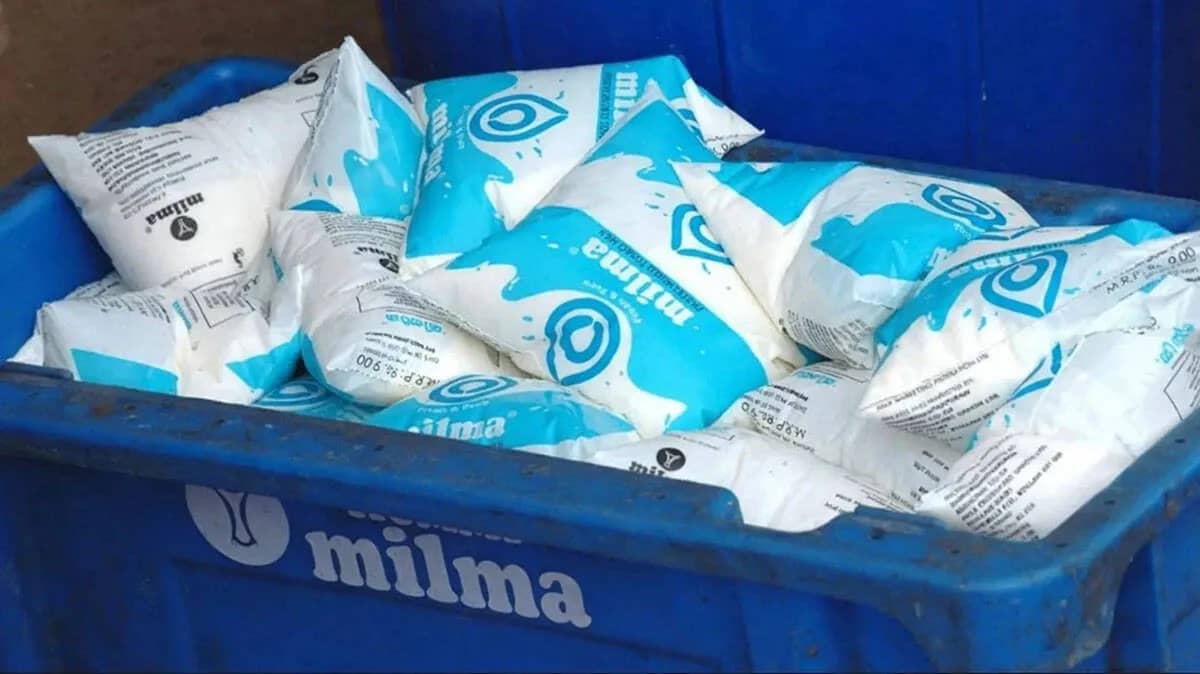
Kerala's dairy sector is facing renewed pricing pressure as the Thiruvananthapuram Regional Cooperative Milk Producers' Union (TRCMPU), operating under the Milma cooperative network, has proposed a ₹10 per litre increase in milk prices to address the financial difficulties faced by dairy farmers.
The union's reinstated Director Board has decided to approach the Kerala government and the Kerala Cooperative Milk Marketing Federation (KCMMF), popularly known as Milma, seeking approval for the proposed revision.
The demand comes just five months after Milma increased milk prices by ₹4 per litre in June 2026. According to the regional union, the earlier revision did not translate into significant financial benefits for dairy farmers.
₹10 Per Litre Increase Proposed to Improve Farmer Returns
The Thiruvananthapuram regional union believes that another price revision is necessary to improve the economic sustainability of milk production.
Rising expenses associated with cattle feed, fodder, labour and animal maintenance have continued to put pressure on dairy farmers.
The union's position is that the earlier ₹4 per litre increase did not provide sufficient relief to producers, making a larger revision necessary.
However, the ₹10 increase remains a proposal. The regional union must secure approval from the state government and the Milma federation before any revised retail price can be implemented.
The final amount and distribution of any additional revenue between farmers, regional unions and the federation have not yet been announced.
₹100 Cattle Feed Subsidy from December 1
Alongside the proposed milk price revision, the reinstated board has approved an immediate support measure for dairy farmers.
The union will provide a ₹100 subsidy per bag of Milma cattle feed from December 1, 2026.
Cattle feed represents one of the most significant recurring expenses in dairy farming. The subsidy is intended to reduce the financial burden on producers while discussions over the proposed milk price increase continue.
The measure also reflects the importance of feed affordability in maintaining milk production and farmer participation in cooperative procurement systems.
Earlier ₹4/Litre Hike Failed to Provide Sufficient Relief
Milma's previous ₹4 per litre price increase in June 2026 was expected to improve returns across the cooperative dairy network.
However, the Thiruvananthapuram regional union maintains that the revision did not generate adequate benefits for dairy farmers.
This highlights an important issue in dairy pricing: an increase in retail milk prices does not automatically translate into an equivalent increase in farmer procurement rates.
The allocation of additional revenue across procurement payments, processing, transportation, distribution and cooperative operations determines how much ultimately reaches milk producers.
For Kerala's dairy sector, ensuring that price revisions improve farm-level profitability remains a central challenge.
Board Reinstated Following Kerala High Court Intervention
The proposed price revision is also significant in the context of recent developments in Milma's regional cooperative governance.
The Kerala government dissolved the Thiruvananthapuram Regional Union's Director Board in July 2026. The board was subsequently reinstated following an order by a Division Bench of the Kerala High Court.
At its first meeting after reinstatement, held on November 12, the board discussed several administrative and operational matters.
These included seeking permission to expedite recruitment for vacant positions in the regional union, completing an internal inquiry into the Sabarimala ghee controversy and arranging additional ghee supplies for the temple.
The board authorised the supply of 10,000 litres of ghee at wholesale rates to meet immediate requirements and also decided to participate in the e-tender for further supplies.
Kerala's Dairy Sector Faces a Wider Cost Challenge
The demand for a ₹10 per litre increase comes amid a broader wave of milk price revisions across India.
Karnataka's Nandini brand implemented an ₹8 per litre increase from November 1, 2026, while Amul and Mother Dairy revised selected liquid milk prices by ₹2–₹4 per litre from November 12.
Rising milk procurement expenses, cattle feed costs, fodder availability, packaging and transportation charges have contributed to the pricing pressure.
Kerala's dairy sector faces its own structural challenges, including competition from milk supplies entering the state from neighbouring regions and the need to maintain attractive procurement prices for local farmers.
For Milma, the challenge is to improve farmer returns while retaining consumer confidence and maintaining the competitiveness of its cooperative network.
What the Proposed Increase Means for the Dairy Industry
The proposal has several important implications:
- For dairy farmers: A higher procurement price could improve farm-level income and help offset rising production expenses.
- For consumers: An approved ₹10 per litre increase would represent a substantial rise in household milk expenditure.
- For Milma: The federation will need to balance farmer remuneration, retail affordability and operational sustainability.
- For cooperative governance: The proposal highlights the importance of regional unions having a meaningful role in pricing and farmer-welfare decisions.
- For the wider dairy sector: Rising procurement costs could encourage further milk-price adjustments by cooperatives and private dairies.
The Challenge: Protecting Farmers Without Pricing Out Consumers
Milma's proposed ₹10 per litre increase brings the long-standing tension between farmer profitability and consumer affordability into focus.
The ₹100 cattle feed subsidy offers some immediate support, but the larger question concerns the long-term economics of milk production in Kerala.
Any sustainable pricing strategy must ensure that additional consumer payments translate into better returns for farmers while allowing cooperatives to maintain efficient procurement, processing and distribution systems.
For Kerala's dairy industry, the real test will be whether Milma can convert the proposed price revision into meaningful improvements in farmer income without making milk increasingly unaffordable for consumers.
#DairyIndustry #Milma #DairyFarmers
Source: Read full story here 14 Nov, 2026 Edited and Reported by
Never miss an important dairy update
Follow DairyNews7x7 on Google to get live milk prices, policy alerts, and daily headlines directly in your feed.