Great Britain Milk Deliveries Fall 4% in October as Dairy Farmer Margins Come Under Pressure
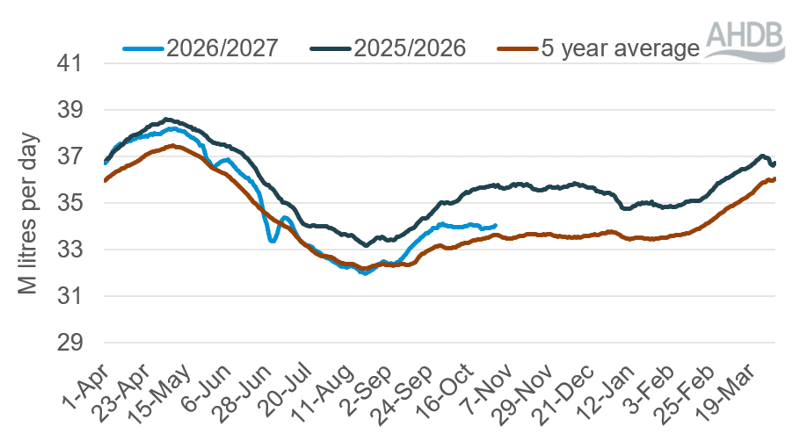
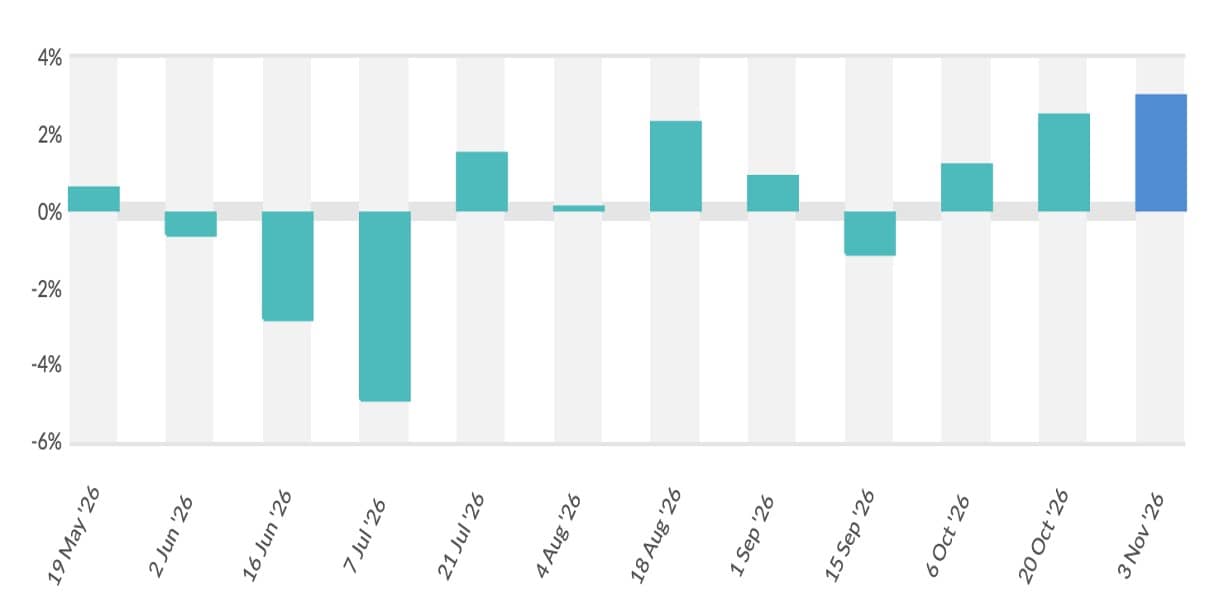
Great Britain’s milk supply is showing renewed weakness, with October 2026 deliveries declining 4% year-on-year as falling milk prices, rising production costs and forage shortages continue to squeeze dairy farmers. The latest figures from the Agriculture and Horticulture Development Board (AHDB) highlight mounting pressure on milk production, despite deliveries remaining marginally above the five-year average.
October Milk Deliveries Decline to 1.05 Billion Litres
According to AHDB’s latest milk production update published on November 10, 2026, Great Britain recorded total milk deliveries of 1,053.24 million litres in October.
Key delivery figures include:
- Average daily deliveries: 33.97 million litres
- Maximum daily deliveries: 34.42 million litres
- Minimum daily deliveries: 33.21 million litres
- Year-on-year change: -4%
- Comparison with five-year average: +1%
Although October volumes remained slightly above the historical average, the year-on-year contraction signals a continued slowdown in milk production following the exceptionally strong supply performance of the previous milk year.
Milk Production Forecast Revised Against a Challenging Farm Economics Backdrop
AHDB’s October forecast projects Great Britain’s milk supplies for the 2026/27 milk year to reach approximately 12.74 billion litres.
This represents a decline of 284 million litres, or 2.2%, compared with the previous milk year.
The contraction reflects a combination of declining cow numbers, reduced forage availability, weaker producer economics and production-related challenges across the dairy sector.
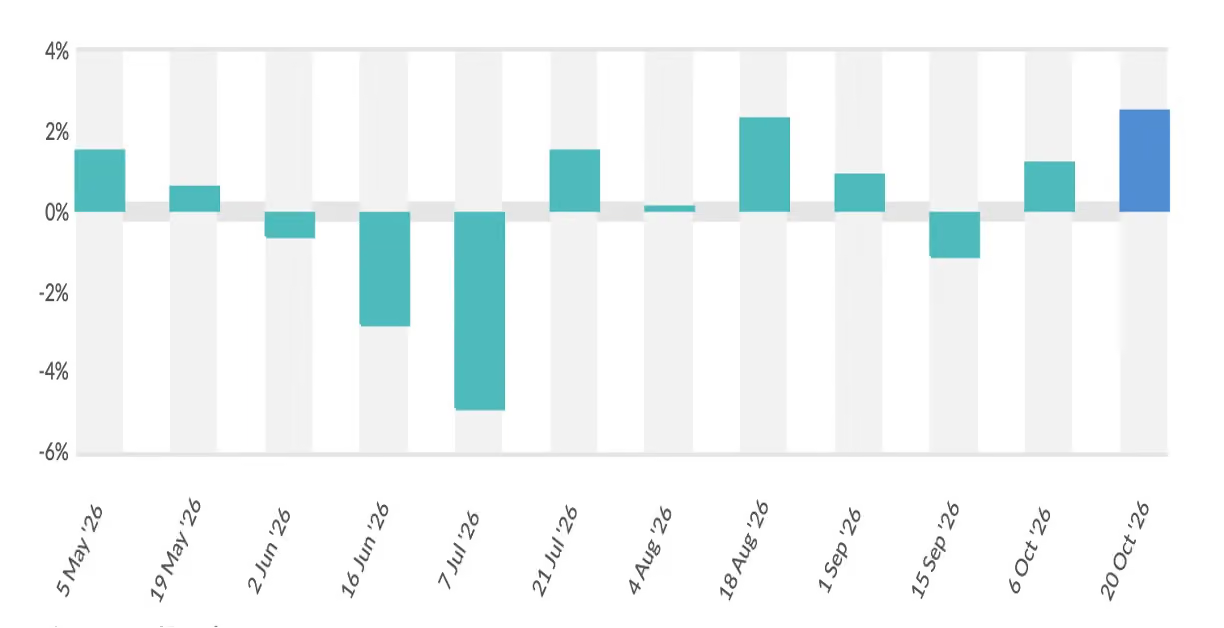
Milk deliveries have been easing since May 2026, with production declining more sharply following the spring flush.
Falling Milk Prices and Rising Input Costs Squeeze Producer Margins
The deterioration in dairy farm economics remains one of the most significant factors affecting milk supply.
Falling farmgate milk prices, alongside increasing input costs, have reduced the financial incentive for producers to maintain or expand production.
AHDB identifies several pressures affecting dairy businesses:
- Higher feed and forage costs: Prolonged dry conditions during summer reduced forage availability and increased demand for purchased feed.
- Rising straw prices: Reduced forage supplies have pushed up straw and forage prices across several regions.
- Energy and fertiliser costs: Geopolitical instability and disruptions to global supply chains continue to influence production costs.
- Lower milk returns: Declining milk prices have weakened margins, limiting farmers’ ability to absorb additional input inflation.
The combined effect is creating an increasingly challenging operating environment for dairy producers.
Summer Drought Continues to Affect Winter Feed Availability
Weather conditions have played a significant role in shaping this year's milk production outlook.
Although spring conditions supported strong grass growth and generally good first-cut silage yields, prolonged heat and dry weather during summer placed considerable pressure on forage stocks.
Many dairy farmers were forced to use winter forage reserves earlier than planned, raising concerns about feed availability during the coming months.
The relatively mild and dry autumn has provided some relief, allowing additional silage production into October and November.
However, AHDB cautions that forage harvested during these later cuts may have more variable nutritional quality than earlier-season silage.
This could create additional challenges for ration formulation, feed efficiency and milk yield during winter.
Bluetongue and Declining Cow Numbers Add Further Uncertainty
Beyond economic and weather-related pressures, bluetongue virus continues to influence milk production.
AHDB notes that the disease has affected production, although anecdotal evidence suggests vaccination uptake among dairy producers has been strong.
The declining dairy herd also remains a structural concern.
Lower numbers of youngstock entering the milking herd could constrain future production capacity, even if milk prices improve.
Interestingly, cumulative cattle throughput between January and October 2026 remained 2.8% below the previous year's level, including both dairy and beef cattle. However, slaughter numbers have increased in recent weeks.
What Does This Mean for the Dairy Industry?
The latest milk delivery figures highlight an important shift in the British dairy sector.
The industry is moving away from the exceptional supply growth recorded during the previous milk year towards a period of tighter production and greater uncertainty.
For dairy processors, declining milk availability could influence procurement strategies, processing utilisation and competition for milk supplies.
For producers, the central challenge remains balancing production costs with milk price returns while maintaining sufficient forage stocks and herd productivity.
Whether milk production stabilises will depend heavily on farmgate milk prices, input cost movements, weather conditions and the continuing impact of animal health challenges.
Outlook: Milk Supply Recovery Depends on Producer Economics
Great Britain's milk production outlook remains under pressure heading into the winter months.
AHDB's forecast of a 2.2% decline in milk supplies during 2026/27 underlines the scale of the adjustment facing the sector.
While October deliveries remained above the five-year average, the broader trend points towards weaker production and increasingly fragile farm margins.
The key question for the British dairy industry is no longer simply how much milk farms can produce, but whether current milk prices can sustain the production capacity needed for the future.
Source: Read full story here 12 Nov, 2026 Edited and Reported by
#UKDairy #MilkProduction #DairyIndustry
Never miss an important dairy update
Follow DairyNews7x7 on Google to get live milk prices, policy alerts, and daily headlines directly in your feed.