Fadnavis Denies Gokul Dairy Takeover Bid, Defends Government Nominees
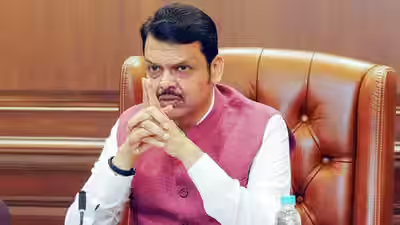
Maharashtra Chief Minister Devendra Fadnavis has rejected allegations that the state government is attempting to take control of Gokul Dairy, insisting that the intervention was intended to resolve a prolonged quorum deadlock in the cooperative's chairman election. His clarification comes amid political opposition, farmer protests and a legal challenge over voting rights granted to government-nominated directors.
Fadnavis Says Government Intervention Was About Quorum
Speaking to reporters in Nagpur on November 7, Fadnavis said neither the Congress-backed nor the Mahayuti-backed group had independently secured the numbers required to conduct the chairman election.
Under Gokul's bylaws, 14 directors are required for a quorum. The Congress-backed panel secured 13 elected seats, while Mahayuti won 12 in the October 19 board election.
Fadnavis argued that repeated failure to conduct meetings could eventually transfer powers to the Deputy District Registrar (DDR), potentially depriving elected representatives of their authority.
He maintained that government nominations were introduced to address this statutory problem and enable the cooperative to function. <Cite refs={["turn811540search0","turn811540search1"]}/>
Government Says Consensus Could Eliminate Need for Nominees
The Chief Minister said the government had no political interest in controlling an institution whose influence is largely confined to Kolhapur district and neighbouring areas.
He also suggested that the intervention could become unnecessary if the rival groups reached a consensus.
According to Fadnavis, the ordinance was a collective decision of the Mahayuti government following discussions involving Deputy Chief Ministers Eknath Shinde and Sunetra Pawar, legal experts and the Advocate General.
He rejected suggestions that disagreements within the ruling alliance had influenced the decision. <Cite refs={["turn811540search0","turn811540search2"]}/>
Why the Government's Nominees Became Controversial
The Maharashtra Cabinet approved an amendment on November 4 providing for five government nominees on the boards of eligible large cooperative societies.
Under the provision, four nominees receive voting rights, while one government officer is appointed without voting rights.
The amendment applies to qualifying federal cooperative institutions with annual turnover exceeding ₹500 crore, a category that includes Gokul Dairy.
Critics argue that the voting rights could change the balance of power established through elected board representation. <Cite refs={["turn811540search8","turn811540search9"]}/>
Gokul Dairy's Election Results and the Political Arithmetic
The October 19 board election produced a narrow advantage for the Congress-backed Samvichari Aghadi:
- Congress-backed panel: 13 elected directors
- Mahayuti-backed panel: 12 elected directors
- Government nominees: Four voting members under the ordinance
The addition of four voting nominees could potentially give Mahayuti a 16–13 advantage in the chairman election.
This arithmetic is at the heart of the controversy, as opponents maintain that nominated members should not determine leadership after the elected board has delivered a different mandate. <Cite refs={["turn811540search8","turn811540search9"]}/>
Fadnavis Responds to Former CJI Bhushan Gavai's Legal Opinion
Fadnavis also criticised the legal opinion issued by former Chief Justice of India Bhushan Gavai opposing the government's move.
The Chief Minister claimed that Gavai had not been informed about the quorum deadlock faced by the rival groups.
However, the legal opinion raised a separate concern: allowing nominated directors to vote in office-bearer elections through an ordinance shortly before a High Court-directed chairman election could interfere with the judicial process.
The dispute remains subject to judicial scrutiny, and the government's explanation does not itself settle the ordinance's legal validity. <Cite refs={["turn811540search8","turn811540search2"]}/>
Gokul Dairy Chairman Election: Outcome and Continuing Legal Debate
The chairman election subsequently took place on November 10, with Mahayuti-backed Rajesh Patil elected chairman in a 16–13 outcome.
The result has further intensified questions about the relationship between elected cooperative representation and government-appointed voting directors.
Although Fadnavis has maintained that the government's objective was to prevent administrative paralysis, critics continue to argue that the amendment could have wider implications for cooperative autonomy. <Cite refs={["turn811540news15","turn527911news9"]}/>
Cooperative Autonomy Versus Government Oversight
The Gokul dispute has evolved into a broader debate about governance in India's large dairy cooperatives.
For farmer-owned institutions, elected representation is central to the cooperative model. At the same time, governments argue that large organisations receiving public support require accountability and functioning governance structures.
The critical question is whether a measure introduced to resolve a governance deadlock can preserve democratic representation—or fundamentally change who controls a farmer-owned cooperative.
The outcome of the legal challenge could influence how government nominations and voting rights are applied across Maharashtra's cooperative sector.
Source: Read full story here 10 Nov, 2026 Edited and Reported by
#GokulDairy #IndianDairy #CooperativeGovernance #Maharashtra #DairyIndustry
Never miss an important dairy update
Follow DairyNews7x7 on Google to get live milk prices, policy alerts, and daily headlines directly in your feed.