Can farmland produce both food and renewable electricity without compromising agricultural productivity? An emerging approach known as agrivoltaics is exploring this possibility by installing elevated solar panels above cultivated land, allowing crops to grow beneath them while generating clean energy.
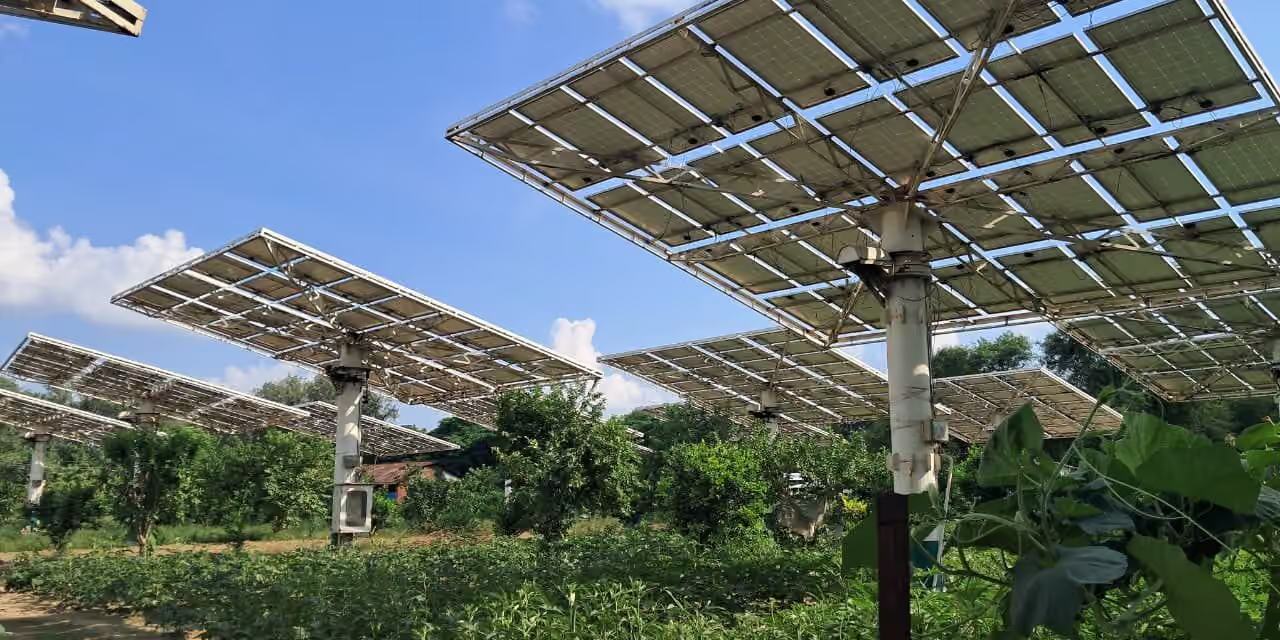
A project at Dayalbagh Educational Institute in Agra, Uttar Pradesh, demonstrates how solar power and agriculture can share the same land. Its AgriPV system, located on the institute’s Dairy Campus, has a capacity of 209 kilowatt-peak (kWp) and consists of 19 elevated solar-panel support structures, each carrying 32 panels.
A 2024 study of the project found that crops grown beneath the elevated panels were not significantly affected by shading. Researchers reported a total vegetable yield of 10 metric tonnes, exceeding the national average vegetable yield for an equivalent area of land, according to the report by EA WorldView.
Potential Benefits for Farmers
Agrivoltaics could offer farmers two potential sources of income: agricultural produce and electricity generated by solar panels. Depending on the crop, climate and system design, partial shade may also reduce water loss and improve growing conditions.
The article cites potential water savings of around 30% and yield improvements of 10% to 20% for certain crops. These benefits are not universal, however, and depend on factors such as panel height, spacing, sunlight, crop selection and water availability.
In Madhya Pradesh, farmer Anand Jain has integrated elevated solar infrastructure into agricultural operations. Panels installed approximately 11 to 13 feet above the ground allow tractors to move beneath them. The 4.5 MW solar plant can generate up to 25,000 units of electricity daily, with surplus power supplied to the grid. Crops grown at the site include strawberries, lettuce, broccoli, tomatoes and cabbage.
Significant Potential, but Practical Limits Remain
The article estimates that approximately 7.5 million hectares of Indian cropland could be technically suitable for agrivoltaics. It suggests that this land could potentially generate up to 20,000 terawatt-hours (TWh) of electricity, compared with projected Indian electricity demand of 5,250 TWh in 2050.
These figures represent technical potential rather than a practical deployment target. Actual viability depends on land suitability, agricultural requirements, grid connectivity, installation costs and local policy.
Elevated solar installations can also cost more than conventional ground-mounted systems, making financing a major challenge, particularly for smallholder farmers. Land-use classification, approvals and policies that recognise the combined agricultural and energy use of land will also influence adoption.
International Research Expands
Agrivoltaics is also being tested in Europe. In Germany’s Baden-Württemberg region, a research initiative has established pilot installations focused on fruit production, including apples, stone fruit and berries. Further research is examining applications in arable farming, grassland, livestock, vineyards and reforestation.
Other international projects are investigating combinations of solar power with horticulture, aquaculture, sheep farming and dairy farming. Their results underline the need to adapt installations to local agricultural conditions, skills, markets and financing arrangements.
Implications for the Dairy Industry
For dairy farms and processors, agrivoltaics could provide opportunities to generate renewable electricity while retaining agricultural land for productive use. Where site conditions permit, solar power could help meet electricity needs associated with milk cooling, water pumping, farm operations and other energy-intensive activities.
However, the Agra project is an example of solar panels combined with crop cultivation on a dairy-campus site; it should not be interpreted as evidence that every dairy farm can achieve the same results. Each installation requires an assessment of energy demand, land use, investment costs and agricultural requirements.
As India expands renewable energy capacity while seeking to protect food production and rural livelihoods, agrivoltaics offers a model worth evaluating. Its success will depend on whether well-designed systems can deliver reliable energy and sustained agricultural output on the same land.
Source: Dairynews7x7 13 Oct, 2026 Read full story here
#DairyIndustry #RenewableEnergy #Agrivoltaics #SolarPower #SustainableFarming #DairySustainability #DairyNews7x7
Never miss an important dairy update
Follow DairyNews7x7 on Google to get live milk prices, policy alerts, and daily headlines directly in your feed.