The American Academy of Pediatrics (AAP) has renewed its call for a nationwide ban on the sale and distribution of unpasteurised milk and raw dairy products in the United States, citing the risk of serious foodborne infections, particularly among infants, young children, pregnant women and people with weakened immune systems. The updated policy statement, titled “Consumption of Unpasteurized (Raw) Milk and Milk Products by Pregnant People and Children,” was published online on October 5, 2026, in the journal Pediatrics and is scheduled for inclusion in its November 2026 issue.
The guidance was prepared by the AAP Committee on Infectious Diseases and Committee on Nutrition, updating recommendations last issued in 2014 and reaffirmed in 2025. According to the AAP, raw milk from cows, goats and sheep can carry dangerous pathogens, including Listeria monocytogenes, Escherichia coli (E. coli), Salmonella, Campylobacter and Brucella, potentially causing severe illness, hospitalisation, miscarriage and death.
The updated guidance also highlights highly pathogenic avian influenza (H5N1) as an emerging concern, following evidence that the virus can enter milk from infected dairy cattle. Research indicates that H5N1 can reach high concentrations in milk and remain detectable in refrigerated raw milk for up to five weeks. During the 2024 US dairy outbreak, infectious H5N1 virus was detected in nearly one-quarter of raw milk samples collected in affected areas. Although no human infections from consuming raw milk contaminated with H5N1 have been confirmed, the AAP considers the virus a credible emerging threat.
The organisation also warns that raw dairy products, including fresh and soft cheeses, yoghurt and ice cream made from unpasteurised milk, can expose consumers to foodborne pathogens. Nearly half of illnesses associated with raw dairy consumption occur among people under 20 years of age, with a significant proportion affecting children under five, according to the AAP. Pregnant people face additional risks because foodborne infections can result in miscarriage, stillbirth, premature delivery or severe illness in newborns; the incidence of listeriosis during pregnancy is estimated to be 12–14 times higher than in the general population.
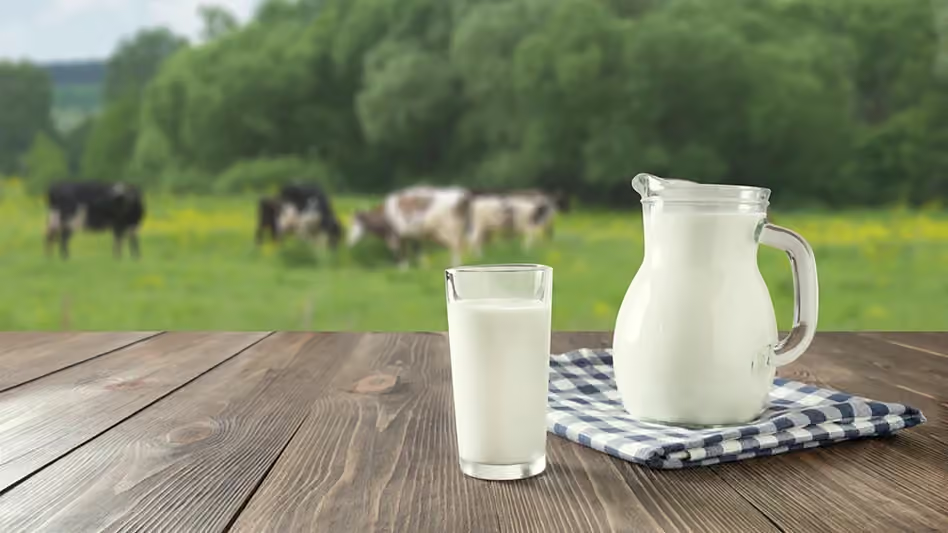
The AAP maintains that claims that raw milk improves immunity, prevents allergies or offers superior nutritional benefits are not supported by sufficient scientific evidence. Pasteurisation, which involves heating milk to a specified temperature for a defined period followed by rapid cooling, substantially reduces harmful microorganisms while preserving the essential nutritional benefits of milk. The policy statement notes that contamination can occur through several routes, including contact with animal faeces, contaminated hides, mastitis, environmental exposure, insects and human handling.
Before pasteurisation became widely established in the United States, unpasteurised dairy products contributed to outbreaks of diseases including typhoid fever, tuberculosis, diphtheria, streptococcal infections and brucellosis. Despite the established safety benefits of pasteurisation, raw milk sales remain legal in at least 27 US states, with rules varying by state. Federal restrictions on interstate sales do not prevent all forms of intrastate sales, and consumers may obtain raw milk through direct farm sales and other arrangements permitted under local laws. The renewed call comes amid growing consumer interest in raw milk, influenced partly by wellness trends, social media personalities and scepticism towards regulatory authorities.
Market research firm Circana reported that US raw milk sales increased by 17.6% in 2024. The AAP is urging healthcare professionals to discuss raw dairy consumption with families and provide evidence-based guidance, particularly for households with young children and pregnant people. For the dairy industry, the development reinforces the importance of pasteurisation, hygienic milk handling, microbiological testing, traceability and transparent consumer communication in protecting public health and maintaining confidence in dairy products.
Source: Dairynews7x7 17 Oct, 2026 Read full story here
#RawMilkSafety #DairyIndustry #FoodSafety #MilkPasteurisation #DairyQuality #PublicHealth #DairyNews
Never miss an important dairy update
Follow DairyNews7x7 on Google to get live milk prices, policy alerts, and daily headlines directly in your feed.