India’s baby formula market is estimated at ₹8,500–10,500 crore in 2025 and is projected to reach ₹22,000–28,000 crore by 2034, registering an indicative compound annual growth rate (CAGR) of 10–13% during 2025–2034, according to an industry analysis by IMARC Group. The report estimates that setting up a baby formula manufacturing plant in India could require an investment of ₹25 crore to ₹180 crore, depending on production capacity and technology, with an indicative payback period of 4–7 years.
A blending and canning unit may cost ₹25–50 crore, while a fully integrated spray-drying facility with an annual capacity of 1,000–3,000 tonnes could require ₹80–180 crore. The estimated revenue at full capacity ranges from ₹40 crore to ₹320 crore annually, with gross margins of 28–40%, net profit margins of 10–18% and an internal rate of return (IRR) of 16–26%. IMARC identifies rising urbanisation, increasing female workforce participation, growing middle-class spending on infant nutrition, expanding e-commerce and organised pharmacy networks, and opportunities to replace imports of premium and speciality formulations as key market drivers.
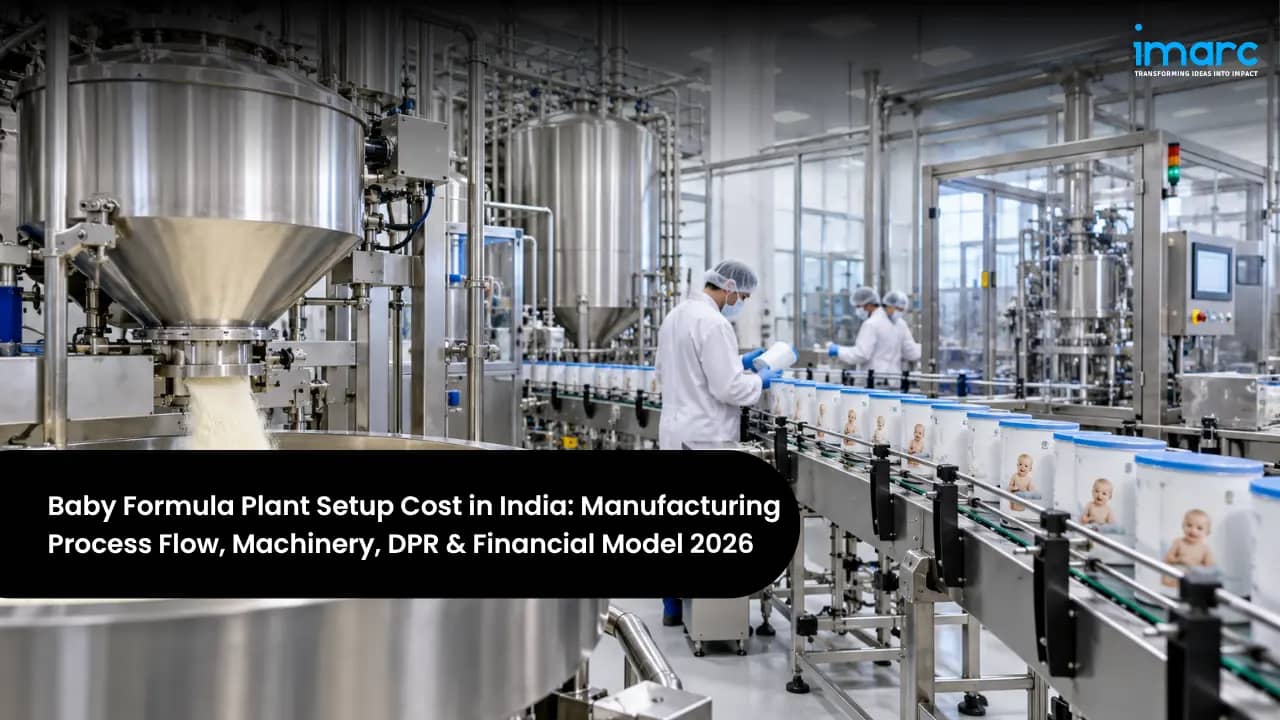
The product categories covered include Stage 1 formula for infants aged 0–6 months, Stage 2 follow-on formula for 6–12 months, Stage 3 growing-up milk for children aged 1–3 years, soy-based formula and partially hydrolysed formula. Premium and speciality products, including whey-protein-based formulations, remain substantially dependent on imports, while domestic manufacturers have opportunities to serve mass-market and value-premium segments. The manufacturing process involves raw-material testing, blending and standardisation, pasteurisation, evaporation, homogenisation, spray-drying, post-drying nutrient addition, cooling, sifting and nitrogen-flush canning.
Major raw materials include milk or milk powder, whey protein concentrate, lactose, vegetable oils, vitamin and mineral premixes, and packaging materials. Dairy raw materials account for an estimated 55–65% of operating expenditure, while vitamin, mineral and probiotic premixes contribute 7–11%, energy 8–12%, packaging 7–10%, and labour, quality control and overheads 8–12%. Recommended locations include Gujarat, Maharashtra, Punjab, Haryana, Rajasthan and Uttar Pradesh, considering dairy procurement, logistics, infrastructure and market access.
A mid-sized spray-drying facility may require 2–4 acres of land, 3,500–8,000 square metres of built-up area, 400–900 kVA of connected power and 15,000–40,000 litres of water daily. Key capital expenditure components include machinery (35–42%), civil construction (20–27%), utilities (10–14%), quality-control laboratories (6–9%), effluent treatment (4–6%), pre-operative expenses and approvals (3–5%), and contingency and working capital (7–10%).
Regulatory requirements include an FSSAI Central Manufacturing License, mandatory BIS certification under IS 14433, compliance with the Infant Milk Substitutes Act, State Pollution Control Board consents, boiler registration, Legal Metrology compliance and applicable labour and fire safety registrations. The report also highlights the importance of stringent microbiological controls, including testing for Cronobacter sakazakii and Salmonella, validated cleaning systems and product-recall preparedness.
Certification and approval processes may take 6–18 months, while the estimated period from investment decision to the first commercially sold batch is 18–30 months. Industry developments cited by IMARC include FSSAI labelling guidance issued in March 2024, Nestlé India’s reported capacity-enhancement investment at its Moga facility in January 2024, a September 2023 consultation on complementary infant foods, Abbott Nutrition’s manufacturing expansion in India in 2022, and the Production Linked Incentive Scheme for Food Processing Industries notified in July 2021, which provides eligible manufacturers with incentives over six years.
IMARC emphasises that actual project costs and returns will depend on the production process, product mix, raw-material prices, regulatory approvals, plant utilisation and distribution reach. All market, investment and profitability figures are indicative estimates and require project-specific feasibility assessment.
Source: Dairynews7x7 17 Oct, 2026 Read full story here
#BabyFormula #DairyIndustry #InfantNutrition #DairyManufacturing #FoodProcessing #IndiaDairyMarket #DairyNews
Never miss an important dairy update
Follow DairyNews7x7 on Google to get live milk prices, policy alerts, and daily headlines directly in your feed.