Latest Blogs
See More


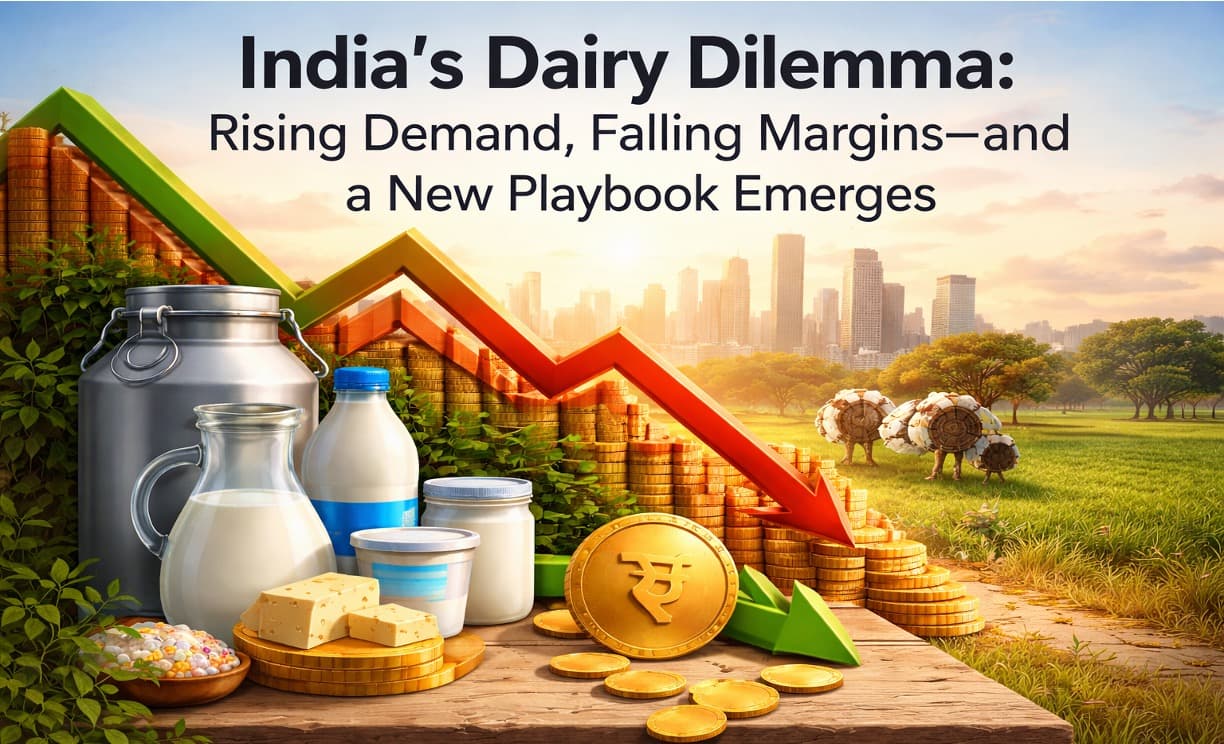
What McKinsey is signalling in its latest dairy playbook is not a cyclical wobble—it is a structural reset. The global dairy industry, as per its 2026 survey, is caught in a paradox: demand is growing, yet margins are under sustained pressure, forcing leaders to rethink both cost structures and growth engines simultaneously.
If you read this through an Indian lens, it feels less like a forecast and more like a mirror.
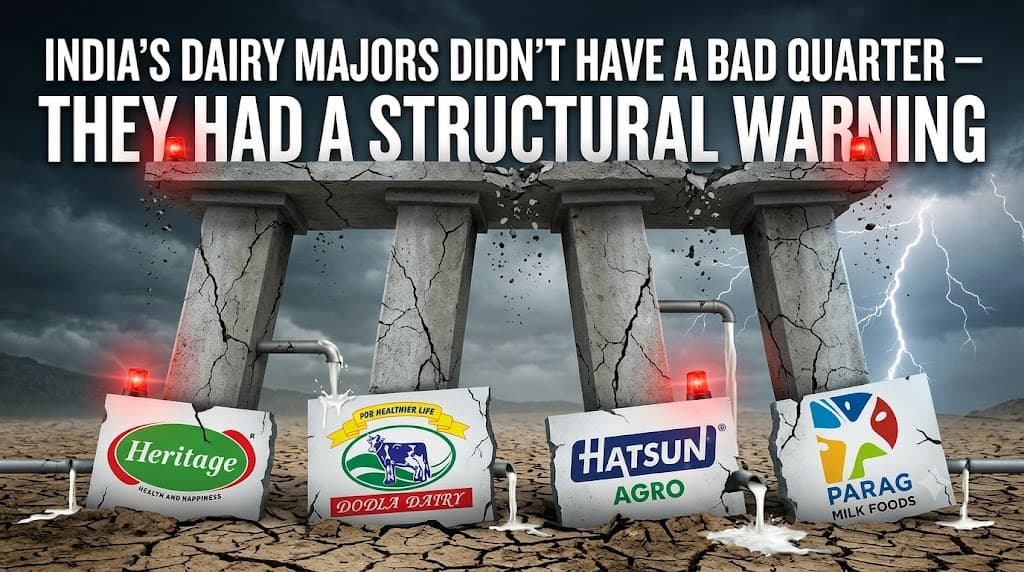
The first—and perhaps most immediate—insight is the intensity of cost inflation versus pricing power. McKinsey frames this as “margin pressure despite demand growth,” a condition that is already visible across listed Indian dairy names. Companies like Dodla Dairy, Hatsun Agro Product and Heritage Foods are facing a sharp rise in milk procurement, packaging and freight costs, with profitability hinging on their ability to pass on price increases.
This is exactly the squeeze McKinsey alludes to: input volatility outpacing realization growth. In India, the lag in price pass-through—often due to political sensitivity around milk inflation—makes this even more acute. The result is a structurally thinner margin profile for commoditized portfolios, particularly liquid milk.
The second theme is more strategic: growth is shifting from volume to value. McKinsey’s long-running thesis—visible even in earlier work—is that traditional dairy volumes stagnate while premium and differentiated categories expand disproportionately. (McKinsey & Company)
India is now entering that phase decisively. The emerging playbook for companies like Parag Milk Foods, Milky Mist Dairy and even cooperative giants like Amul is centered on protein, probiotics, functional nutrition and convenience formats.
Similarly, Hatsun Agro Product is pushing into protein-based offerings and expanding retail reach, betting on health-led consumption tailwinds.
Amul, India’s largest dairy cooperative, is aggressively expanding its protein production capacity, aiming for a fivefold growth within the next few years. This move is backed by a strategic marketing push during the Indian Premier League (IPL), targeting higher consumer awareness about daily protein intake. Currently producing around 1,000 tonnes of protein powder annually, Amul plans to ramp up capacity to 5,000 tonnes, citing surging demand for dairy-based proteins in sports nutrition and health-conscious segments.(Dairynews7x7)
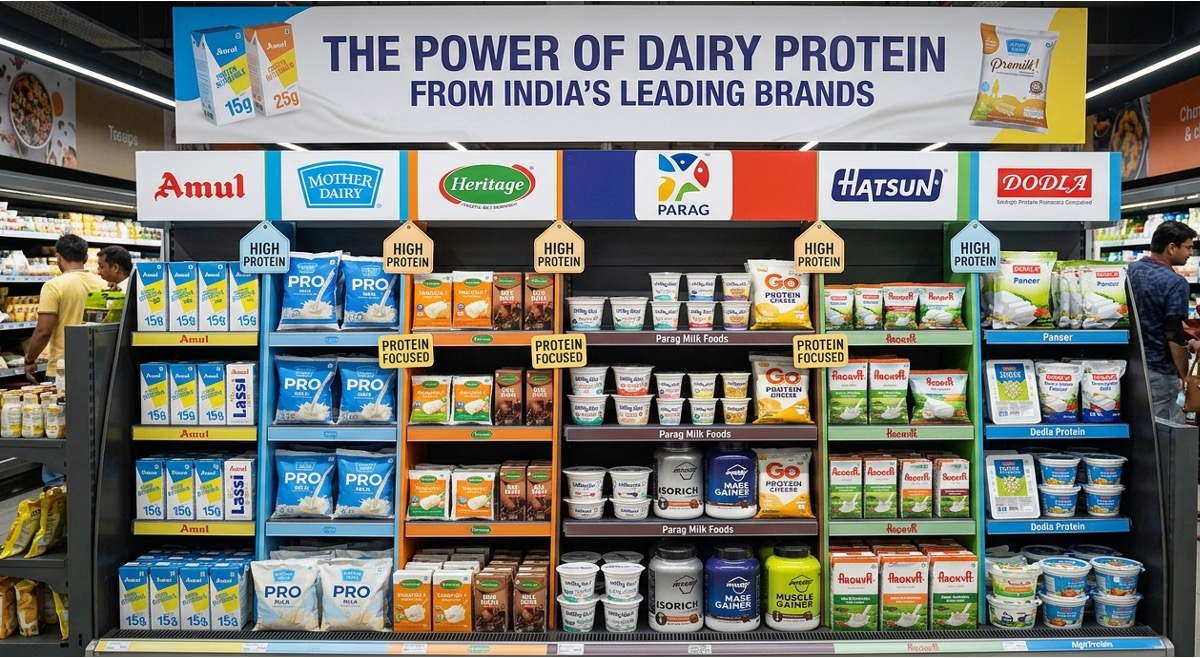
This aligns perfectly with McKinsey’s core message: future growth will come from premiumization, not commoditization.
The third insight is about portfolio reshaping and channel evolution. McKinsey highlights the need for sharper portfolios and new go-to-market models. In India, this is playing out in two distinct ways.
One, the rise of quick commerce and omnichannel dairy distribution. Brands like Mother Dairy, Amul and Parag Milk Foods are increasingly visible on platforms like Blinkit and Zepto, where freshness meets immediacy.
Two, geographic expansion through acquisitions and regional scaling. Dodla Dairy’s acquisition-led entry into eastern India is a case in point, reflecting the fragmented, state-level nature of India’s dairy economy.
McKinsey’s underlying argument—that growth requires new routes to market and sharper geographic plays—is almost tailor-made for India’s hyper-local dairy structure.
A fourth, subtler theme in the McKinsey survey is the importance of operational excellence and supply-chain resilience. Dairy, more than most FMCG categories, is a logistics business disguised as a consumer brand.
Here, Indian companies have a structural advantage—but also a structural burden. Deep procurement networks and farmer relationships, as seen with Amul or Mother Dairy, create defensibility. But they also lock companies into high fixed costs and exposure to milk price cycles.
Even for private players like Hatsun Agro Product, recent earnings commentary emphasizes end-to-end efficiency—from farmer engagement to last-mile distribution—as a core lever for sustaining margins.
This is McKinsey’s “protect margins” agenda in action: productivity, not just pricing, becomes the first line of defense.
Finally, there is the question of long-term competitive positioning. McKinsey’s survey implicitly points toward a bifurcation:
The risk, as McKinsey would argue, is strategic drift: trying to do both without clarity.
India’s dairy industry is not just entering a high-growth phase—it is entering a high-discipline phase. Growth is assured, but profitability is not.
The winners over the next decade will likely be those who:
And that, more than anything else, is the real message behind McKinsey’s 2026 playbook.
Source : Editorial by Kuldeep Sharma Chief editor Dairynews7x7 on recently published Mckinsey 2026 Playbook