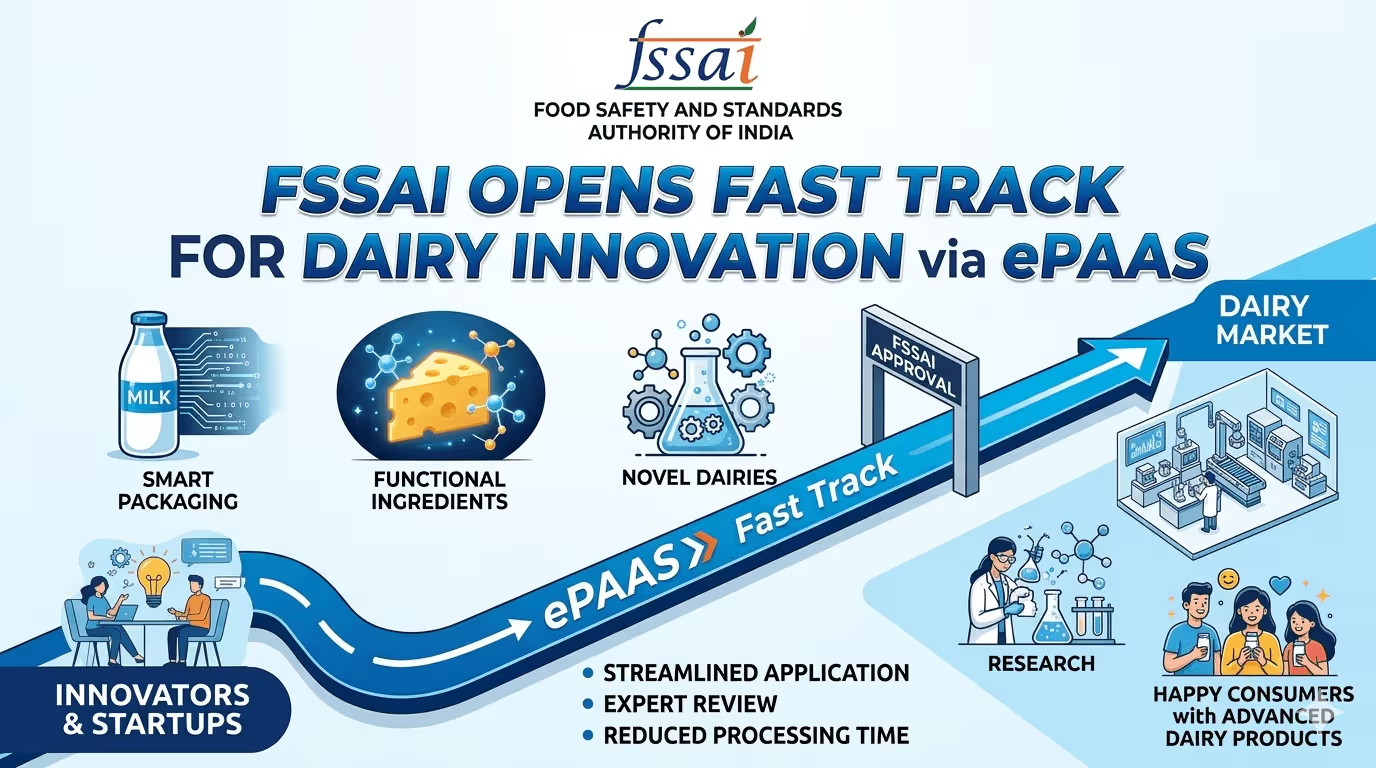
In a major move that could reshape innovation and premiumisation in India’s dairy sector, the Food Safety and Standards Authority of India (FSSAI) has operationalised a unified digital approval mechanism through the electronic Product and Claim Approval Application System (ePAAS). Effective June 1, 2026, all applications related to prior approvals, risk assessments, claims, novel ingredients, nutraceuticals, vegan endorsements, FSMPs and non-specified foods will have to be routed exclusively through this single-window platform.
For the dairy industry, this is far more than a procedural reform. It is potentially the beginning of a structured innovation ecosystem where new-age dairy products, functional ingredients, precision nutrition formats and scientifically validated claims can move faster from concept to commercialisation.
The Indian dairy sector has traditionally been conservative in product innovation due to regulatory ambiguity, long approval cycles and fragmented submission processes. With ePAAS, FSSAI is attempting to bring transparency, parity and digital tracking into approvals related to food ingredients, health claims and emerging food technologies.
The biggest opportunity lies in value-added dairy and wellness-oriented products. Dairy processors are increasingly exploring high-protein beverages, probiotic fermented dairy, immunity-focused products, medical nutrition, sports nutrition, lactose-free formulations, botanical-infused milk beverages and functional dairy snacks. Many of these categories require prior scientific evaluation, approval of ingredients or substantiation of claims.
Under the new system, applications for nutraceuticals, foods for special medical purposes (FSMP), approval of claims, novel ingredients and non-specified foods will now move through a unified digital interface. This could significantly reduce uncertainty for dairy companies investing in R&D and product development.
The implications for dairy startups could be even bigger. Until now, smaller innovators often struggled with regulatory navigation while developing differentiated products. ePAAS may democratise access by creating a standardised dossier-based approval mechanism where startups, cooperatives and large processors operate under a common framework.
Several manifestations of ePAAS are likely to emerge across the dairy value chain:
Functional Dairy & Nutraceuticals:
Dairy companies can now aggressively explore fortified whey beverages, probiotic yogurts, sleep-support milk drinks, gut-health fermented products, collagen-enriched dairy beverages and high-protein nutrition formats targeted at athletes, elderly consumers and diabetic populations. Any product carrying specific physiological or disease-risk reduction claims will now have a clearer regulatory pathway through ePAAS.
Medical & Clinical Nutrition:
The FSMP category presents a major untapped opportunity for Indian dairy companies. Specialized dairy-based formulations for patients suffering from malnutrition, digestive disorders, oncology recovery, geriatric nutrition and metabolic diseases may now witness greater innovation. India imports a large volume of clinical nutrition products; domestic dairy players could leverage their protein base and processing capabilities to enter this high-margin segment.
Botanical & Ayurveda Dairy Products:
The integration of Ayurveda Aahara approvals within ePAAS is particularly relevant for Indian dairy processors. Traditional concepts like turmeric milk, ashwagandha milk beverages, saffron whey drinks, herbal lassi, digestive buttermilk and immunity-focused fermented products could gain scientific legitimacy and regulatory clarity if supported with dossiers and evidence.
Alternative Ingredient Integration:
The notification also covers approvals for esters, derivatives, salts and chelates of vitamins, minerals and amino acids. This opens the door for advanced micronutrient fortification in dairy products, including bioavailable calcium systems, specialty amino acids, enhanced protein delivery systems and next-generation infant and geriatric nutrition products.
Premium Infant & Pediatric Nutrition:
The dairy industry may also see accelerated innovation in infant and pediatric formulations, especially around probiotics and specialized nutritional ingredients requiring prior approval.
Exports & Global Alignment:
One of the hidden advantages of ePAAS is that it pushes Indian dairy companies toward globally acceptable scientific documentation and dossier culture. As Indian dairy exports increasingly target premium and regulated markets, scientific substantiation and traceable approval systems will become critical differentiators.
However, the reform may also create a divide between innovation-ready dairy companies and traditional processors. The future winners are likely to be those who invest in regulatory science, clinical validation, ingredient research and structured documentation rather than relying only on conventional commodity dairy products.
For laboratories, food consultants and dairy R&D centres, this could open a completely new service ecosystem around claim substantiation, toxicological studies, ingredient validation, clinical documentation and regulatory advisory.
The notification also signals that FSSAI is preparing India’s food system for the next phase of food-tech evolution where dairy will intersect with nutraceuticals, preventive healthcare, precision nutrition and functional wellness.
India’s dairy sector has long dominated volumes. ePAAS may now become the bridge that helps it move toward higher-value science-led products.
Source : Regulatory review by Kuldeep Sharma May 7th 2026 chief editor Dairynews7x7.
Never miss an important dairy update
Follow DairyNews7x7 on Google to get live milk prices, policy alerts, and daily headlines directly in your feed.