Latest Blogs
See More
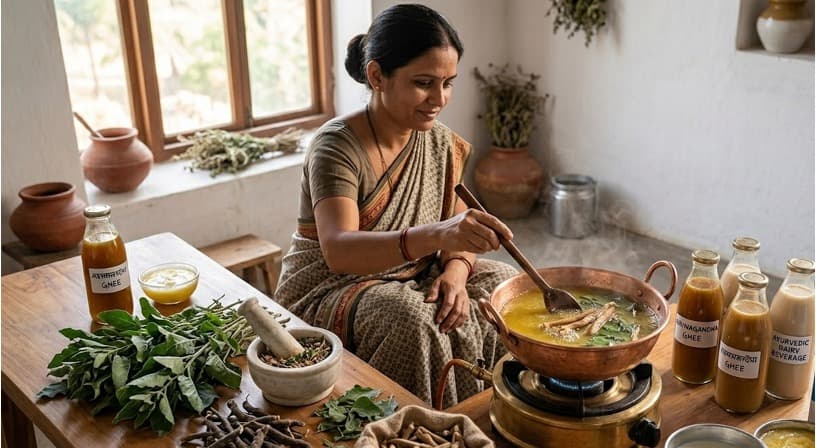
Ashwagandha has gradually made its way into the evolving Indian dairy landscape, though largely in a niche and emerging manner. Traditionally, the combination of milk and ashwagandha has been well accepted in Ayurveda, and this cultural compatibility is now reflecting in early-stage product innovation. While its presence in mainstream dairy beverages remains limited, there is visible interest in functional milk formulations and wellness-oriented products. A more established application is seen in the value-added ghee segment, where ashwagandha is incorporated into premium Ayurvedic “ghrita”-based offerings. However, these products largely operate at the intersection of traditional wellness and nutraceutical positioning rather than within the core dairy FMCG space.
The recent advisory issued by the Food Safety and Standards Authority of India brings an important regulatory clarification regarding the use of ashwagandha in food products. The advisory specifically restricts the use of ashwagandha leaves in any form—whether crude, extract, or otherwise—in food products. It is important to note that this is not a blanket restriction on ashwagandha itself, but a clear distinction on the permitted part of the plant. Traditionally and scientifically, the root of ashwagandha has been the accepted component for consumption, whereas the leaves have limited validation for food use. This advisory is therefore aligned with the broader regulatory approach of ensuring that only safe, validated, and standardized botanical ingredients are used in food applications.
From a dairy industry standpoint, the impact of this advisory is more nuanced than disruptive. Most organized and serious manufacturers, particularly those operating in the premium ghee or nutraceutical space, already rely on ashwagandha root extracts, which continue to remain permissible. As such, there is no immediate impact on well-formulated and compliant products currently available in the market. However, the advisory is likely to increase scrutiny on informal or unstandardized formulations, particularly in the small-scale or direct-to-consumer segment, where the use of different plant parts may not always be clearly defined or validated.
At the same time, this development could act as an additional checkpoint for the expansion of ashwagandha into mainstream dairy beverages. The category is still at an exploratory stage, and regulatory clarity—while helpful—also introduces tighter compliance requirements around ingredient sourcing, extract standardization, and product positioning. This may slow down rapid experimentation in the short term but will ultimately contribute to more credible and scientifically aligned product development. It also reinforces the distinction between food and nutraceutical categories, an area where dairy-based functional products often operate in a grey zone. The message is clear that only approved plant parts and formats can be used within the food framework, while anything beyond that may need to align with nutraceutical or AYUSH regulations.
In essence, this advisory should be seen less as a restriction and more as a course correction for the industry. The opportunity for ashwagandha in dairy remains intact, particularly in value-added ghee and emerging functional formats, but its future will depend on compliant and science-backed integration. Manufacturers will need to focus on the use of standardized root extracts, ensure alignment with existing regulatory frameworks, and build product propositions that are both effective and credible. For the Indian dairy sector, especially those exploring functional and wellness-driven innovation, this is a reminder that sustainable growth in such categories will require regulatory discipline to move hand in hand with product innovation.
Download FSSAI notification from here
Source : Policy insight by Kuldeep Sharma Chief editor Dairynews7x7.com