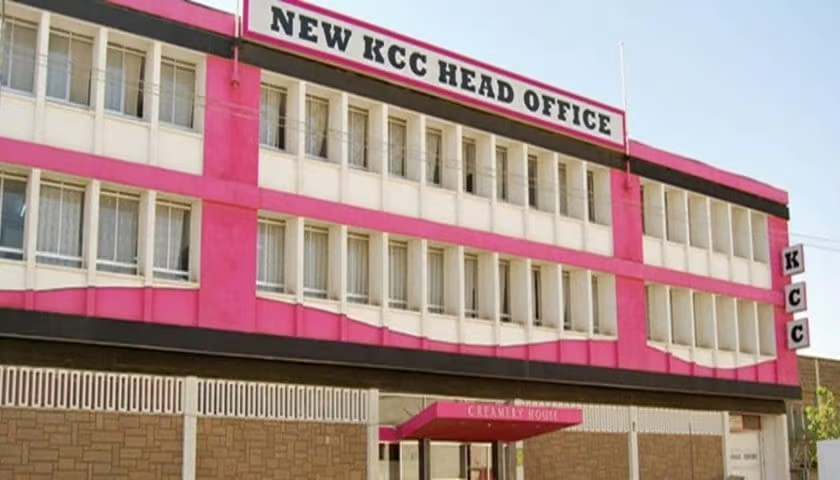
Dairy farmers in Kenya’s Murang’a County have reported delayed payments from New Kenya Co-operative Creameries (New KCC), with some farmers shifting milk sales to private processors to maintain cash flow and meet the costs of dairy production.
Farmers affiliated with New KCC said they had not received payment for milk supplied over the previous three months, prompting them to seek alternative buyers. David Kirika Mwangi, a dairy farmer in Murang’a, said repeated payment delays had influenced his decision to sell milk to private companies.
According to Mwangi, delayed payments create difficulties because farmers have ongoing expenses for feeding and maintaining their animals. He also called for greater government attention to the cost of raw materials used in animal feed.
The farmer suggested that reducing input costs could help producers grow more maize for silage. Stored silage could provide a feed reserve during drought periods and reduce the impact of seasonal feed shortages.
The payment delays come against a difficult financial backdrop for New KCC. For the year ended June 30, 2025, the company reported a net loss of approximately US$7.38 million (KES 953 million). It also received US$18.56 million (KES 2.40 billion) in government grants and received a going-concern warning for the fourth consecutive year.
New KCC’s financial deterioration has extended over several years. Its last reported meaningful pre-tax profit was in FY2020, when it recorded approximately US$736,000 (KES 95 million) in pre-tax profit on revenue of US$67.96 million (KES 8.79 billion), with a gross margin of 30.3%.
Revenue subsequently increased to approximately US$73.2 million (KES 9.46 billion) in FY2021, but pre-tax profit fell sharply to around US$20,900 (KES 2.7 million), while gross margin declined to 26.6%.
Since the FY2021 revenue peak, New KCC’s revenue has fallen by about 22% to US$56.9 million (KES 7.35 billion). The company has recorded four consecutive pre-tax losses totalling approximately US$32.96 million (KES 4.26 billion).
Its gross margin also declined from 26.6% in FY2021 to 5.4% in FY2024, when cost of sales accounted for 94.6% of revenue. The margin subsequently recovered partially to 15.4% in FY2025.
Milk collection has also remained below the company’s budget targets. New KCC collected between 82 million and 87 million litres annually for five consecutive years, compared with annual budget targets of 120–122 million litres. This represented approximately 68–72% of the targeted collection volume each year.
The payment difficulties are also occurring amid broader discussions about restructuring and the future ownership of New KCC. The Kenyan government has previously linked privatisation plans to efforts to address persistent payment problems and improve the company’s financial stability, while farmers and lawmakers have raised questions about ownership and the interests of dairy producers.
For dairy farmers, the situation highlights the importance of predictable milk payments alongside access to affordable feed and reliable markets. For New KCC, restoring financial sustainability and milk collection volumes remains closely connected to its ability to maintain farmer confidence and strengthen its position within Kenya’s dairy value chain.
Source: Dairynews7x7 27 Sep, 2026 Read Full Story here
#DairyIndustry #KenyaDairy #DairyFarmers #MilkProduction #DairyValueChain #AfricaDairy #DairyNews7x7