The American Academy of Pediatrics (AAP) has renewed its call for a ban on the sale and distribution of unpasteurized milk and dairy products, warning that raw dairy can expose consumers—particularly young children and pregnant people—to serious and potentially life-threatening infections.
The updated policy statement, “Consumption of Unpasteurized (Raw) Milk and Milk Products by Pregnant People and Children,” was published online in Pediatrics on October 5 and updates guidance issued in 2014 and reaffirmed in 2025. The statement was prepared by the AAP Committees on Infectious Diseases and Nutrition.
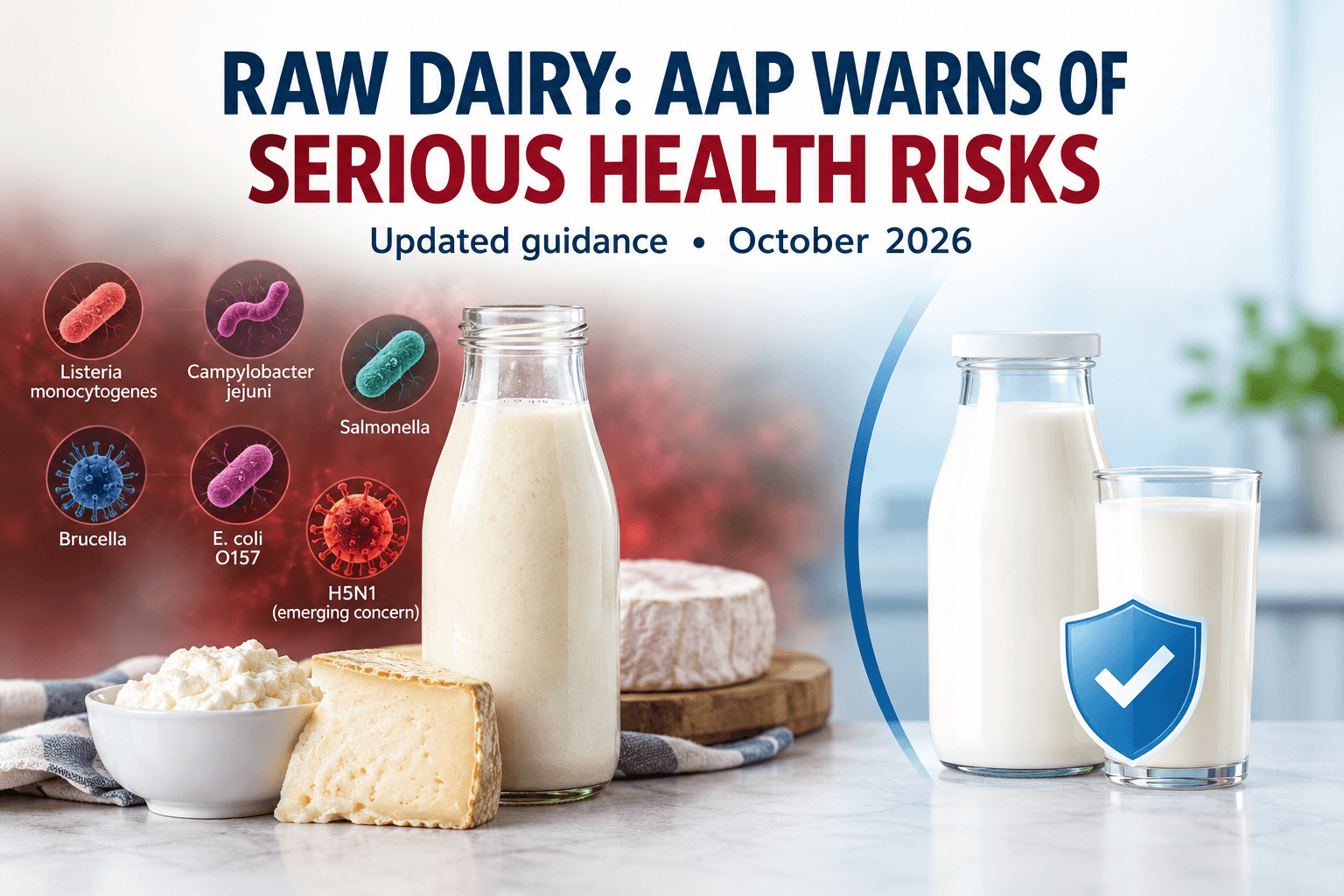
The AAP said unpasteurized milk, cheese and other raw dairy products are associated with pathogens including Listeria, E. coli, Salmonella, Campylobacter and Brucella. These infections can result in hospitalization, severe illness, miscarriage and, in some cases, death, with children, pregnant people and those with weakened immune systems facing greater risks.
H5N1 Adds Emerging Concern
The updated guidance also highlights highly pathogenic avian influenza (H5N1) as an emerging concern associated with raw milk.
According to the AAP, research indicates that H5N1 can pass from infected dairy cattle into milk, where the virus can reach high concentrations. It can also remain detectable in refrigerated raw milk for up to five weeks.
During the 2024 U.S. dairy outbreak, infectious H5N1 virus was detected in nearly one-quarter of raw-milk samples collected from affected areas. However, the AAP noted that no confirmed human cases of H5N1 infection from consuming raw milk have been reported to date.
Children and Pregnant People Face Higher Risks
The AAP highlighted that nearly half of illnesses associated with raw dairy consumption occur in people under 20, with a significant share involving children under five.
Pregnancy also increases the potential consequences of foodborne infection. The AAP estimates that listeriosis is 12 to 14 times more common during pregnancy than in the general population and says infection can result in miscarriage, stillbirth, premature delivery or severe illness in newborns.
AAP Challenges Raw Milk Health Claims
The updated policy also addresses claims that raw milk offers superior nutritional or health benefits.
According to the AAP, available scientific evidence does not support claims that raw milk provides greater health benefits than pasteurized milk. The organisation states that pasteurization substantially reduces infection risks without removing the essential nutritional value of milk.
The AAP recommends that infants, children and pregnant people consume only pasteurized milk and dairy products.
Policy Call, Not a Nationwide Ban
The AAP's recommendation is a policy position rather than a newly enacted U.S. federal ban. Raw milk products remain legal to sell and distribute in at least 27 U.S. states, according to the updated guidance.
For the dairy industry, the renewed guidance puts greater focus on pasteurization, pathogen control, consumer education and traceability as the raw-milk debate continues. The emergence of H5N1 as an additional concern also highlights the importance of monitoring biological risks across the dairy supply chain.
Source: Dairynews7x7 07 Oct, 2026 Read full story here
#DairyIndustry #FoodSafety #RawMilk
Never miss an important dairy update
Follow DairyNews7x7 on Google to get live milk prices, policy alerts, and daily headlines directly in your feed.