Canadian dairy farmers are facing growing uncertainty after a 50% U.S. tariff on a range of Canadian products, including dairy, disrupted cross-border sales. The additional duties took effect on August 22, with Canadian dairy exports to the United States subsequently slowing sharply.
The impact is being felt through Canada's milk-marketing system rather than through farmers directly choosing which products to export. Farmers supply milk into provincial systems, which allocate it to processors based on demand, including demand for products destined for export markets. When processors lose access to U.S. buyers, demand for milk can also come under pressure.
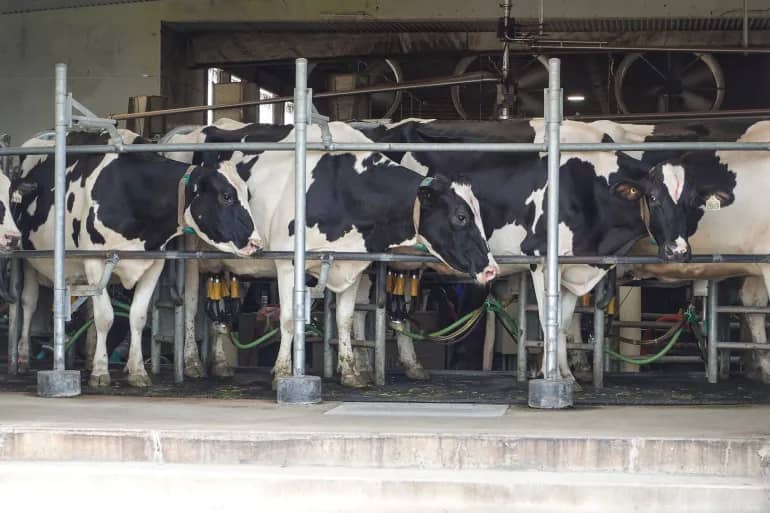
At Prime Acres Ltd. in Abbotsford, British Columbia, farmer Casey Pruim produces around 28,000 litres of raw milk every second day. His herd of approximately 330 cows is milked three times a day, with most of the milk consumed domestically but a portion ultimately linked to products sold in the U.S. market. Pruim also chairs the British Columbia Dairy Association, which represents about 400 dairy farmers in the province.
The immediate challenge is that milk production cannot be adjusted as quickly as international demand. Pruim told Al Jazeera that if processors lose U.S. demand and require less milk, the resulting reduction in demand can flow back through the provincial milk pool. He warned that, in a severe scenario, farmers could face milk disposal or reductions in herd size.
Dylan Kruger, director of public affairs at BC Dairy, said there remains considerable uncertainty about the eventual impact of the tariffs and whether products previously sold in the U.S. can be redirected to other markets. Finding alternative markets or developing higher-value products could help absorb some of the displaced supply, but such adjustments cannot happen immediately.
The U.S. measures have also triggered a Canadian response. Canada introduced retaliatory tariffs effective September 8, covering U.S. products including dairy. The measures include a 50% tariff on milk, cream and whey products and a 25% tariff on many U.S. cheeses, according to the report.
The U.S. government has said its dairy-related measures are intended to address what it describes as discriminatory Canadian tariff-rate-quota allocation policies affecting U.S. dairy products. A September 8 presidential proclamation maintained the additional duties and also announced that certain Canadian products would become subject to import restrictions from September 29.
For Canada's dairy sector, the situation illustrates the difficulty of absorbing sudden changes in export access. Milk is a highly perishable agricultural product, and farmers cannot immediately reduce production when processing or export demand falls.
The developments also highlight the importance of market diversification for dairy processors and exporters. While alternative destinations and higher-value dairy products could provide outlets for displaced supply, the Canadian experience shows how quickly trade-policy changes can move from international negotiations into farm-level supply-chain pressures.
Source: Dairynews7x7 22 Sep, 2026 Read full story here
#DairyIndustry #DairyTrade #CanadaDairy #MilkMarket #GlobalDairy #DairyExports #DairyNews7x7