Label the Added, Honour the Milk: Front-of-Pack Labelling and Indian Dairy
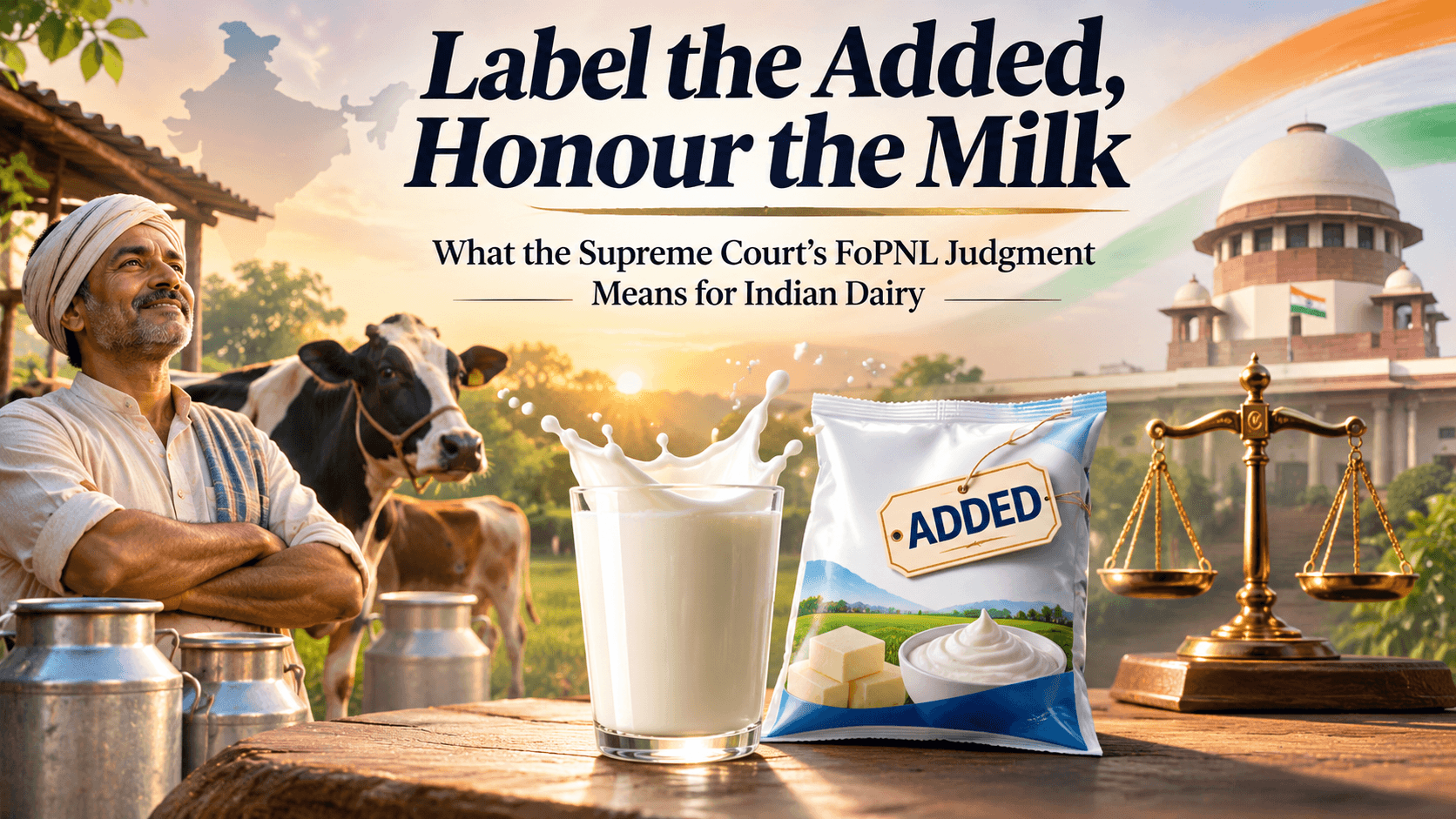
The Supreme Court's front-of-pack labelling judgment counts milk fat and lactose. That is not a defeat for dairy. It is a ten-week chance to write a milk-only exemption into India's food law.
Kuldeep Sharma, Chief Editor | DairyNews7x7
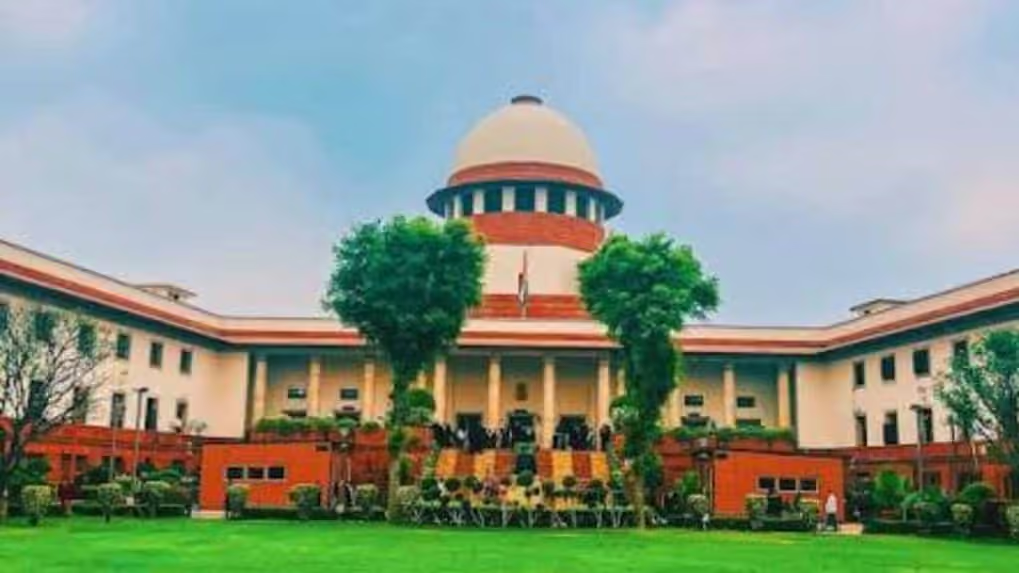
On National Milk Day, 26 November 2026, the Supreme Court told FSSAI to bring in front-of-pack labelling for packaged food: a red hexagon wherever total sugars, saturated fat or salt run high. Many in our industry read the headline and saw a threat. Milk fat is about two-thirds saturated. Lactose is a sugar. On those two facts alone, every pack of paneer, cheese and butter in India could soon carry a warning.
After analysing all 131 pages of 3S and Our Health Society v. Union of India. I come away with the opposite view. This is a good judgment for public health and, read carefully, a good judgment for milk. It hands dairy every legal tool it needs to keep plain milk and its products free of a front-of-pack warning. Whether we use those tools in the next ten weeks is up to us.
The Court begins with a line every dairy plant should frame: "The label is the only witness at the point of sale." A witness must tell the truth. A red hexagon on a pouch of toned milk or a block of paneer would be a false witness, against the cheapest complete protein most Indian families can buy and against the 8 to 10 crore farm households who produce it.
Where I was wrong, and the Court was right
In August I argued in these pages that FSSAI should label what we add, not what the cow gives, and never treat milk fat as "added fat". The Court has now chosen total sugars and saturated fat as the nutrients of concern for front-of-pack labelling. On the question of measurement, I accept its reasoning.
No laboratory can separate added fat or sugar from what was already in the food, and a warning that cannot be tested cannot be enforced. "Added fat" appears in no other country's labelling law. FSSAI's own consultative group had settled on total sugars and saturated fat back in 2021, before the DGI 2024 table pointed it elsewhere. The Court found no good reason for that U-turn, and neither do I.
So the inherent-versus-added argument cannot live in the threshold any more. It must move to the exemption list. That is exactly where Canada, the model FSSAI itself chose, put it.
Composition shows what is at stake. Against the 5 g of saturated fat per 100 g in the 2022 draft, which the Court quoted, every solid dairy product we make would trip the front-of-pack labelling threshold.
| Product (per 100 g or ml) | Fat (g) | Saturated fat (g) | Total sugars (g) | Protein (g) |
|---|---|---|---|---|
| Toned milk (3% fat) | 3.0 | 1.9 | 4.7 (lactose) | 3.2 |
| Full cream milk (6% fat) | 6.0 | 3.8 | 4.9 (lactose) | 3.4 |
| Plain dahi (toned) | 3.0 | 1.9 | ~4 | 3.2 |
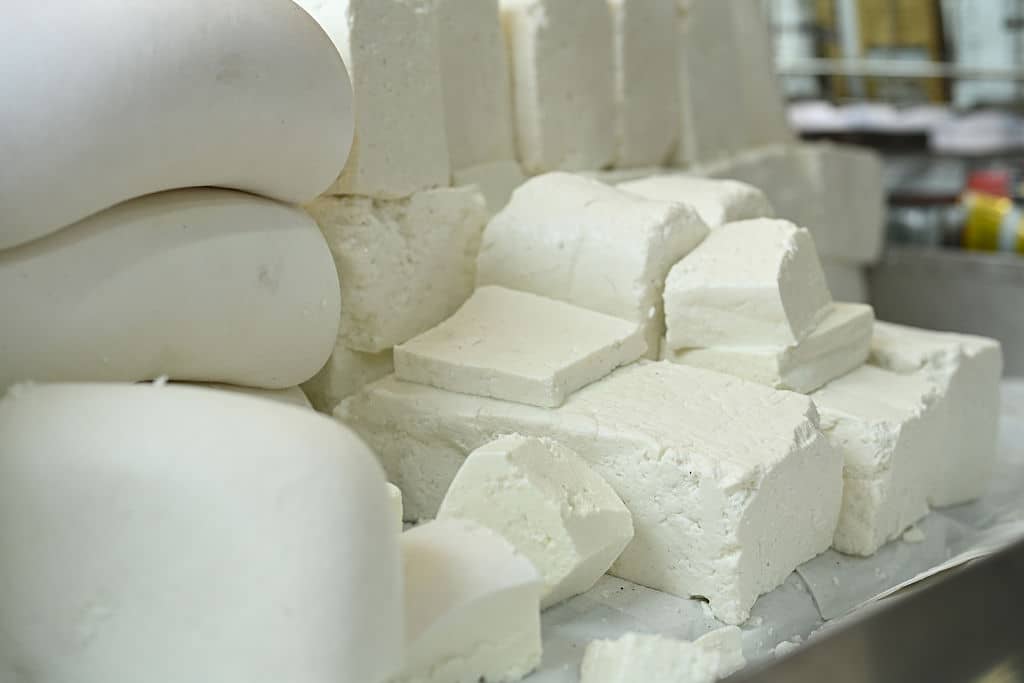
| Paneer | 20+ | 13 | ~2 | 18 |
| Natural cheese (cheddar type) | 33 | 21 | <1 | 25 |
| Butter | 80 | 51 | <1 | <1 |
| Ghee | 99.5 | 62 | 0 | 0 |
Ghee is already on FSSAI's proposed front-of-pack labelling exemption list. Paneer, cheese, butter and dahi are not. Plain milk is one low liquid threshold away from the same fate.
Four doors the Court has opened on front-of-pack labelling
The exemption list. FSSAI's affidavit of 28 August proposed exempting single-ingredient foods and foods "inherently rich in fat, sugar or salt, such as ghee". The Court called that list inclusive, not exhaustive, and directed FSSAI to produce a "robust and exhaustive" list with clarity and reason. Plain milk is a single-ingredient food. Paneer, dahi, chhena, butter and natural cheese are milk with a culture, an acid, rennet or salt. How "single-ingredient" is defined is now an open question, and it is ours to argue.
The thresholds. The Court warned that limits set too low would put a warning on almost every pack and breed "label fatigue". It cited a study of 44,109 packaged-food records in which 94.1 per cent crossed at least one DGI 2024 threshold, and said the thresholds on record fall into that trap. A front-of-pack labelling rule that brands plain milk is exactly the over-reach the Court has rejected.
International practice. The judgment leans on Section 18(2)(a)(ii) of the FSS Act, which obliges FSSAI to take international standards into account and to give reasons when it departs from them. Canada's front-of-pack labelling also measures total saturated fat and sugars, yet it fully exempts plain milk, plain yogurt and cheese as calcium sources, and butter because a symbol on it would be redundant. In 2024 Canada lowered its calcium bar so that more cheese, yogurt, kefir and buttermilk qualify. India cannot borrow Canada's warning and leave behind Canada's dairy exemption without reasons.
The right to food. The Court reads Article 21 to protect safe and nutritious food, not just calories. It recalls its own directions that mid-day meals carry 8 to 12 g of protein a day, and milk, eggs or substitutes on three to five days a week. Front-of-pack labelling that frightens families away from milk would work against the Court's own jurisprudence.
One caution keeps us honest. The Court also said no exemption may let a product that deserves a warning slip through. Our ask must therefore be narrow: plain dairy only. Not flavoured milk, not sweetened lassi or yogurt, not ice cream, not mithai, and never analogues.
Protein is the real shortfall
The Court speaks of a "double burden": undernourished children on one side, a surge of diabetes, obesity and hypertension on the other. Front-of-pack labelling is the right tool for the second burden. It must not deepen the first.
India's protein problem is one of quality. A CEEW analysis of NSSO 2023–24 data found that nearly half the protein Indians eat at home comes from cereals, against the 32 per cent NIN recommends. The richest tenth eat 1.5 times the protein of the poorest. Cereal protein is short of lysine and digests poorly; research by Kurpad and colleagues found rural and tribal diets fall short on protein quality even where the grams look adequate.
Milk protein is complete and easily digested. For hundreds of millions of vegetarian Indians, milk, dahi and paneer are its main source. Milk fat carries vitamins A, D, E and K, and lactose is simply milk's own carbohydrate. National availability has reached 485 g per person per day (BAHS 2025), but it is badly uneven between states and between rich and poor.
Front-of-pack labelling changes behaviour; that is its purpose. Canadian dairy processors cited a poll in which one in three shoppers said they would avoid any product carrying a front-of-pack warning. Aim that effect at sugary drinks and fried namkeen and the nation gains. Aim it at a half-litre pouch of toned milk and a poor family loses its best protein, while a cereal-heavy plate gets heavier.
The farmer at the other end of the label
India produced 247.87 million tonnes of milk in 2024–25, more than any other country. Behind that number stand 8 to 10 crore farm households, most with two or three animals, a large share of them women. For them milk is the weekly cash that pays school fees and buys fodder. Front-of-pack labelling that tells the city shopper milk is a warning food travels back down the chain as lower demand, lower procurement prices and, in a flush season, milk poured away.
This front-of-pack labelling judgment is about honest labels, and honesty cuts both ways. The Court recalled its earlier concern over synthetic milk. FSSAI's draft of September 2026 would stop non-dairy products being sold as paneer, and it should be finalised. The same honesty that strips the word "paneer" from a vegetable-fat analogue must keep a red hexagon off real paneer. If plain dairy is branded and analogues are not, front-of-pack labelling would push shoppers towards the very products the Court distrusts.
FSSAI already has a positive mark for this. Its milk logo, the white drop on a blue square, was created to set genuine dairy apart from analogues. Let exempted milk-only products carry it, so the shelf tells two clear stories: red for what is added, blue for what is milk.
What FSSAI should write into the front-of-pack labelling rule
Direction (d) asks for an exemption list with clarity and reason. Here is one that meets the Court's test and closes the loopholes the petitioner fears.
- Define "single-ingredient" to include milk-only foods: made only from milk or milk constituents, with nothing beyond permitted cultures, coagulants and, for butter and cheese, common salt within FSSAI standards.
- Name them: pasteurised and UHT milk of every standardised grade, plain dahi, unsweetened buttermilk and chhach, paneer, chhena, plain khoa, cream and malai, butter, ghee and natural cheese.
- Make it self-cancelling: add sugar, sweetener, flavour, colour or any non-milk fat, and the exemption ends.
- Keep the rest out: flavoured and sweetened dairy, ice cream, frozen desserts, dairy mithai, processed cheese and spreads are judged on their numbers like any other food.
- Never extend it to analogues, however fortified. Canada drew the same line.
- State the science in the regulation itself: protein quality, low calcium intake and a cereal-heavy national diet, as Section 18(2)(a)(ii) requires.
- Publish an SKU-level impact study before notification.
- Use direction (h) to teach schoolchildren that plain milk is protein and calcium, and that the hexagon flags what was added to it.
The matter returns to the Court in ten weeks for FSSAI's progress report. NDDB, the Indian Dairy Association, the cooperative federations and private processors should file joint, evidence-backed submissions with FSSAI now, so that the draft front-of-pack labelling regulations carry a milk-only definition when they go back before the bench.
Label what we add, exempt what the cow gives
On front-of-pack labelling, the Supreme Court has done the country a service. It has insisted on a warning that is visible, testable and hard to game, and it has refused to let FSSAI drift. Dairy should support that, loudly. Our quarrel was never with the hexagon. It was with the hexagon landing on the wrong food.
The Court has given us the exemption list, a warning against low thresholds, a legal duty to follow international practice and a right to food that includes nutrition. With those, plain milk and its products can remain what they have always been in Indian homes: the protein on the plate and the income in the village.
Label what we add. Exempt what the cow gives. Then let the red hexagon do its work on the foods that earn it.
Kuldeep Sharma is Chief Editor of DairyNews7x7 and a dairy industry consultant with Suruchi Consultants. Earlier in this series on front-of-pack labelling: Label What We Add, Not What the Cow Gives and Supreme Court Orders Separate HFSS Warnings on Food Packs.
Nov 26th 2026..National Milk Day
Never miss an important dairy update
Follow DairyNews7x7 on Google to get live milk prices, policy alerts, and daily headlines directly in your feed.