FAO Dairy Price Index Falls 1.1% as Butter and Cheese Slump; Sugar Surges 6.6%
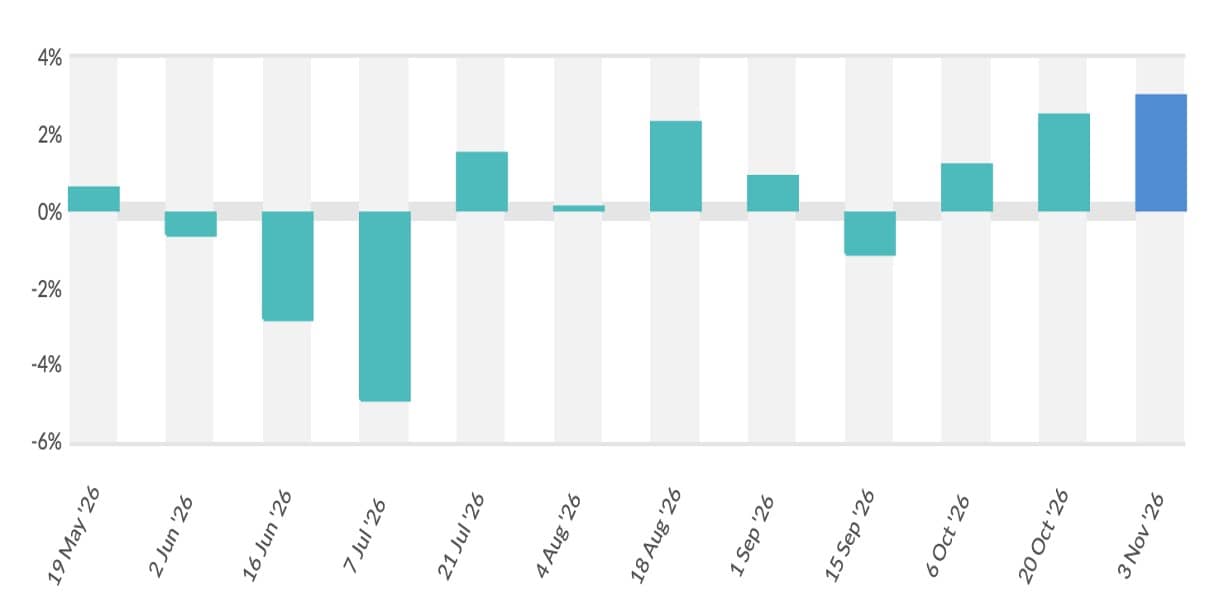
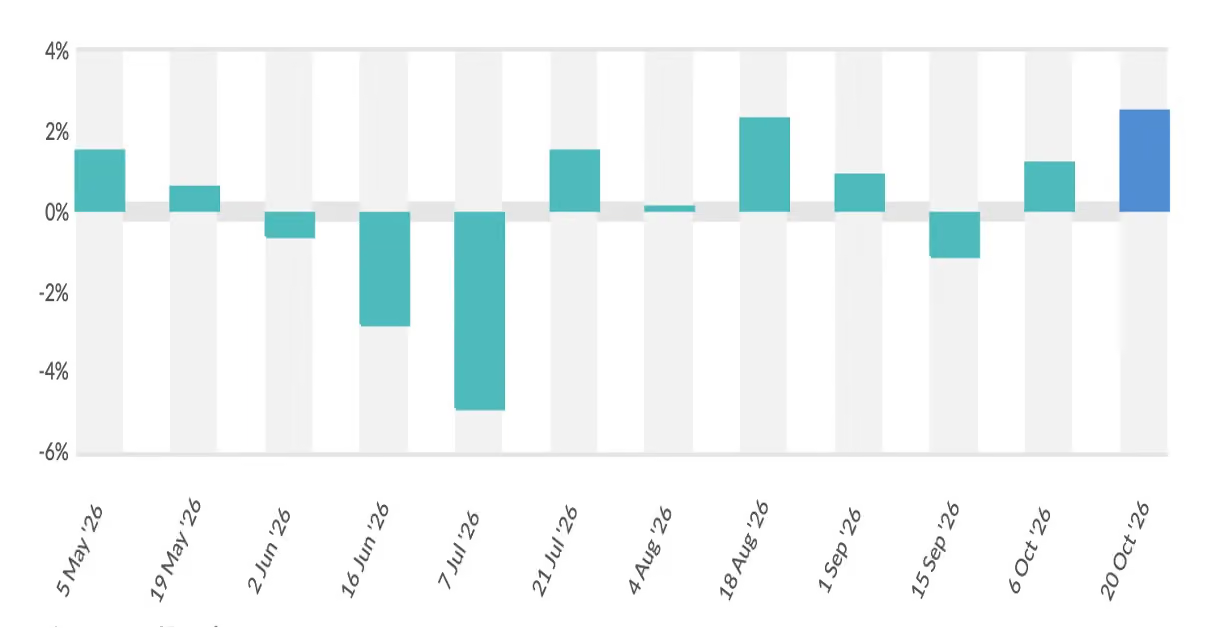
The FAO dairy price index fell again in October as butter and cheese prices weakened on ample supplies. According to the Food and Agriculture Organization of the United Nations, reported by Agriland, the index averaged 117.8 points in October 2026, down 1.3 points or 1.1% from September and 16.9% lower than a year earlier.
What Drove the FAO Dairy Price Index Down
The decline was driven by butter and cheese, which outweighed further gains in milk powders. Both products weakened because of ample export supplies and subdued buying interest, especially in the European Union, where butter stocks are high. Competitive export offers from the United States added further downward pressure.
The year-on-year falls are steep. Butter prices were 31.1% lower than in October 2025, and cheese prices were down 29.3%.
Milk Powders Buck the Trend
Milk powders moved in the opposite direction. Skim milk powder (SMP) prices rose sharply, up 45.8% from a year earlier, supported by strong import demand and limited supplies available for prompt delivery. Whole milk powder (WMP) prices edged higher on firmer Oceania quotations and were broadly unchanged from a year earlier.
This split between fats and powders has been a feature of global dairy markets in recent months. Weak butter and cheese prices reflect strong milk output in Europe and the US, while powder prices are supported by buying from Asia, the Middle East and North Africa.
The Wider FAO Food Price Index
The overall FAO Food Price Index averaged 133.9 points in October, down 1.2% from September but 5.9% higher than a year earlier. It remains 16.4% below its March 2022 peak.
- Cereals: down 4.5%, as wheat fell after four monthly increases and maize eased from a three-year high.
- Meat: down 1.2% to 125.5 points, with lower pig, sheep and bovine prices.
- Vegetable oils: up 0.3%, led by soybean and sunflower oil.
- Sugar: up 6.6% to 121.3 points, its fourth monthly rise and highest level since December 2024, on harvest disruptions in Brazil and concerns over output in India, the EU and Thailand.
How the FAO Dairy Price Index Is Calculated
The FAO dairy price index tracks international prices for four main traded dairy products: butter, cheese, skim milk powder and whole milk powder. Prices are weighted by each product's share of world trade, and the index is expressed relative to a 2014–2016 base of 100. A reading of 117.8 therefore means global dairy prices are still about 18% above that base period, even after the recent decline.
Because butter and cheese carry significant weight, sharp falls in these two products can pull the FAO dairy price index down even when milk powder prices are rising, as happened in October.
Outlook for Global Dairy Prices
The direction of the FAO dairy price index over the coming months will depend on milk output in the main exporting regions. Strong production in the EU and US has kept fat supplies ample, while New Zealand has just completed a record season. On the demand side, buying from China, Southeast Asia, the Middle East and North Africa remains the key support for powders. El Niño-related weather risks in Oceania and South Asia could tighten supply later in the season.
What the FAO Dairy Price Index Means for Exporters
For major exporters such as New Zealand, the EU and the US, a falling FAO dairy price index means weaker returns on butter and cheese, partly offset by stronger powder prices. New Zealand, which exports large volumes of WMP and SMP, is better placed than the EU, where butter and cheese dominate. Fonterra's recent decision to raise its milk price forecast reflects that powder strength, as covered in our report on Fonterra's annual results.
Why It Matters for India
Indian dairy prices are driven mostly by domestic supply and demand, because India's dairy imports are restricted. However, global prices still matter. Low international butter and cheese prices make it harder for Indian exporters to compete overseas, while higher SMP prices can support returns on Indian powder exports. At the same time, Indian ghee and butter prices are rising on local shortages, a contrast with the global glut covered in our report on India's ghee price surge.
The key takeaway: The FAO dairy price index fell 1.1% in October on cheaper butter and cheese, while skim milk powder prices climbed sharply, showing a clear split between global dairy fats and powders.
Read the report on Agriland and the FAO release.
Source: Agriland, FAO | DairyNews7x7
Never miss an important dairy update
Follow DairyNews7x7 on Google to get live milk prices, policy alerts, and daily headlines directly in your feed.