Latest Blogs
See More
Indian Dairy News

DairyNews7x7
Global Dairy News

DairyNews7x7
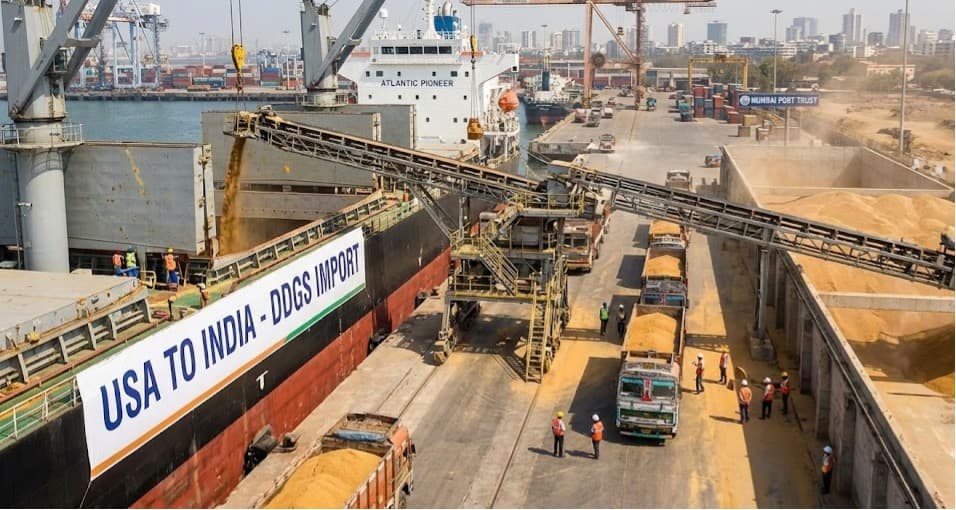
What India has agreed upon, instead, is to grant greater market access through elimination or reduction of tariffs for other American farm produce: Distiller’s Dried Grains with Solubles (DDGS), soyabean oil, red sorghum for animal feed, tree nuts, fresh and processed fruits, wine and spirits, and “additional products”.
These, on the face of it, don’t represent significant threats to Indian farmers, given their limited domestic acreage or production. But it may not be as simple. To start with, the “additional products” are not specified.
Then take DDGS, which is basically a byproduct of ethanol manufactured from corn and other cereal grains. After ethanol is produced from fermentation of the starch in corn or rice and separated through distillation, the wet grain mash that remains is further dried. The resultant so-called DDGS is a protein-rich material that is a relatively low-cost alternative livestock feed ingredient.
The protein source that Indian poultry, cattle and aqua feed makers normally use is the residual de-oiled cake (DOC or meal) obtained after extraction of oil from soyabean, cottonseed, groundnut, mustardseed or rice bran. These are much costlier than DDGS.
Oilseed processors in India are currently selling soyabean DOC containing 46% protein at Rs 43-44 per kg. As against this, the ex-distillery price of DDGS from rice with 42% protein content is only around Rs 30/kg. It is lower, at Rs 24-24.5/kg, for corn DDGS having 27% protein content. Thus, even after adjusting for protein content, DDGS is far cheaper than soyabean meal. And with imports from the US, it could work out still cheaper.
To put things into perspective, the US is the world’s largest producer and exporter of corn as well as ethanol and DDGS derived from this feed grain. While India has shut itself to imports of American corn and ethanol for fuel use (i.e. blending in petrol and diesel), it has agreed to open up to DDGS from the US.
Divya Kumar Gulati, chairman of CLFMA (formerly Compound Livestock Feed Manufacturers Association) of India, has welcomed the move.
“Maize DDGS from Indian distilleries has aflatoxins (produced by certain fungus moulds growing on the grain) of 100-200 parts per billion, making it unsuitable as feed ingredient for broiler chickens and dairy cattle. It can, at best, be used in feed for egg layer birds in limited quantities. The corn DDGS from the US has less than 20 parts per billion, which is the generally accepted regulatory safety threshold for aflatoxins,” he told The Indian Express.
In other words, the Indian poultry, dairy and aqua industry will benefit from the increased availability of cheaper and probably better-quality DDGS from the US. That the DDGS is derived from genetically modified (GM) corn is another matter though. The US, in 2024 alone, exported some 12.2 million tonnes (mt) of DDGS valued at $3.1 billion. This was in addition to 1.91 billion gallons of ethanol ($4.3 billion) and 61.7 mt of corn ($13.7 billion).
India’s livestock sector could also gain from reduced or zero duty imports of red sorghum (jowar) for animal feed. The US is the world’s biggest producer and exporter of sorghum, at a projected 11.1 mt and 5.4 mt respectively for the 2025-26 marketing season. US sorghum exports in 2024 were worth over $1.6 billion.
The main loser in the bargain would be Indian soyabean farmers and processing industry, apart from local ethanol grain-based distilleries that sell DDGS from maize and rice as byproduct. Every 100 kg of soyabean that is processed yields roughly 18 kg oil and 82 kg DOC. The trade agreement with the US has allowed imports of DDGS as well as lower-duty soyabean oil. If domestic realisations on soyabean DOC and oil come down as a result, it might hurt farmers who grow the leguminous oilseed on some 13 million hectares – mainly in Madhya Pradesh, Maharashtra and Rajasthan.
The effective import duty on crude soyabean oil is now 16.5%. India, in 2024-25 (November-October), imported 4.8 mt of soyabean oil primarily from Argentina (2.9 mt), Brazil (1.1 mt), Russia (0.3 mt) and the US (0.2 mt). That could, however, change with American soyabean oil attracting lower tariff. The US mostly exports whole soyabean.
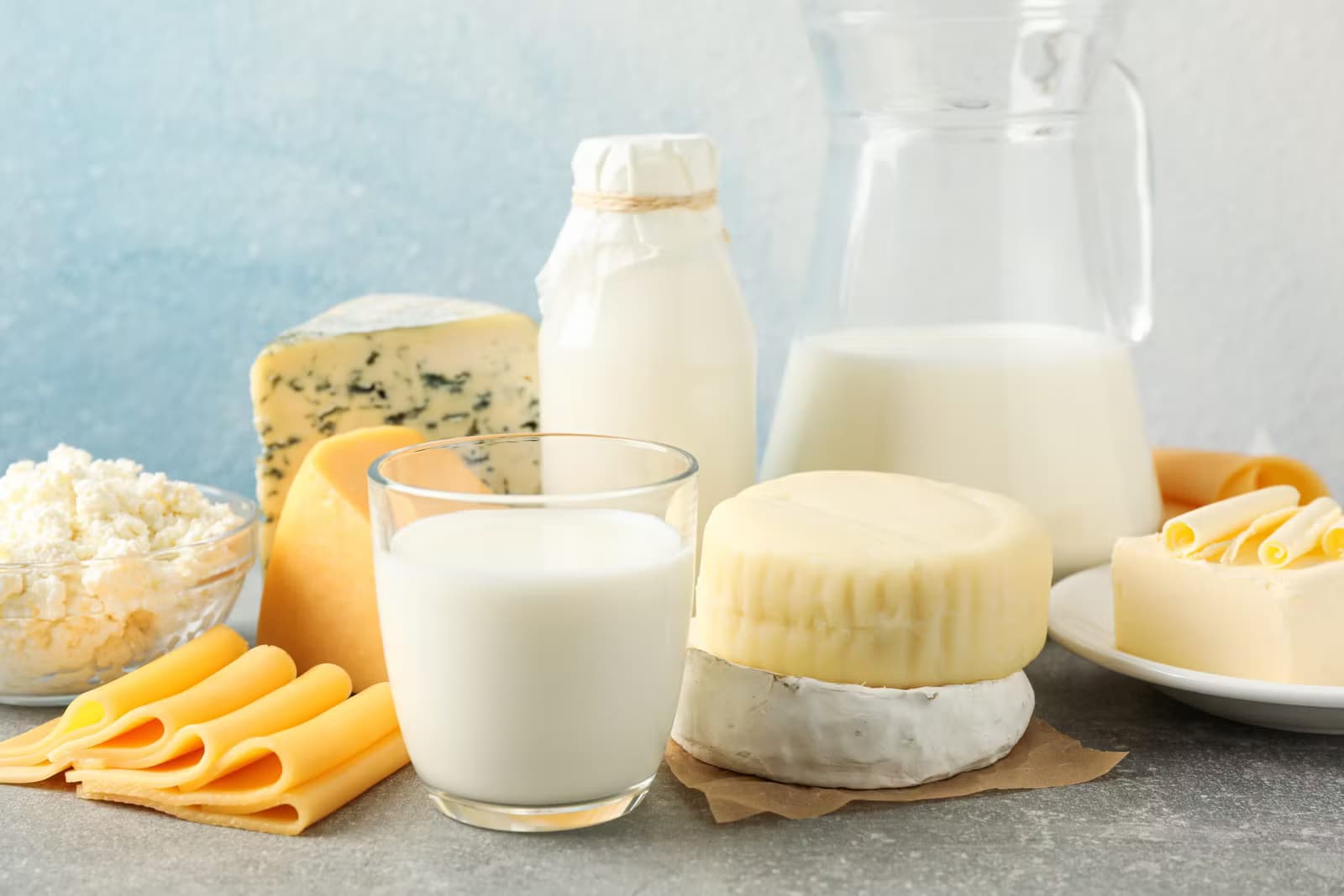
With India standing its ground on not liberalising imports of either American corn or soyabean (which are both GM) and also dairy products (which are produced from cows that are fed on internal organs, blood meal, tissues and other bovine-based formulation ingredients), one can expect more US produce to come in the form of DDGS, ethanol and sorghum.
The joint statement significantly has a line on India agreeing to “address long-standing non-tariff barriers to the trade in US food and agricultural products”. Whether these pertain to India’s current restrictions on imports of GM crops and dairy products remains to be seen.
The import concessions that India has given on other agricultural products may not impact its farmers much. India has an import duty of 100% on walnuts, Rs 35/kg on in-shell and Rs 100/kg on shelled almonds, and 10% on pistachios. Removing these will not cause great harm, given that India isn’t a major producer of dry fruit.
India is, on the other hand, the biggest market for American tree nuts. The US exported an estimated $10 billion worth of tree nuts in 2025. India’s share in that was $1.5 billion. That number could further go up with the reduction, if not elimination, of import duties.
Source : Dairynews7x7 Feb 7th 2026 First Published here