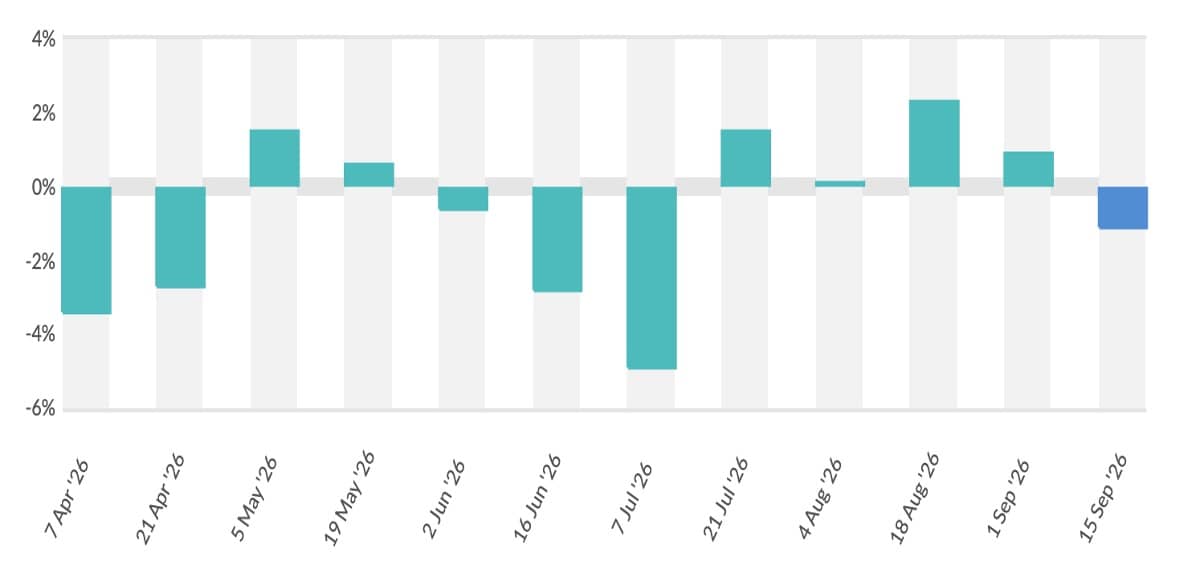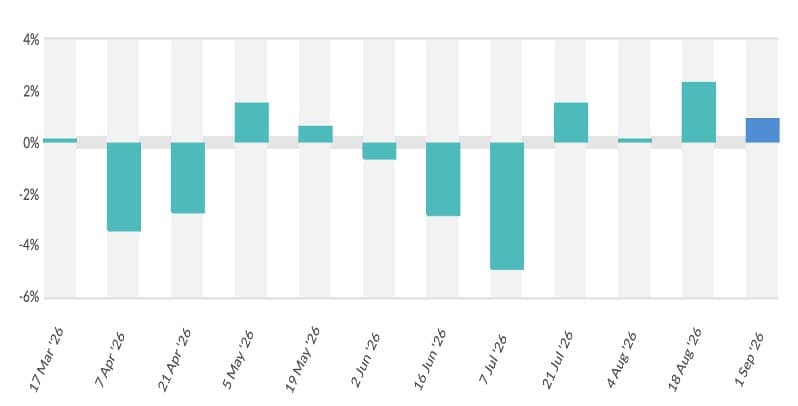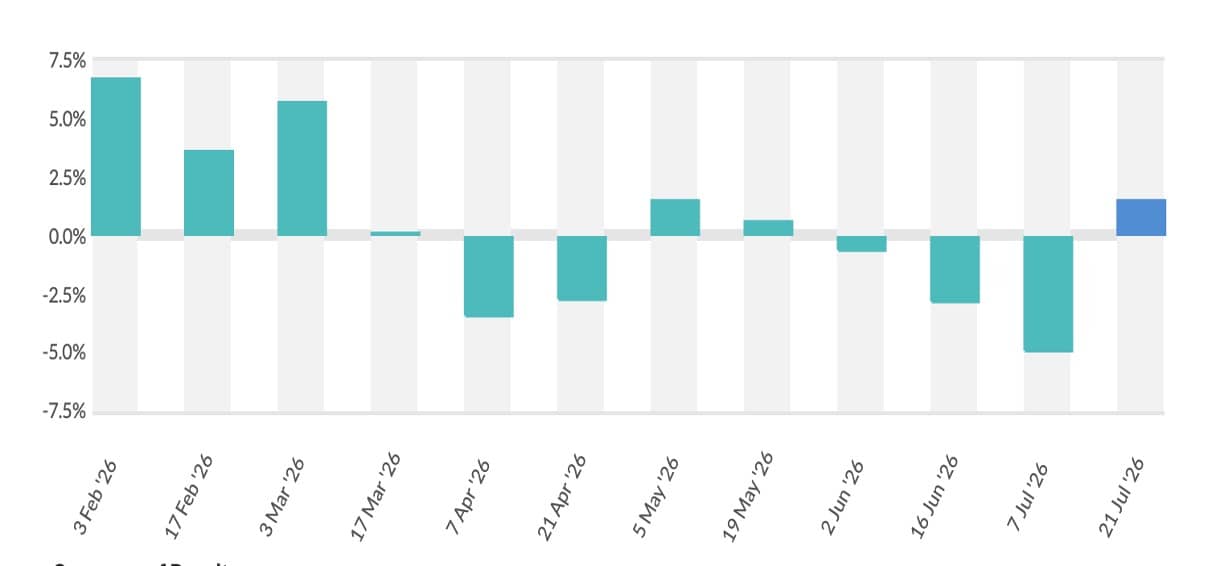
The latest Global Dairy Trade (GDT) Event 408, held on 21 July 2026, has brought a welcome respite to the global dairy market after three consecutive weak auctions. The GDT Price Index increased by 1.5%, reversing the sharp 4.9% decline recorded in Event 407, while the average winning price improved to USD 3,793/MT. The auction witnessed active participation from 167 registered bidders, of which 117 emerged as successful buyers. A total of 26,889 MT of dairy products changed hands over 17 bidding rounds during a trading session lasting 2 hours and 46 minutes, against an offered supply ranging from 24,745 MT to 30,422 MT. Although the overall increase in the index appears modest, the auction reflects a significant shift in buying behaviour, with powders once again attracting stronger demand while cheese and butter continued to face pressure.
The recovery was led primarily by milk powders, reaffirming that this segment continues to determine the direction of global dairy trade. Whole Milk Powder (WMP), the largest traded commodity on the GDT platform, gained 1.6% to USD 3,486/MT, while Skim Milk Powder (SMP) increased by a stronger 2.8% to USD 3,234/MT. The improvement in powder prices indicates renewed procurement by importers after the sharp correction witnessed in Event 407. Buyers appear to have considered the lower price levels attractive enough to re-enter the market, particularly for medium-term inventory replenishment. The recovery in SMP was especially encouraging, suggesting improving confidence among industrial users and food manufacturers.
Among dairy ingredients, Butter Milk Powder (BMP) emerged as the star performer of the auction, recording a remarkable 10.5% increase to USD 4,737/MT. The sharp rise highlights robust demand from recombination plants, processed food manufacturers and ingredient users across developing markets. Lactose also strengthened by 2.0% to USD 1,721/MT, reflecting sustained demand from infant nutrition, pharmaceutical and specialised food sectors. These gains indicate that value-added dairy ingredients continue to enjoy resilient demand despite broader economic uncertainties.
The performance of the fat segment remained mixed. Anhydrous Milk Fat (AMF) recovered marginally, rising 1.1% to USD 6,405/MT, suggesting that premium fat demand has not disappeared entirely. Butter, however, declined by a further 0.6% to USD 5,303/MT, indicating that buyers remain cautious at prevailing price levels. The earlier premium enjoyed by butter has gradually narrowed as milk production improves in New Zealand and Europe and buyers increasingly limit purchases to immediate requirements rather than speculative stocking.
Cheese markets continued to remain under pressure. Cheddar registered the sharpest decline among all major dairy commodities, falling 6.5% to USD 3,586/MT, reflecting subdued foodservice demand and abundant export supplies from Western producers. In contrast, Mozzarella increased by 1.3% to USD 3,940/MT, supported by relatively steady demand from pizza chains, quick-service restaurants and food processors. The contrasting performance of Cheddar and Mozzarella once again demonstrates that global cheese markets are increasingly responding to end-use demand rather than moving in tandem.
The broader message emerging from Event 408 is that global dairy markets are no longer being driven by a single commodity or a single importing nation. Instead, demand is becoming increasingly diversified across product categories and geographical regions. Buyers are showing renewed confidence in milk powders, particularly WMP and SMP, while remaining selective in fats and traditional cheese products. This selective buying pattern suggests that importers are purchasing according to actual consumption requirements rather than building large inventories.
China continues to remain an important participant in the market, but its procurement strategy has become far more disciplined than during previous dairy cycles. Rather than aggressively rebuilding inventories, Chinese buyers are making tactical purchases whenever prices become attractive. At the same time, Southeast Asia, the Middle East, North Africa and several African countries are emerging as increasingly important destinations for milk powders and dairy ingredients. These regions continue to support demand for recombination, bakery, confectionery and nutrition applications, reducing the global market's historical dependence on a single buyer.
From the perspective of developed dairy-exporting countries, Event 408 reflects a market that is gradually moving towards equilibrium. Milk production in New Zealand is seasonally improving ahead of the new production cycle, European milk collections remain relatively comfortable and US dairy supplies continue to support exports. Consequently, supply availability has improved compared with the beginning of the year. However, the recovery in powder prices suggests that buyers believe the recent correction has been sufficient and that current price levels offer reasonable procurement opportunities.
The GDT index has displayed four distinct phases since the beginning of 2026. The year commenced with a strong rally during January and February, driven by tight milk supplies and exceptionally firm milk fat prices. This was followed by a correction during March and April as supply conditions improved. Events 403 and 404 indicated the beginning of market stabilisation, while Events 405, 406 and particularly Event 407 witnessed renewed weakness led by powders and cheese. Event 408 now signals that the correction may have found temporary support, although the recovery remains selective rather than broad-based. The market is therefore transitioning from a period of rapid price movements towards one characterised by commodity-specific fundamentals.
Looking ahead over the next two to three months, the outlook appears cautiously optimistic for milk powders but more restrained for fats and cheese. Whole Milk Powder is expected to trade within USD 3,450–3,650/MT, while Skim Milk Powder may remain in the range of USD 3,200–3,400/MT with a slightly firmer bias if Asian buying continues. Butter is likely to remain under pressure around USD 5,200–5,400/MT, whereas AMF may fluctuate between USD 6,300 and USD 6,500/MT. Cheese markets, particularly Cheddar, may continue to face headwinds until foodservice demand improves and export inventories reduce. Overall, the GDT index is expected to remain stable to marginally firm over the coming months, although significant upside will depend on stronger Chinese imports and any weather-related production disruptions in Oceania.
For India, Event 408 offers cautiously positive signals. The recovery in WMP to USD 3,486/MT and SMP to USD 3,234/MT improves sentiment in international dairy markets, although export competitiveness for Indian processors remains constrained by relatively high domestic milk procurement prices. Nevertheless, the stabilisation in global powder prices reduces the risk of further international price erosion and may encourage Indian exporters to explore selective opportunities in neighbouring markets and the Middle East. The continued softness in butter prices is unlikely to materially affect India's domestic ghee market, where strong consumer demand and tight milk availability continue to support prices. With procurement remaining competitive across major milk-producing states, India's dairy sector is expected to remain largely driven by domestic consumption rather than export demand.
Overall, GDT Event 408 marks an important turning point after the sharp correction witnessed earlier in July. The recovery may not yet represent the beginning of a sustained bullish cycle, but it clearly demonstrates that buyers have returned to the powder market at lower price levels. The latest auction confirms that global dairy markets are becoming increasingly selective, with powders regaining leadership while fats and cheese continue to adjust to changing consumption patterns. If this buying momentum continues over the next few auctions, the market could gradually transition from correction towards a more balanced and sustainable phase of growth.
Editorial on latest auction at Global Dairy trade Event 408 July 21st 2026 by Kuldeep Sharma Chief editor Dairynews7x7