
You must not use wood to put out the fire: Organic milk story in India
Last week I participated in a panel discussion organized by AIOI in a seminar on Organic Dairying in India. It was a wonderful experience attending the same and listening to the great insights of the key stakeholders. India is the largest producer of milk in the world with 7% of the contaminated milk. Aflatoxins and antibiotics and the major contaminants in Indian milk.
Farmers however, use different types of chemicals in fodder production. These may include pesticides and fertilizers for growing the fodder which is fed to the cows. Such chemicals have also contaminated the water in the area which is again fed to animals. Hormones, antibiotics and aflatoxins M1 are also contaminating the milk.The excessive use of these chemicals in conventional milk production, has resulted in harmful health effects on human beings . This has led to a newer trend towards consuming organic milk and preferably from a desi cow. A large number of brands in India are writing Organic on their food package but hardly a few of them are certified. Poor consumerism and weak regulation on organic milk is the reason for such practices .
What is an organic milk production system ?
As per the government Organic dairy production is a system of farm design and management practices. Even our environment benefits from organic milk. It is because of the careful stewardship of organic dairy farmers who maintain healthy pastures free of GMO crops, persistent pesticides, and synthetic fertilizers .Basic organic milk certification requirements include:
- managing crop and pasture land without the use of synthetic fertilizers, genetically engineered (modified) organisms (GMOs), fungicides, herbicides or insecticides for 3 consecutive years
- maintaining accurate records for production management, including machinery usage and cleaning, rented land and storage
- providing a comprehensive history of all land to be certified
- feeding 100% organic rations to cows and replacement heifers (with certain exceptions, such as minerals and essential ingredients that cannot be sourced as organic)
- The use of antibiotics or synthetic hormones has to be avoided or done under the supervision of a veterinarian . Vaccination, vitamins and electrolytes can be given to the cows.
- Providing access to certified organic grazing land throughout the growing season, weather permitting. Pasture must provide at least 30% of the total dry matter intake. The animal should have access to the outside pasture throughout the year.
FSSAI perspective on Organic food
The FSS(organic Foods) Regulations, 2017 recognise already established two systems of certifications i.e Participatory Guarantee System ( PGS-India) implemented by Ministry of Agriculture and National Program for Organic Production (NPOP) by ministry of commerce and industry. All organic foods should be certified by any one of the systems.These certification costs are very high for small and marginal farmers. The organic certification of milk takes around 3 years. A young start up doesn’t have that kind of bandwidth to invest and wait for three years to start charging a premium for the organic milk.
Challenges
- We do not have any regulation on primary milk production. There is no concept of Good Agricultural Practices (GAP) or Clean milk production (CMP) in Indian farming.
- Aflatoxin M1 was found in 5.7% of milk during the 2018 milk adulteration survey. We can not control it in the absence of any enforceable regulation of Feed in the country.
- Nearly 60% of the farm subsidies are for chemical fertilizers. Excessive use of these chemicals have ruined our soil and contaminated the water beneath.
- The consumer is just not aware of how to evaluate the organic nature of food.
- There are very few certification agencies and they are charging very high fees. There are very few auditors and the whole eco system of organic certification requires a huge expansion.
- The economic adulteration of milk is still possible even with the organic milk, so organic milk is not a guarantee that the milk will be safe.
- Authenticity or integrity is a bigger issue than Food safety. The marketers are selling products in the name of organic and natural and no authority is concerned about it. These frauds have started to sell natural in their labeing to confuse the customers.
- Its easy to say that the farmers must discard the milk after using Antibiotics but who will bear the cost of that milk ?
A million dollar question
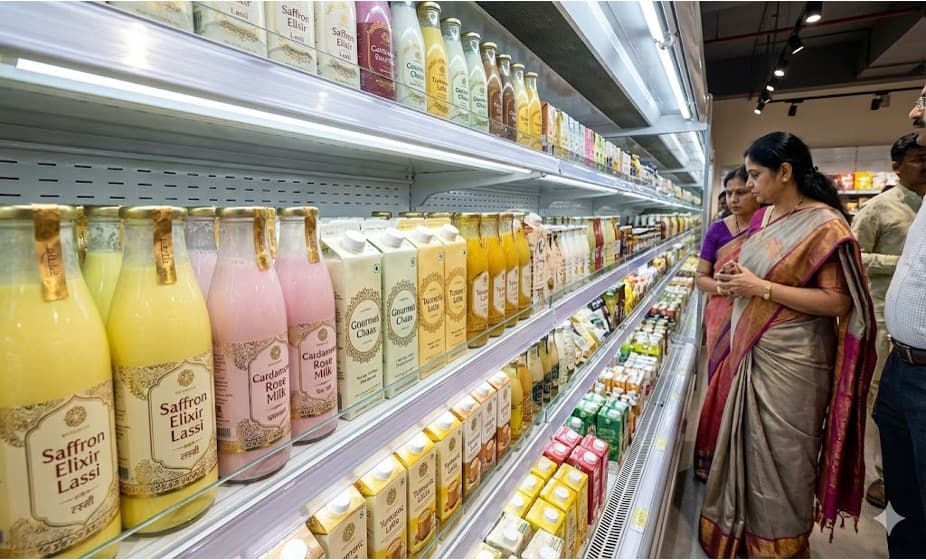
As per some market research firms the size of Indian organic milk market is around 4500 Crores and will grow at 33% per annum till 2026. I would like the competent certifying agency to check whether this data is correct . Considering price of organic milk at Rs 90 per liter , this turnover converts into 50 crores liters of milk per annum. It means that the organic milk market in India is 2.5% of the total milk sold in the organized sector. I doubt this number but let the organic certifying agency confirm whether they have a certified dairy processing plants for 13 lakh liters of milk per day in the country.I feel supply of safe milk to the consumer must be the first objective of all stakeholders. The second priority must be to control the use of chemical fertilizers and other chemicals in the fields. The third priority may be creating GAP and CMP protocol for the farmers at the primary production level. Organic milk will automatically be the logical conclusion of all the above interventions if implemented religiously.
Why befooling a consumer is permitted ?
Food safety is a consumer centric concept. Why are consumers forced to pay a premium for safe milk ? Isn’t it his right to get access to safe food ?I would like to request the government agencies to prioritize their plans in the dairy sector first. As some one has rightly said “You must not use wood to put out the fire”. The government must first stop subsidizing the chemical fertilizers and start making farmers aware about organic farming before even thinking about promoting it.
Your comments are welcome.
Source : Dairy blog by Kuldeep Sharma