Latest Blogs
See More



Indian Dairy News

DairyNews7x7
Global Dairy News


DairyNews7x7
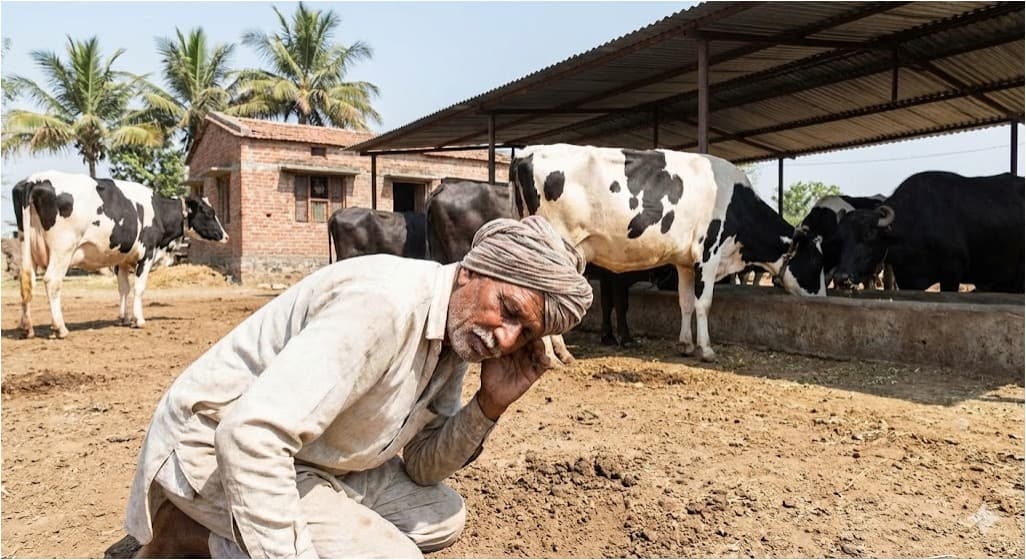
India’s dairy sector, valued at nearly $30 billion, has reached a point where incremental changes will not deliver the next breakthrough. For decades, improvement programs have focused on what farmers say they need — more subsidies, more schemes, more training modules. But a new thinking is emerging: productivity will improve only when we start listening to the farm, not just the farmer.
This idea, championed by a former investment banker who moved into dairy reform, challenges a fundamental assumption in India’s dairy extension model. Farmer consultations capture intention, comfort and perception — but they often miss the actual bottlenecks inside the farm system. The real answers lie in objective, measurable farm-level data: milk yield per animal, feed conversion ratio, days in milk, mastitis incidence, fodder cycles, heat stress, and chilling efficiency. These metrics speak with far more accuracy than any verbal feedback.
India is the world’s largest milk producer, yet its yield per animal remains one of the lowest globally. This gap does not come from a lack of effort at the farmer level — it comes from systemic inefficiencies in breeding, nutrition, animal health and on-farm practices. A “farm-listening” approach means diagnosing the system as a whole rather than responding only to what farmers are familiar or comfortable with.
Across the country, many farmers express resistance to new technologies, improved genetics or feed changes simply because they have worked in a certain way for decades. But the farm data tells a different story: poor-quality fodder, unmanaged heat, declining fertility, unscientific feeding and weak veterinary access are the real productivity killers. Listening to the farm means responding to these numbers, not assumptions.
Interventions based on farm signals — not just farmer statements — have proven to deliver higher productivity: ration balancing driven by actual nutrient gaps, preventive health programs built on disease patterns, scientific breeding aligned to herd performance, and mechanisation decisions based on milking hygiene data rather than preference.
This approach also allows policymakers and cooperatives to invest where it truly matters. Instead of spreading resources thinly across awareness campaigns, the model pushes for data-led decision making: improving chilling density in clusters where bacterial load is consistently high, focusing extension teams in low-yield pockets, or guiding financial institutions to prioritise farms with clear productivity potential.
As India prepares for the next phase of dairy growth, the message is clear. The country does not need another generic advisory scheme. It needs a productivity revolution built on farm-level intelligence, system diagnostics and measurable outcomes. Listening to the farmer remains important — but listening to the farm is what will create real impact.
Source : Dairynews7x7 Dec 12th 2025 Read full story here