
Logo
IndianGlobalBlogsPublicationsPodcastsMarketAboutContact
Logo
IndianGlobalBlogsPublicationsPodcasts
7News
TN Minister Urges Farmers to Adopt Tech for Value Addition in DairyListen to the Farm, Not the Farmer—The New Productivity LensWhat’s Driving Change In Beverages, FMCG And Dairy in 2025ED begins money laundering probe in dairy investment fraud caseIndo-Brazil pact aims to boost cattle genetics and dairy yield

Indian Dairy News

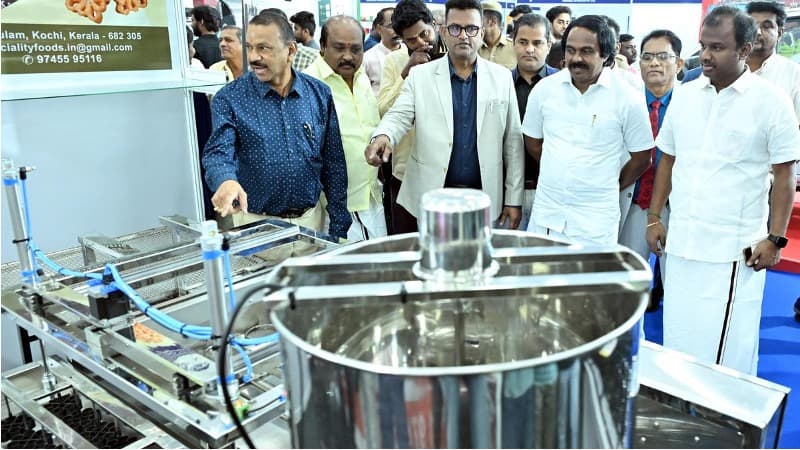
TN Minister Urges Farmers to Adopt Tech for Value Addition in Dairy
Dec 12, 2025

TN Minister Urges Farmers to Adopt Tech for Value Addition in Dairy

In Coimbatore this week, Tamil Nadu’s Minister for Milk and Dairy Development, Mano Thangaraj, called on dairy farmers to embrace modern technologies to boost productivity and value addition across th...Read More

Listen to the Farm, Not the Farmer—The New Productivity Lens
Dec 12, 2025

Listen to the Farm, Not the Farmer—The New Productivity Lens

India’s dairy sector, valued at nearly $30 billion, has reached a point where incremental changes will not deliver the next breakthrough. For decades, improvement programs have focused on what farmers...Read More

What’s Driving Change In Beverages, FMCG And Dairy in 2025
Dec 12, 2025

What’s Driving Change In Beverages, FMCG And Dairy in 2025

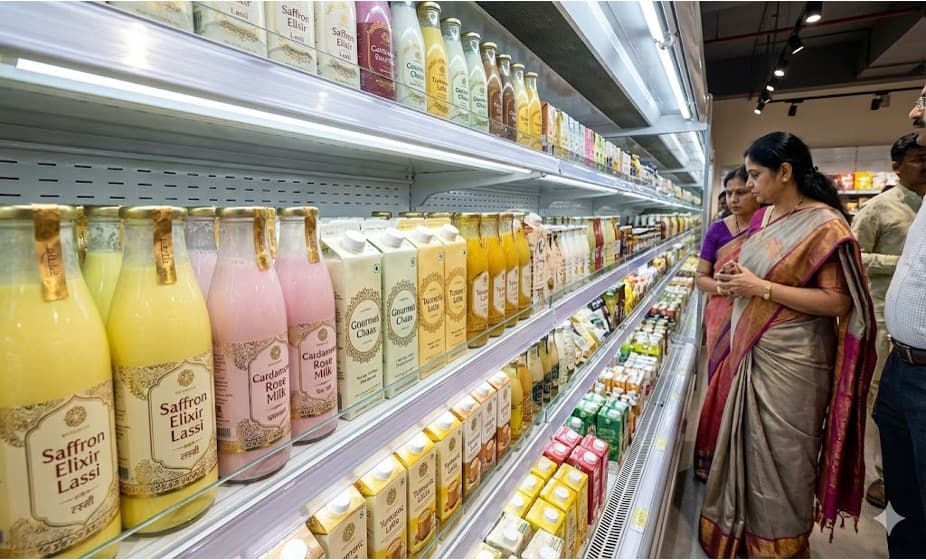
India’s retail landscape in 2025 was marked by a decisive shift in how consumers choose, consume and connect with brands. From beverages to daily nutrition and even the most essential dairy products,...Read More

Latest Blogs

See More
More Milk, Less Money: India’s Dairy Crisis
Dec 01, 2025

More Milk, Less Money: India’s Dairy Crisis

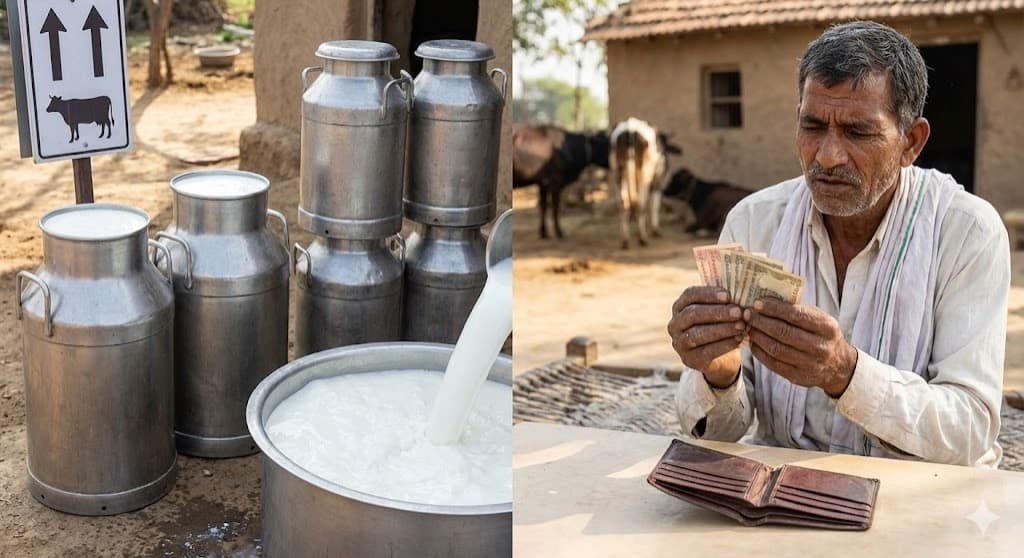
With the release of the BAHS 2025 summary report, I felt compelled to deep dive into its findings and reflect on the real progress and challenges facing India’s dairy sector. Over the last six years,...Read More

India Milk Prices: Cost Shock and Procurement Pressure
Nov 28, 2025

India Milk Prices: Cost Shock and Procurement Pressure

Milk prices in India face upward pressure as rising feed costs and procurement hikes reshape farm economics. Insight on dairy procurement, feed costs, and market outlook. Official government and coope...Read More

Stop Blaming, Start Claiming: Livestock’s Carbon Credit Future
Nov 16, 2025

Stop Blaming, Start Claiming: Livestock’s Carbon Credit Future

This week, I had the opportunity to attend an Agri Carbon Masterclass conducted by CII FACE. The deliberations, case studies, and discussions presented during the session were both insightful and thou...Read More

India Powers the Gulf’s Dairy Revolution -Gulf Food 2025
Oct 31, 2025

India Powers the Gulf’s Dairy Revolution -Gulf Food 2025

As Gulf Food Manufacturing prepares to open its doors from November 4–6 in Dubai, Indian dairy product and equipment manufacturers have a unique opportunity to explore one of the most promising region...Read More

Global Dairy News

Why the global milk business needs a structural shake-up
Dec 08, 2025

Why the global milk business needs a structural shake-up

The New Zealand dairy stalwart Fonterra has sold its consumer dairy-brands (milk, butter, cheese) — including “Anchor” and “Mainland Cheese” — to French agribusiness giant Lactalis in late October 202...Read More

Raw-milk prices in Europe hit 5-yr low; ripple effect looms
Dec 07, 2025

Raw-milk prices in Europe hit 5-yr low; ripple effect looms

European raw-milk prices have plunged to their lowest in five years, as oversupply and weak demand weigh on dairy markets across the region. According to recent data from DCA Market Intelligence B.V.,...Read More

Global food prices ease; FAO dairy index slips — impact looms
Dec 06, 2025

Global food prices ease; FAO dairy index slips — impact looms

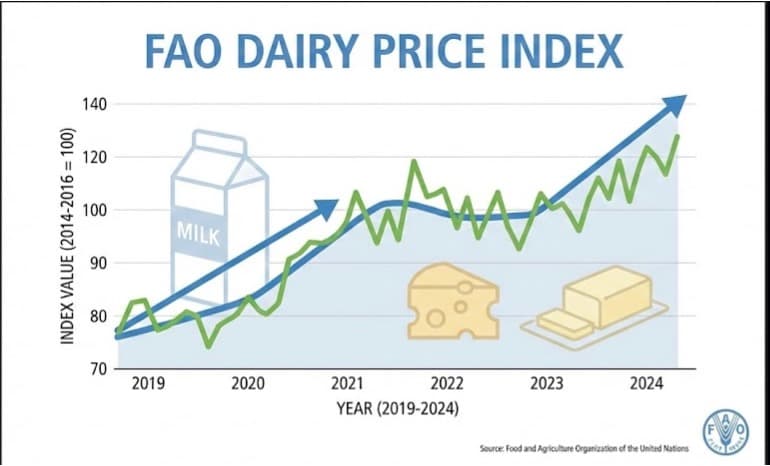
The FAO Dairy Price Index averaged 137.5 points in November, down 4.4 points (3.1 percent) from October and 2.4 points (1.7 percent) from its value a year ago. International dairy prices fell for the...Read More

Dairy News 7x7

Your trusted source for all the latest dairy industry news, market insights, and trending topics.

FOLLOW US
CATEGORIES
  • Global News
  • Indian News
  • Blogs
  • Publications
  • Podcasts
SUBSCRIBE TO OUR NEWSLETTER

Stay informed with the latest updates and trending news in the dairy industry.

No spam, unsubscribe at any time

GET IN TOUCH
C-49, C Block, Sector 65,
Noida, UP 201307
+91 7827405029dairynews7x7@gmail.com

© 2025 Dairy News 7x7. All Rights Reserved.

Terms of ServicePrivacy Policy

Why doubling farmers’ income still remains a dream

By DairyNews7x7•Published on May 16, 2022

In 2016, the Prime Minister had said farmers’ income would double by 2022. How far is the nation from the target?
Even though the government has not provided any concrete data on farmers’ income, the data available on various schemes for farmers providesome insights into its current status.

The latest estimate of the income of agricultural households is based on the Situation Assessment Survey of Agricultural Households, conducted by the National Sample Survey Office (NSSO) during the 77th round (January-December 2019).

Income rose from wages

As per survey, the average monthly income per agricultural household, from all sources, was estimated at ₹10,218 when compared with ₹6,426 in 2012-13. In other words, farm income had risen by 59 per cent till 2019.

But, in this period, their earnings came more from wages than from the crop production in 2018-19. While MSPs have increased and the Centre is spending on farm mechanisation, insurance, etc., the lack of awareness is a hurdle in bringing schemes to farmers.

Farmers’ earnings

In 2012-13 (during the 70th NSS round), the average monthly income of agricultural households was ₹6,426, of which ₹2,071 came from wages, ₹3,081 came from crop production and cultivation, ₹763 from farming of animals, and ₹512 from a non-farm business.

The 77th NSS round data, in 2018-19, showed that the average monthly income has gone up to ₹10,218, of which the highest income comes from wages (₹4,063), followed by income from crop cultivation and production (₹3,798). There is also a substantial rise in income from animal farming (₹1,582 from ₹763). Farmers are also earning comparatively higher income from non-farm businesses and leasing out land.

However, farmers say that cultivation costs have almost doubled while their income is not commensurate with the rising inflation. Income from wages was 32 per cent in 2012-13. It was recorded to be 40 per cent in 2018-19. This implies that farmers are turning into daily wage labourers.

Production and income

The Ministry of Agriculture told the Lok Sabha in April this year that in 2013-14, the budget allocation for the Department of Agriculture was ₹21,933.50 crore. This increased by more than 5.5 times to ₹1,23,017.57 crore in 2021-22.

Foodgrain production increased to the highest ever from 265.05 million tonnes (mt) in 2013-14 to 305.43 mt in 2020-21 (third advance estimate). Horticulture production has increased from 280.99 mt in 2014-15 to 320.48 mt in 2020-21 (second advance estimate), the highest ever for the horticulture sector.

However, the NITI Ayog report on Doubling Farmers’ Income by Ramesh Chand (2017) states that in some cases, growth in output increased farmers’ income, but in many cases, farmers’ income did not increase significantly with the increase in output.

Benefit from schemes

The Government had increased the minimum support price (MSP) for all the mandated kharif, rabi, and other commercial crops with a return of at least 50 per cent on the overall India-weighted average cost of production from 2018-19. The MSP for paddy was increased to ₹1,940 per quintal in 2021-22, from ₹1,310 per quintal in 2013-14, marking an increase of 48 per cent. The MSP for wheat was increased from ₹1,400 per quintal in 2013-14 to ₹2,015 per quintal in 2021-22.

Farmers who protested on Delhi’s borders against farm reform laws had demanded a law for guaranteed MSP.  The NSS 77th round shows that the percentage of output sold by households under the MSP ranges between 0 to 24.7 per cent (except sugarcane). Paddy and wheat-growing households dominate the charts of MSP awareness and output sold under it. With over 14 per cent of 14.6 crore landholding farmers (2015-16) getting benefits from the MSP, most farmers are out of the MSP net and continue to sell their produce below MSP.

The government launched the PM-KISAN in 2019 to provide ₹6,000 per year in three equal installments, with a total of ₹1.8-lakh crore released to over 11.7 crore farmer families.

This benefit does not necessarily go into the capital expenditure in farming, as small and marginal farmers still struggle to fulfill their basic needs, such as their children’s education and health expenses.

Insurance, credit and infra

About 29.29 crore farmer applicants enrolled themselves under the Pradhan Mantri Fasal Bima Yojana (PMFBY), launched in 2016. Over 8.99 crore (provisional) farmer applicants have received claims of over ₹1,03,903 crore.

During this period, farmers paid nearly ₹21,448 crore as premium, against which claims of over ₹1,03,903 crore (provisional) were disbursed For every ₹100 of premium paid by farmers, they have received ₹484 as claims. Yet, many States such as Maharashtra, are now opting out of the scheme saying that farmers are unhappy with claim settlements.

Institutional credit for the agriculture sector increased from ₹7.3-lakh crore in 2013-14, with a target to reach ₹16.5-lakh crore in 2021-22.
For agricultural mechanisation, from 2014-15 to 2021-22 (as of December 31, 2021), ₹5,130.61 crore has been allocated. On subsidy, about 13.78 lakh machines and equipments were provided to them. About 16,007 custom hiring centres, 378 high-tech hubs, and 16,064 farm machinery banks have been established. However, farm mechanisation is posing a major threat to agricultural labourers.
Under the Agriculture Infrastructure Fund, the government had mobilised ₹7,700 crore for more than 7,300 projects, but experts insist on need for more investment in infrastructure from the government and the private sector.

Need for policy

Farmers say that government schemes will not help them double their income unless government policies on agriculture are comprehensive, grant freedom of technology and market, and infuse more money into infrastructure development.

Apex farmers’ organisations such as the Shetkari Sanghatana in Maharashtra say that ad hoc policies and schemes will not help farmers as long as government intervene in the market to control prices to keep the consumers happy at the cost of farmers.

Source : The Hindu Busines Line 16th May 2022

Swipe to continue reading

Previous Article

Next Article