
White Revolution of India—Myths and Reality
India is widely mentioned as the top milk producer in world and this achievement is frequently stated to have been achieved on the basis of its ‘white revolution’ which in turn is claimed to have been achieved on the basis of improved livelihoods of small dairy farmers. How real are these claims?
This is not merely an academic question. If these claims are correct, then there would be strong reasons to go on promoting similar patterns of dairy development. On the other hand if there is something seriously wrong about these claims and there are actually many matters of concern and worry, then there would be strong reasons for reconsidering the present day path and trends of dairy development in India.
The main base of dairy development is that it provides high nutrition food to people who need it. The extent to which this objective is achieved depends not just on the total volume of production but even more on the way consumption is distributed. If more milk and milk products reach the poor, then these contribute much to reducing malnutrition. Most of the poor households in India suffer from malnutrition and from protein deficiency. The most prominent source of providing protein to them used to be legumes (mostly pulses) traditionally and this has declined significantly following the so-called ‘green revolution’, and hence the importance of receiving adequate proteins from milk and milk products has increased further.
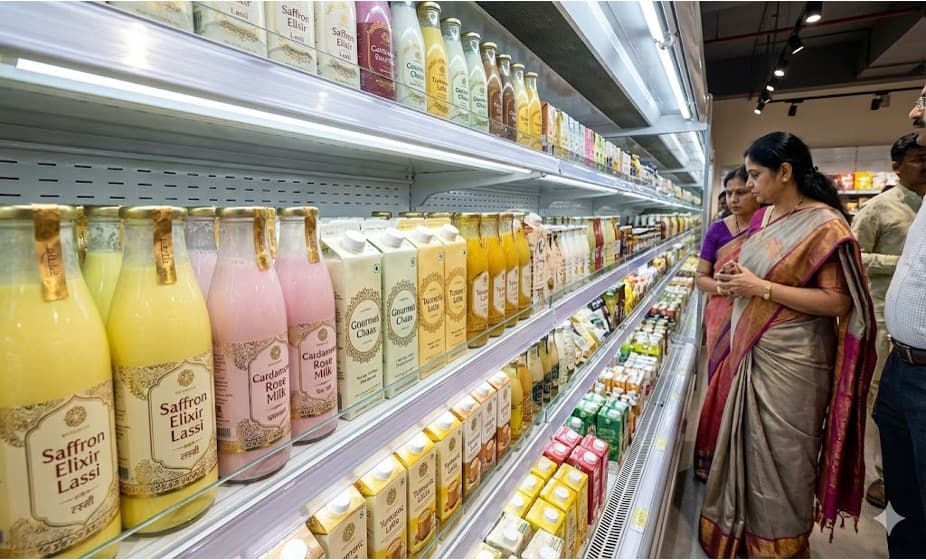
However while there has been highly visible increase of a wide range of milk products ( including very highly priced ones) among the richer sections of society where these often contribute more to increased obesity than increased nutrition, at the same time in both cities and villages there have been increasing indications of a decline in the consumption of milk and milk products among the poor. There is also a shift towards higher consumption in cities compared to villages, although in terms of hard work related higher nutrition needs in villages, clearly there is more need for higher milk consumption in villages.
This is partly related to changes in milk processing. The Indian village typically saw milk being processed into butter and ghee in most homes till a few decades back for local consumption, which ensured that a lot of nutrition stayed with the village. A neglected aspect of this local processing is that the by-product or residue which remained (often called chaach) still had high protein and this was often distributed free among the poorest, farm workers and poorer neighbors. There has been a big decline of this most accessible form of protein among the rural poor, even as very high priced, flavored ‘diet’ milk in ever-increasing amounts is being marketed to richer urban consumers in highly wasteful packaging.
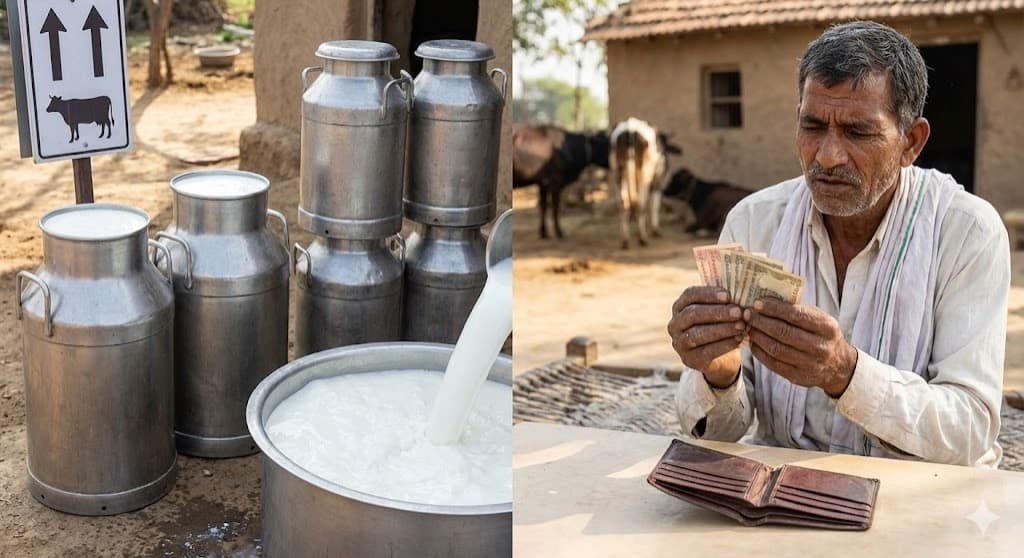
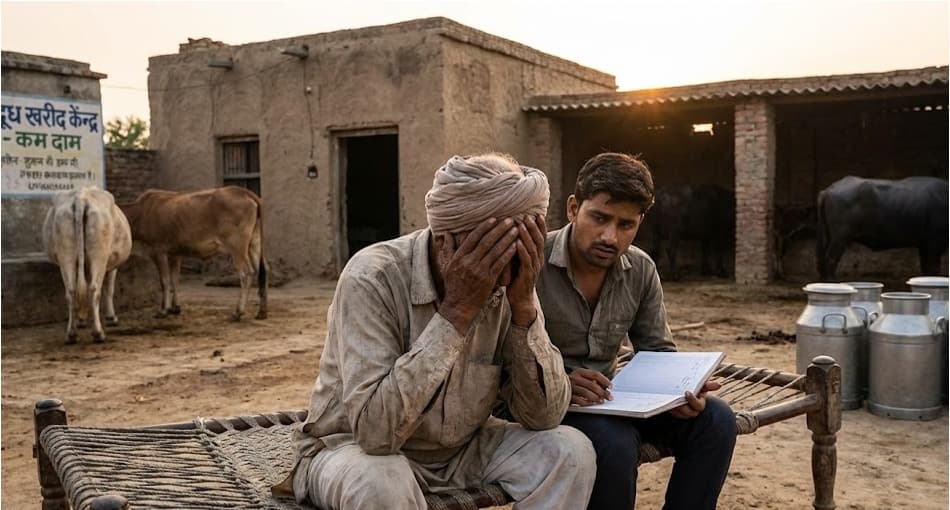
At the same time problems of small dairy farmers too have been increasing, particularly in terms of steep rise in costs. Most of the dairy farmers in India consist of small landowner farmers and landless households in villages. Traditionally milk production has been both an important means of nutrition and an important source of earnings for them. Whereas the income from crops comes after the harvest, income from milk production can come on short-term basis and is an important source of meeting routine daily expenses. However keeping in view their low resource base, it is important that they should be able to work at low costs.
One very important means of ensuring this is that there should be adequate feed for dairy animals. This consists of grazing fields or pastures, dry fodder and concentrate feed or oilcakes. Pastures and fodder trees have been in rapid decline in most parts of the country. Dry fodder is lesser in the case of exotic dwarf green revolution crop varieties compared to tall indigenous traditional varieties of crops grown earlier. With mechanization of crop harvesting, particularly wheat, the availability of dry fodder has decreased.
As alternative industrial uses are becoming available, this too is reducing the availability of dry fodder. In recent times the increase in the price of dry fodder has been extremely high due to a combination of all these factors. The landowner dairy farmers can still survive this by getting dry fodder from their own farms but the landless dairy farmers are suffering the most as they have to buy even dry fodder at a fast rising price. The trend of giving some free dry fodder to landless farm workers has also decreased.
As oilseed processing has moved almost completely from villages to big urban units, oilcake supply is prioritized for exports and big units while small village dairy farmers can get only very limited supplies at a higher price. In this context also problems are set to increase as future edible oil supply increases are to be obtained more and more from palm oil, as per a recent decision announced by the government, so that the shortfall of oilcakes of mustard or groundnut or other traditional oilseeds is likely to be aggravated.
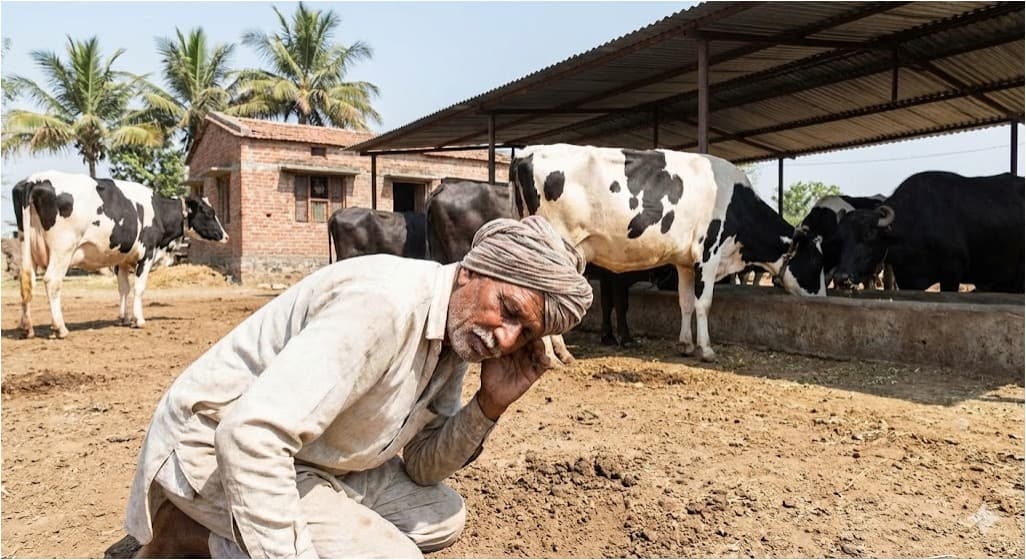
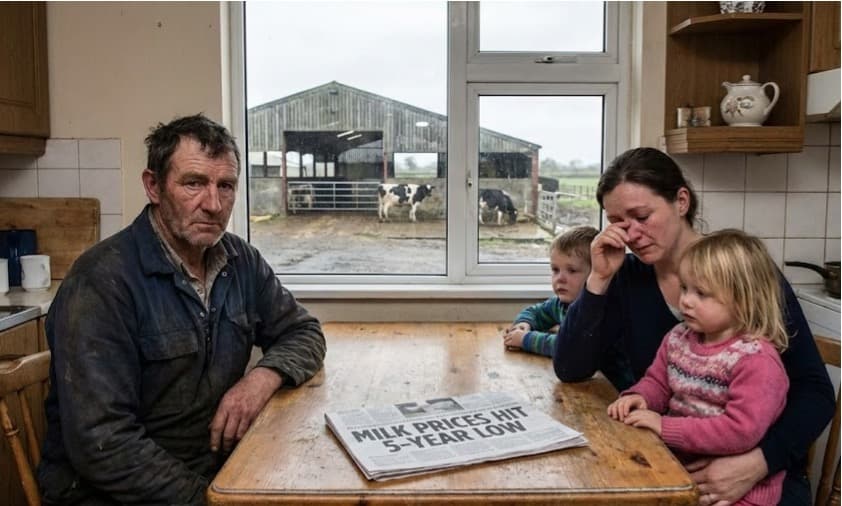
As a result of fast rising costs most small landowning farmers are producing milk at an increasingly lower margin. The landless dairy farmers may even be pushed into losses and hence pushed out of this livelihood support. The spread of lumpy skin disease among dairy animals has only added further to this depressing situation for dairy farmers in recent times.
Another reason why costs arise relates to breeding practices and inputs. More attention has been given to cross-breed cows in official policy but these require conditions which increase costs.
Hence from the point of view of the bulk of small dairy farmers and particularly landless dairy farmers (whose need for dairying as a source of livelihood is the highest), almost all the recent trends are adverse trends, particularly in terms of higher costs. When all factors are adverse, feed and fodder are scarce, then how the government goes on claiming higher success of small dairy farmers is surely a matter of surprise, and reminds one of how so much success was claimed when most of the impacts of the so-called ‘green revolution’ were negative (for a detailed review of adverse effects of green revolution kindly refer to my recent book ‘India’s Quest for Sustainable Farming and Healthy Food’). Hence learned scholars of this issue may do well to re-examine how much of the claimed increase of milk production is real, and to the extent that it is real, to what extent the contribution of small dairy farmers has been declining due to adverse conditions.
The other day I was standing in a village in Haryana and noticed people buying branded milk of big dairies packed in polythene bags. I asked them why they were buying this and they told me that they find this cheaper. I then went to those villagers who had buffaloes or cows and asked them about their prospects. They told me things are very difficult as costs have gone very high and it is difficult for them to compete with the branded packaged products.
The branded products from huge milk plants located far away, perhaps a thousand or so km. away, reach this village (and countless others) only after incurring considerable packaging, transport and refrigeration costs as well as commissions to retailers. If despite this the small dairy producer is finding it difficult to compete with the branded milk pouch (not to mention other milk products like butter and cheese, where the market situation is even more unfavorable for the small dairy farmer) even in his home village, despite the fact that fresh milk is generally well regarded by people for health reasons, then this is a matter of concern for millions of small dairy farmers in the unorganized sector.
One reason of course relates to their huge costs. The other reason is that the big dairy company selling branded products is able, legally, to reconstitute milk by adding milk powder, butter oil etc. to fresh milk in certain proportions at levels of various fat content and in addition is also able to import milk powder and other milk constituents/products when required by big business interests at cheap international price (for example when there is a surplus in the international market). If the unorganized small dairy producers try to do something similar, even while caring to maintain health norms, they would face charges of adulteration with the possibility of stiff fines and possibly arrest.
This then is the prevailing system which was facilitated by the highly publicized Operation Flood Project, modernization of dairy sector and the white revolution. It is also a hugely polluting system as it has one of the most polluting packaging, with milk pouches making the single biggest contribution on daily basis to garbage which has already taken the form of methane emitting, massive landfills in many cities ( even though earlier big cities like Delhi had lived well with a system of returnable bottles ). At a time when the concept of food miles travelled is asking for food production to be closer to milk consumption (something which was already there in the case of the traditional system fast uprooted in the name of development) such a perishable commodity as milk is being made to travel more and more food miles as leading brands of milk and milk products try to carve out an ever increasing share of the market.
Recently , particularly in the last six years or so, the government has promoted the technology of sexed semen in which semen is treated and tampered with to ensure that only female calves are born. It is strange indeed that a government that claims to promote holistic cow-protection has actually been pushing a technology that prevents male calves from being born!
On the other hand several opportunities of protecting even old cows and bullocks are emerging by integrating these to the spread of organic farming as in India organic farming is mostly done with composted manure prepared from cow dung and cow urine, with other ingredients added. These need to be better utilized and the Chattisgarh government has taken a lead in this. Better care for cows and bullocks, such a rich part of the Indian tradition, should be strengthened.
Last but not the least, there is concern that increasing corporate control over dairy farmers can result in dairy farmers being asked time and again to buy particular high-cost equipment, feed and vaccines ( including those whose efficacy and usefulness may be questionable), increasing costs further. Dairy farmers have also been opposing those free trade agreements which can lead to increased imports of milk products from Europe, Australia, New Zealand and the USA, apart from increasing corporatization trends.
As already pointed out, unorganized sector small dairy farmers have become more vulnerable with spread of recombined milk in which milk powder, butter oil etc. are combined with fresh milk. By changing the proportion in favor of powder and butter oil, adequate milk availability can be ensured for consumers even when procurement from farmers is declining. If and when cheap imports are available, then this tendency can increase. Hence there is careful need to monitor such trends, to ensure transparency and to protect the interests of small dairy farmers.
There have been indications that the tendency to increase domestic or imported milk powder/butter oil in recombined milk increased in COVID times and the worry is that this can become a longer term trend which will be harmful for farmers. Milk being a perishable product, there is need for a lot of care to ensure that dairy farmers operating at a low margin do not suffer losses due to sudden loss of market or fall in price received by them. The government can also issue instructions that whenever the procurement of milk is threatened, for example due to a sudden lockdown or transport strike or road blockade, the milk should be still purchased and distributed among poor households or for anganwadis and mid-day meals, with the government directly paying for this.
If small-scale processing facilities are set up within or very close to villages, then risks for farmers can be reduced. In addition nutritious by products like chaach which were earlier available even to poorest sections can again become more abundant in villages. Similarly there is a strong case for processing of oilseeds like mustard, groundnut etc. to be located in or very close to villages, so that oilcakes can be made available to the same villages which supply oilseeds.
You are unlikely to hear such criticisms and recommendations in big conferences as these are mostly funded by big business interests while the analysis here has kept as central focus the interests of sustainable livelihoods of small dairy farmers and nutrition of poor and ordinary households. We conclude with a humble plea that these considerations should be the focus of policy makers as well, and should receive more attention from learned scholars also.