
Towards White Revolution 2.0
India has set itself an ambitious target of raising its milk output by around 100 million metric tonnes by 2033–2034 by creating an additional 2 lakh primary dairy cooperatives. But getting there is anything but easy
In March, Union Cooperation Minister Amit Shah, while addressing the dairy industry at the Indian Dairy Summit, talked about raising India’s milk production, currently pegged at around 230 million metric tons (MMT), by at least 100 MMT, and taking the country’s share in global milk output to one-third. The Ministry of Cooperation under Shah plans to achieve this target by creating an additional 2 lakh primary dairy cooperative societies (PDCS).
“The Indian dairy sector has grown by 6.6 per cent per year in the past decade. The central government is setting up 2 lakh dairy cooperatives in villages. Once that happens, the dairy sector growth will go up to 13.80 per cent. And India’s share of global milk production will be 33 per cent. Our dairy exports will be at least five times the current level,” said Shah.
Currently, there are 1,99,182 PDCSs with around 1.5 crore members. These PDCSs are engaged in procurement of milk from the farmers, providing milk testing facilities, cattle feed sale, extension services, etc. The bigger challenge is to double the number of PDCSs in the next 10 years. Experts tracking the sector list out a number of challenges that need to be tackled if India has to increase its milk production rapidly. “The Indian dairy industry remains highly fragmented and largely regional. The organised sector currently accounts for only 26-30 per cent of the marketable milk volumes. Most players are local/regional. GCMMF (better known as Amul) being the only player to have a pan-India presence,” says a senior analyst who tracks the dairy sector.
Sheetal Sharad, Vice President, ICRA and an expert of dairy sector echoes the thought. “In value terms, the Indian dairy market is estimated at around Rs 14-15 lakh crore contributing ~4.5 per cent to India’s GDP. Around 70-74 per cent of the dairy market is unorganised (unbranded, traditional vendors) and the remaining is organised (cooperatives + private dairies). The top three dairy players in India are cooperatives. In terms of product mix, 51 per cent is sold as liquid milk and balance as value added dairy products or VADP. The Indian milk production is estimated at 221 million tonnes for FY2022, which is a YoY growth of 5.3 per cent. Around 45-47 per cent is self-consumed by the cattle owner and balance is sold in the market,” says Sharad.
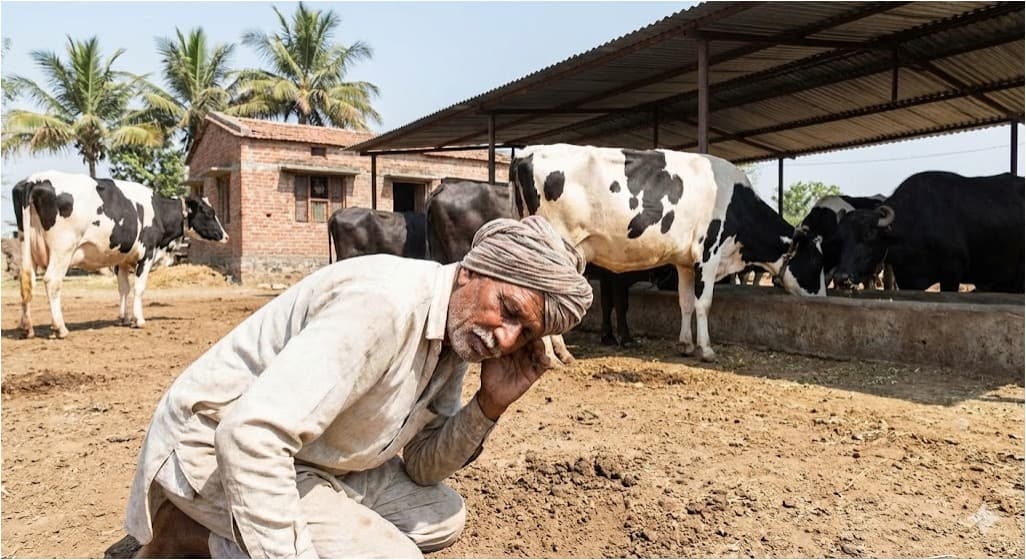
Milk production growth is significantly dependent on growth of cattle population. In FY23, milk production in India was impacted by the incidence of lumpy skin disease (LSD) in North India. Additionally, there was slower than usual induction of new cattle as a result of the restriction on cattle movement owing to LSD. That led to lower milk yields.
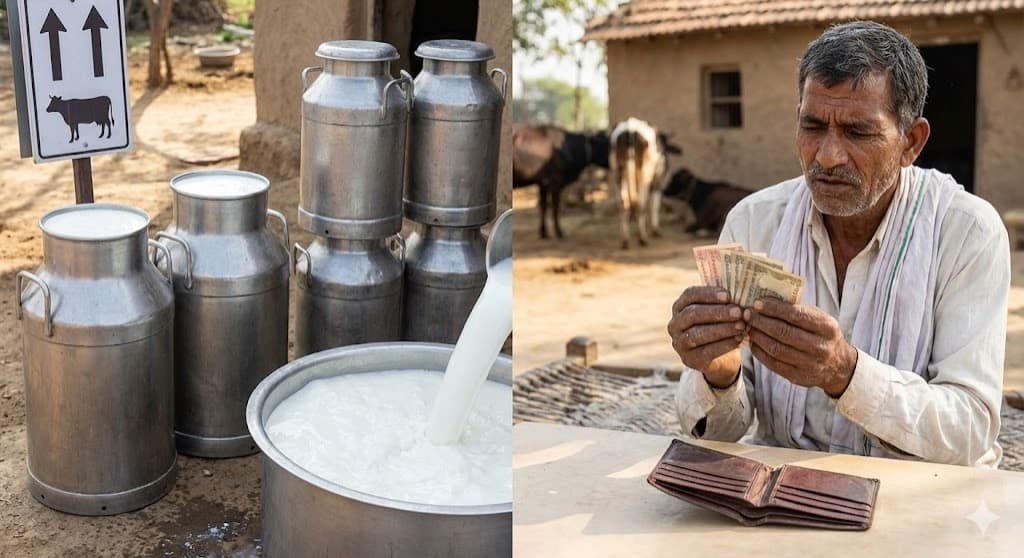
Increasing Milk Output How can India increase its milk production? According to Sharad of ICRA, increase in output will depend on rapid growth in cattle population and incentives to farmers to rear cattle, including attractive pricing for milk. “Also, increasing network penetration and converting unorganised farmers into being part of an organised supply chain can improve farmer incomes and help focus on cattle rearing and productivity,” says Sharad.
Some of the steps being taken by authorities to improve productivity of cattle include cross breeding and artificial insemination to improve the genetic factors of the cattle, leading to better milk yields. Improving access to healthcare facilities for cattle is also being facilitated.
Pushan Sharma, Director – Research, CRISIL Market Intelligence and Analytics points out that the milk yield in India is much lesser compared to the US and New Zealand. “This is primarily because of the cow and buffalo breeds that are found in India. Higher yielding breeds are expensive and cannot be afforded by small and marginal farmers. Therefore, to substantially increase milk production in India, higher yield milch animals must be made accessible for small and marginal farmers,” says Sharma. Further, the quality of fodder consumed by animals is of substandard quality as farmers switch to different fodder crops in response to fluctuating crop prices. “Ensuring high quality and nutrient-rich fodder for the milch animals will further aid in increasing yields,” adds Sharma.
The recently formed Ministry of Cooperation plans to increase the number cooperatives in India by 2 lakh through schemes and subsidies for dairy coops. Incidentally, cooperatives account for a little less than half of all milk procurement in the organised sector. The same schemes need to be extended to private players as well for overall dairy development in the country, say experts in chorus.
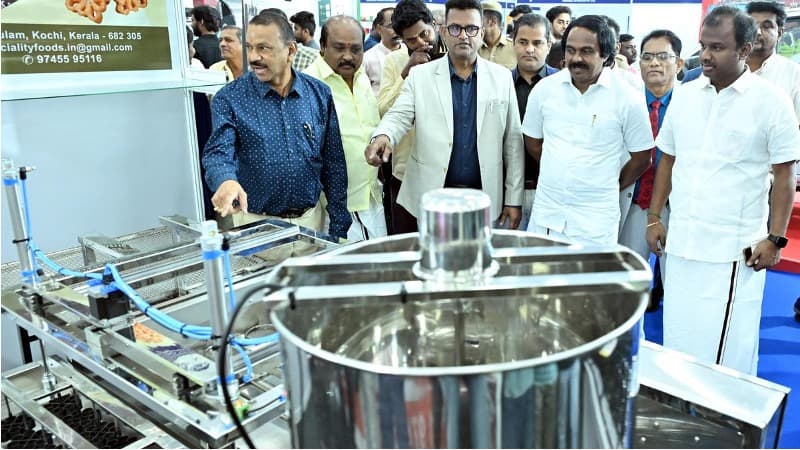
Clearly, the Indian dairy industry needs further enhancements across its value chain to achieve the additional 100-110 MMT in milk production over the next 10 years. On the input front, the foremost priority, experts say, should be improving cattle health by eradicating foot-and-mouth disease and lumpy skin disease. Also, by making artificial insemination services available to all farmers. On the processing and storage side, investments should be made in high-quality machinery, particularly for value-added dairy products that command higher realisations. Then, a robust cold-chain infrastructure is essential to help smoothen distribution and extend the shelf life of dairy products. However, the investment roadmap to achieve this is still a ‘work-in-progress’ by the various government departments.
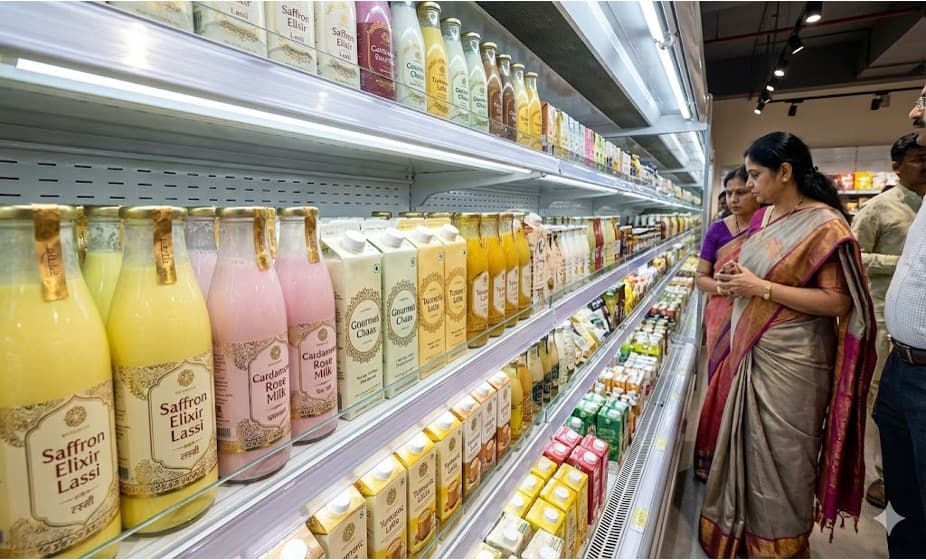
Demand Grows Meanwhile, the demand for not just fresh milk but also value added dairy products is on the rise. The Gujarat Co-operative Milk Marketing Federation (GCMMF), popularly known as Amul India, said recently that the 18.5 per cent growth in its turnover largely on account of demand for branded consumer products. The provisional unduplicated group turnover of member unions of the Amul group crossed Rs 72,000 crore ($9 billion) for FY23. “Our fresh products grew by 21 per cent with a contribution of 50 per cent to the GCMMF turnover and ice cream range grew by 41 per cent. Our consumer products have registered a growth of 23 per cent year on year with products such as cheese, butter, UHT milk, milk beverages, paneer, cream, buttermilk and dahi having grown at 20-40 per cent,” GCMMF said.
The GCMMF with its 18 member unions boating farmer member strength of more than 36 lakh across 18,600 villages of Gujarat is investing in new product categories such as organic foods, high protein products, probiotic range, fresh sweets as it aims to transition from being India’s largest dairy brand to India’s largest FMCG company specialising in food and beverages. Shamalbhai Patel, Chairman, GCMMF, emphasises the fact that the mantra of rapid expansion has clearly yielded rich dividends for GCMMF.
The next big organised player, and most popular in north India, Mother Dairy Fruits & Vegetables, is said to have recorded a turnover of Rs 15,000 crore for FY23 clocking more than 15 per cent growth. Manish Bandlish, Managing Director, Mother Dairy says: “In FY22-23, we observed a phenomenal demand for milk and milk products across regions. Notably, ice creams saw a remarkable revival registering a growth of over 45 per cent in comparison to the last fiscal, while other leading categories such as dairy beverages, curd etc. also witnessed a healthy growth year on year.”
According to Bandlish, the consumption trend remained persistent during the fiscal, with continued in-home consumption, enhanced out-of-home consumption and preference for packaged foods going strong. “Apart from the consumer segment, the demand from institutional segment also made a comeback. The year saw new products, markets and experiences, both for the business as well as the consumers – we introduced a range of new products to expand our value-added dairy products portfolio in order to meet the ever-evolving needs of our consumers,” he says.
Going forward, Mother Dairy will continue to expand its markets and categories with the best-in-class product experience to enhance consumption while creating new avenues for its farmers.
Nestle India, which follows the calendar year as its financial year, reported sales of Rs 16,790 crore, clocking its highest double-digit growth in a decade led by sustained volume growth. “In 2022 total sales grew by 14.5 per cent and domestic sales increased by 14.8 per cent, with broad-based performance across all categories,” Suresh Narayanan, Chairman and Managing
Director, Nestlé India said in a statement. For the full calendar year 2022, the company reported sales of Rs 16,790 crore and a profit of Rs 2,390 crore.
Others Are Growing Too Besides GCMMF and Mother Dairy, there are other significant regional players in the dairy business that are also clocking growth. For example, there is KMF from Karnataka, better known by its brand name Nandini. It has more than 25 lakh farmers. Then, there is Parag Milk Foods which in FY22 sourced more than 11 lakh litres of milk daily from more than 2.5 lakh farmers spread across five states but majorly based in Maharashtra.
Also, there are players like Heritage Foods (Andhra Pradesh), Hatsun Agro, (Tamil Nadu, Andhra Pradesh, Telengana & Karnataka), Dodla (also in Southern India), among others, that are helping the business grow.
Experts say that adding more farmers to these networks plus creating more cooperatives is the only way to push the overall milk production. The policymakers in states and at the Centre must take note of this and give all possible support to make India a globally significant player in milk production as well as exports and quality by-products.