
Logo
IndianGlobalBlogsPublicationsPodcastsMarketAboutContact
Logo
IndianGlobalBlogsPublicationsPodcasts
7News
TN Minister Urges Farmers to Adopt Tech for Value Addition in DairyListen to the Farm, Not the Farmer—The New Productivity LensWhat’s Driving Change In Beverages, FMCG And Dairy in 2025ED begins money laundering probe in dairy investment fraud caseIndo-Brazil pact aims to boost cattle genetics and dairy yield

Indian Dairy News

TN Minister Urges Farmers to Adopt Tech for Value Addition in Dairy
Dec 12, 2025

TN Minister Urges Farmers to Adopt Tech for Value Addition in Dairy

In Coimbatore this week, Tamil Nadu’s Minister for Milk and Dairy Development, Mano Thangaraj, called on dairy farmers to embrace modern technologies to boost productivity and value addition across th...Read More

Listen to the Farm, Not the Farmer—The New Productivity Lens
Dec 12, 2025

Listen to the Farm, Not the Farmer—The New Productivity Lens

India’s dairy sector, valued at nearly $30 billion, has reached a point where incremental changes will not deliver the next breakthrough. For decades, improvement programs have focused on what farmers...Read More

What’s Driving Change In Beverages, FMCG And Dairy in 2025
Dec 12, 2025

What’s Driving Change In Beverages, FMCG And Dairy in 2025

India’s retail landscape in 2025 was marked by a decisive shift in how consumers choose, consume and connect with brands. From beverages to daily nutrition and even the most essential dairy products,...Read More

Latest Blogs

See More
More Milk, Less Money: India’s Dairy Crisis
Dec 01, 2025

More Milk, Less Money: India’s Dairy Crisis

With the release of the BAHS 2025 summary report, I felt compelled to deep dive into its findings and reflect on the real progress and challenges facing India’s dairy sector. Over the last six years,...Read More

India Milk Prices: Cost Shock and Procurement Pressure
Nov 28, 2025

India Milk Prices: Cost Shock and Procurement Pressure

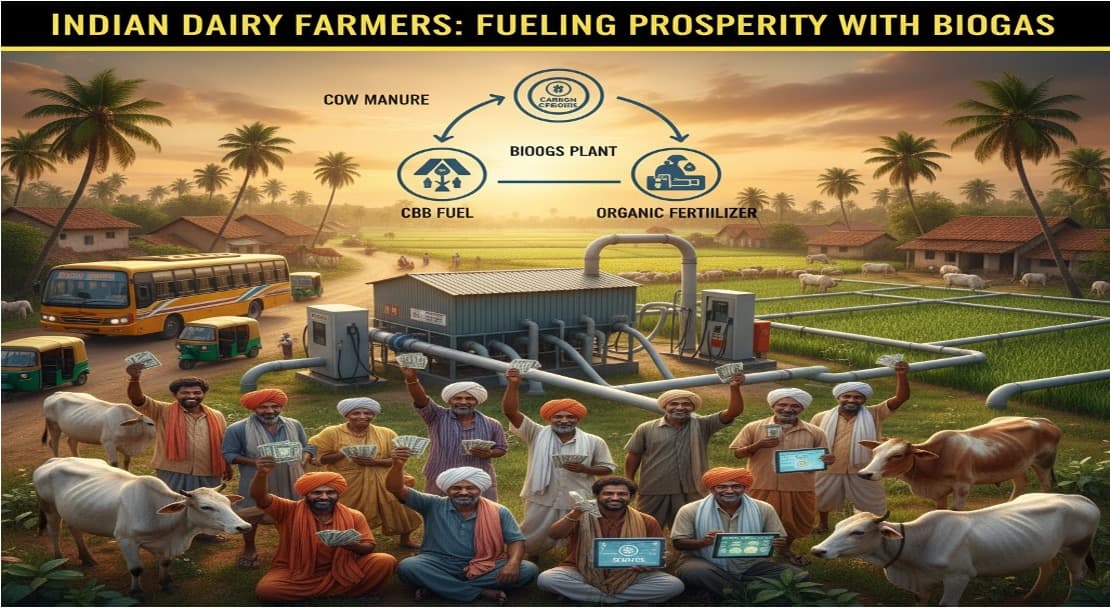
Milk prices in India face upward pressure as rising feed costs and procurement hikes reshape farm economics. Insight on dairy procurement, feed costs, and market outlook. Official government and coope...Read More

Stop Blaming, Start Claiming: Livestock’s Carbon Credit Future
Nov 16, 2025

Stop Blaming, Start Claiming: Livestock’s Carbon Credit Future

This week, I had the opportunity to attend an Agri Carbon Masterclass conducted by CII FACE. The deliberations, case studies, and discussions presented during the session were both insightful and thou...Read More

India Powers the Gulf’s Dairy Revolution -Gulf Food 2025
Oct 31, 2025

India Powers the Gulf’s Dairy Revolution -Gulf Food 2025

As Gulf Food Manufacturing prepares to open its doors from November 4–6 in Dubai, Indian dairy product and equipment manufacturers have a unique opportunity to explore one of the most promising region...Read More

Global Dairy News

Why the global milk business needs a structural shake-up
Dec 08, 2025

Why the global milk business needs a structural shake-up

The New Zealand dairy stalwart Fonterra has sold its consumer dairy-brands (milk, butter, cheese) — including “Anchor” and “Mainland Cheese” — to French agribusiness giant Lactalis in late October 202...Read More

Raw-milk prices in Europe hit 5-yr low; ripple effect looms
Dec 07, 2025

Raw-milk prices in Europe hit 5-yr low; ripple effect looms

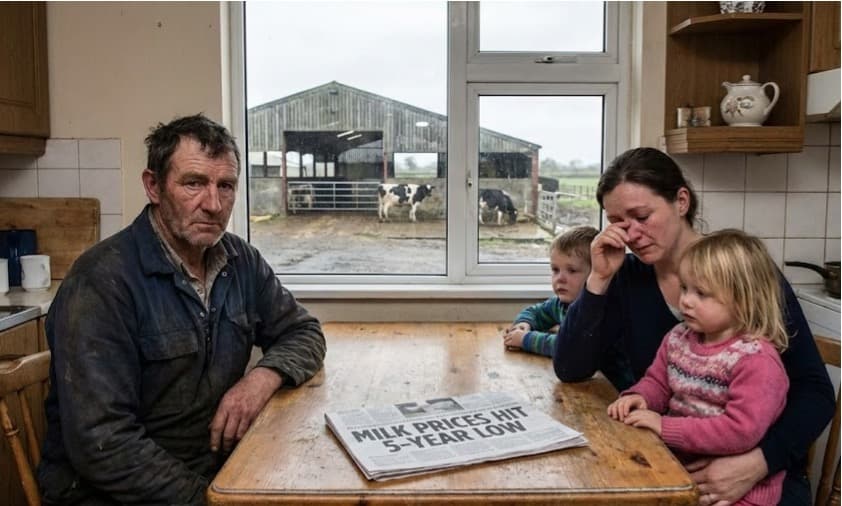
European raw-milk prices have plunged to their lowest in five years, as oversupply and weak demand weigh on dairy markets across the region. According to recent data from DCA Market Intelligence B.V.,...Read More

Global food prices ease; FAO dairy index slips — impact looms
Dec 06, 2025

Global food prices ease; FAO dairy index slips — impact looms

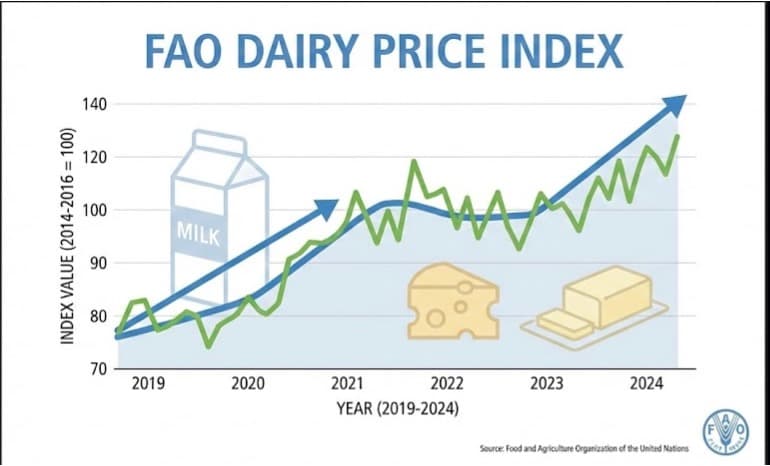
The FAO Dairy Price Index averaged 137.5 points in November, down 4.4 points (3.1 percent) from October and 2.4 points (1.7 percent) from its value a year ago. International dairy prices fell for the...Read More

Dairy News 7x7

Your trusted source for all the latest dairy industry news, market insights, and trending topics.

FOLLOW US
CATEGORIES
  • Global News
  • Indian News
  • Blogs
  • Publications
  • Podcasts
SUBSCRIBE TO OUR NEWSLETTER

Stay informed with the latest updates and trending news in the dairy industry.

No spam, unsubscribe at any time

GET IN TOUCH
C-49, C Block, Sector 65,
Noida, UP 201307
+91 7827405029dairynews7x7@gmail.com

© 2025 Dairy News 7x7. All Rights Reserved.

Terms of ServicePrivacy Policy

Three key trends shaping the future of dairy alternatives market through 2028

By DairyNews7x7•Published on August 25, 2022

A report by Global Market Insights Inc. claims the dairy alternatives market to be worth USD 49 billion by 2028 end. 

The demand for dairy alternatives seems to be growing appreciably over the last few years, with no visible signs of deceleration whatsoever. Increasing consumption of plant-based milk is at the forefront of this growth, driven mainly by the growing intolerance to dairy products.

According to the statistics released by World Population Review for 2022, lactose intolerance is most common in Asian countries, particularly in East Asia, where nearly 70 percent to 100 percent of the population has lactose intolerance. In Northern and Central Europe, close to 5 percent of the population suffers from lactose intolerance.

It would be imperative to note that it is not just vegetarians or vegans or lactose intolerant population consuming more dairy alternatives. There is a community of flexitarians who are shifting towards quality brands with ethical and nutritional credentials.

As per a survey conducted by Morning Consult in March 2021, 82 percent of Americans who consume non-dairy milk do so because of the taste and flavor, while about 56 percent of Americans are motivated by growing environmental concerns.

This has enabled many producers and retailers to invest in dairy alternatives to appeal to the rising number of consumers who deem it a more sustainable and healthy choice. In 2022, All G Foods, an Australian start-up, announced that it had secured USD 17.4 million to expand its portfolio into dairy alternatives and cater to the surging vegan population.

Mentioned below is a brief snapshot of 3 dairy alternative trends to look out for in 2022 and beyond.

  1. Growing health consciousness
The onset of the COVID-19 pandemic in 2020 prompted a huge chunk of the population to switch to healthier versions of food they had been consuming. Say, for example, people are now opting for alternatives that are enriched with vitamins and nutrients, are less heavy, low in calories, and nutritious, to help them fight diseases and improve immunity. Riding high on this trend, dairy alternatives have gained considerable traction.

Non-dairy milk is known to have fewer calories, more water content, less fat (except for coconut-based milk), more vitamins and nutrients, and less protein (except soy) when compared to cow milk. In fact, research has depicted that the consumption of a cup of plant-based milk provides 8 grams of high-quality protein with all the required essential amino acids for proper growth and development in children.

  1. Rise in oat product consumption
Across the dairy alternatives market landscape, oats have retained the spotlight in recent years. Oat products, oat fiber, and functional oat flours possess a variety of attributes that make them an ideal choice in the formulation of dairy-free alternatives.

Oat milk is also comparatively lower in fat than traditional milk and much higher in fiber, making it far easier to digest. Oat milk beverages have more protein content than any other dairy alternatives like rice or almond milk. Additionally, they also help reduce cholesterol levels and regulate blood sugar.

The growing prominence of oat products has urged beverage chains to leverage the trend and cater to a widespread dairy-free beverage consuming population. To illustrate, Starbucks in 2021 announced including a new portfolio of oat milk-based drinks to stores considering the elevating demand for dairy milk alternatives.

  1. Asia Pacific: A leading investment ground for dairy alternatives industry 
Asia Pacific is projected to stand as a massive investment hub for dairy alternatives in the coming years. This can be credited to an increase in consumption and production of plant-based dairy-free products in the APAC economies. In addition, evolving dietary habits and lifestyle changes have increased the prevalence of obesity and diabetes in countries like China, India, and Japan.

The prevalence of overweight and obesity in India may reach 30.5 percent and 9.5 percent among men and 27.4 percent and 13.9 percent among women respectively, by 2040 end. This will upscale the demand for diary-free food and beverages, enabling major companies to invest in the expanding field of plant-based dairy products.

Say for example, an Indian plant-based dairy firm- Alt Co. recently raised USD 1 million to expand its retail footprint and product portfolio across Asia, while continuing to advocate a ‘vegan way of life’ for Indian consumers.

Carbon-neutral dairy farming to define the future of the dairy industry

Not surprisingly, the dairy industry is one of the leading contributors to greenhouse gas emissions worldwide. According to reliable sources, 75 percent of the global dairy GHG emissions come from dairy farms in emerging countries.

In the EU alone, dairy accounts for just one-quarter of the carbon footprint. Also, cow milk causes nearly 3 times as much GHG emissions, 2-20 times as much freshwater, utilizes around 10 times as much land, and creates high levels of eutrophication.

To this end, plant-based dairy alternatives would emerge as a viable solution. Among the different options available in dairy alternatives, soy products are expected to be a sustainable choice. Studies showcase that the GHG emissions associated with its production are relatively lower than dairy and almost equivalent to pea and almond milk.

Soybean also makes use of less than a tenth of the water almonds do. Increasing research and development studies such as these are expected to make way for more novel innovations in the dairy alternatives market in the years to come.

Swipe to continue reading

Previous Article

Next Article