

The Rising Challenge of Dairy Greenhouse Gas Emissions
he abundance of milk, cheese, and egg on our kitchen tables are inseparable from the rise of large feed-grain-dependent dairies. In today’s global dairy industry, giant dairy farms are displacing smaller farms and increasing methane emissions. China’s rapid dairy expansion, alongside major players like the EU, US, and New Zealand, also raises environmental concerns. What can government regulators and stakeholders do to curb greenhouse gas emissions from the dairy industry?
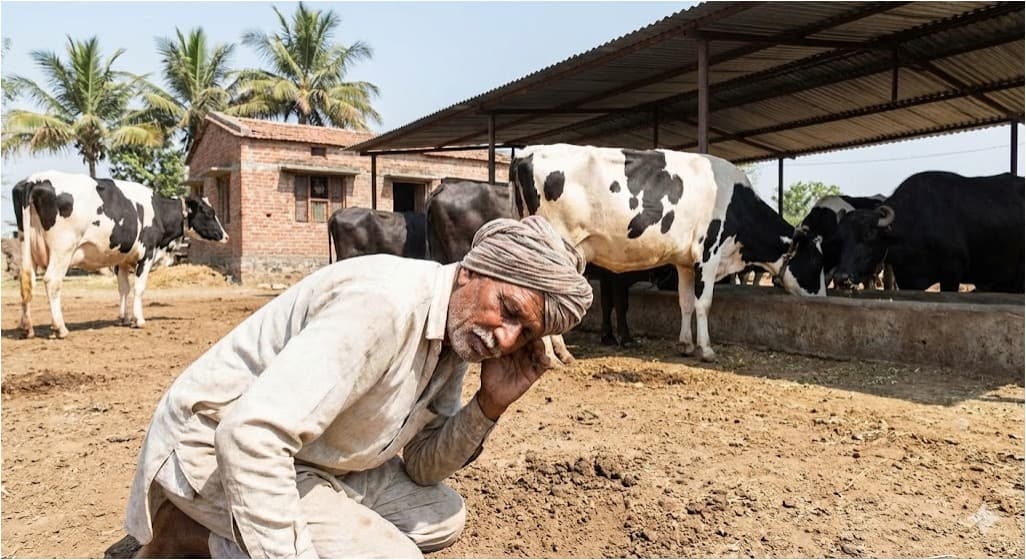
Global dairy production has risen dramatically over the last several decades, coinciding with a shift toward much larger dairies that rely on feed grain and also require giant manure lagoons.
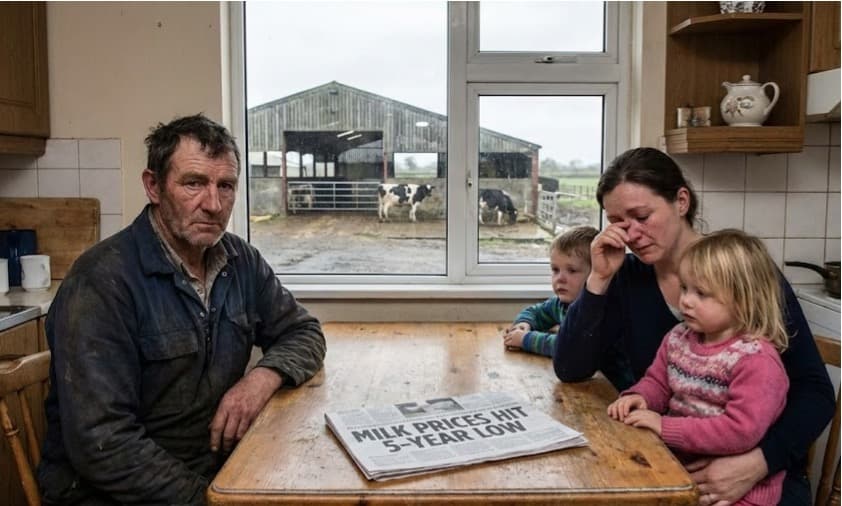
This expanding factory farm system has quickly become the world’s model. The European Union, United States, and New Zealand account for 46% of all global dairy production, with large-scale dairies driving small and mid-size dairy farmers out of business. In Europe, four out of five dairy farms disappeared between 1981-2013, while American dairies shrank from 125,000 to 54,000 from 1997 to 2017.
China, now the fourth largest dairy producer, has imported 1.2 million cattle over the last 5 years, with 80% being used to stock the expanding dairy factory farms. With more large farms, China’s dairy production grew from 30 to 39 million metric tons between 2018 and 2022.
Yet it is not only economic growth that has accompanied this new dairy model. It also brings with it the challenge of increased greenhouse gas (GHG) emissions, particularly methane, in the US and Europe. And in 2021, Chinese dairy cows emitted three times the methane emissions of New Zealand.
Governments around the globe have been slow to respond to rising dairy emissions. In our 2020 report Milking the Planet, we found that 13 of the world’s largest dairy corporations combined emitted more GHGs in 2017 than the US oil company ConocoPhillips.

Reining in the Methane Hoofprint
According to the 2023 Intergovernmental Panel on Climate Change report, rapid GHG emission cuts, particularly in methane, are needed in this decade to prevent catastrophic climate change. Methane, a short-lived GHG, only lives in the atmosphere for a decade but has around 80 times more warming potential than CO2.Livestock agriculture is the single largest source of methane, responsible for 32% of global anthropogenic methane emissions. Manure lagoons associated with the factory farm system also emit nitrous oxide, a GHG 273 times more potent than carbon.
Countries are starting to respond to this crisis with promises to take action. Launched at COP26 in Glasgow, more than 150 countries have committed to a Global Methane Pledge that aims to reduce global methane emissions by 30% by 2030. China did not join, but that nation is releasing its own Methane Action Plan.
Emissions Impossible?
To spur action on reducing agriculture methane, the Institute for Agriculture and Trade Policy (IATP) published a report with the Changing Markets Foundation in 2022 on the emissions of the biggest meat and dairy companies. When calculated over 20 years, these methane emissions could make up nearly 50% to 75% of the companies’ estimated GHG footprint.Some of the biggest dairy companies stood out. Dairy Farmers of America’s methane emissions are comparable to the total livestock methane of the United Kingdom. And despite their massive climate impact, most large dairy companies fail to fully report their GHGs. The few dairy companies with climate targets and net-zero plans often include claims that are not independently verified.
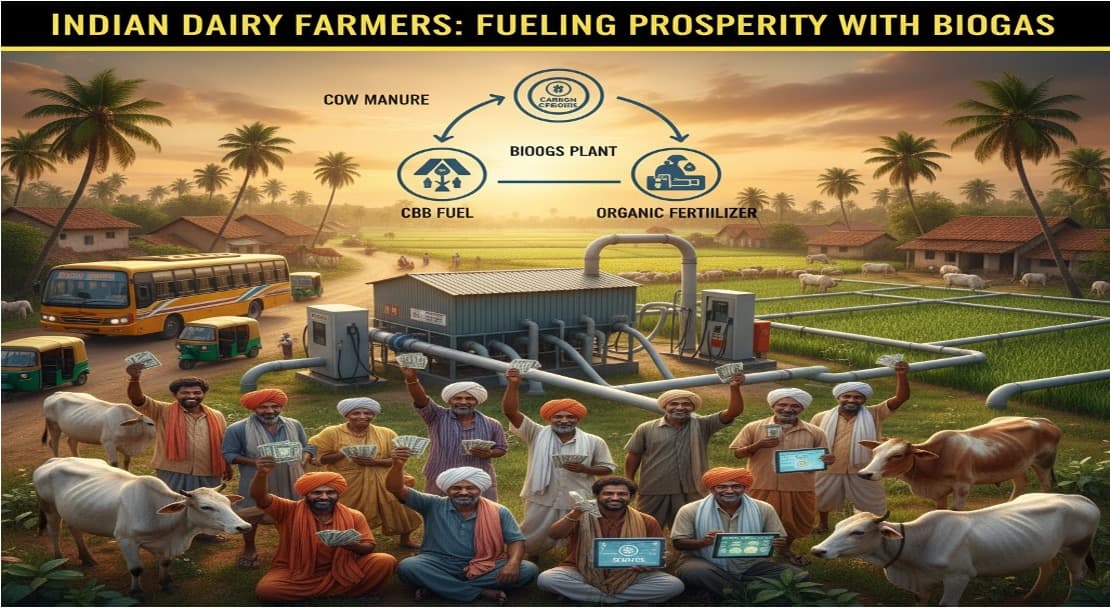
Rather than lessening the carbon footprint of its production, the dairy industry is choosing to employ technology fixes and carbon accounting tricks to “reduce” their emissions. Specifically, the dairy industry is promoting anaerobic digesters to capture methane from giant manure lagoons and convert the gas into heat, fuel and electricity. The rise in demand for biogas supported by government subsidies is pushing dairy expansions. These larger manure lagoons and biogas production are increasing air, soil and water pollution in low-income communities around these dairies.
California has invested over $350 million in digesters for large-scale dairy farms. A portion of that manure is converted into methane gas, often for natural gas pipelines. What remains is digestate—the leftover sludge which when exposed to air emits nitrous oxide. When this sludge is applied as fertilizer it can leach ammonia and nitrates into the soil and water. High levels of ammonia can severely degrade air quality for surrounding communities.
New research also suggests biogas production releases methane along the supply chain that are not being measured or acknowledged. IUCN scientists have argued that incentivizing manure production for biogas production could be increasing overall methane emissions at some big dairies.
Holistic Methane Strategies Possible
Many big dairy companies, like Fonterra, are seeking to reengineer herds to eliminate methane from cow guts through the use of seaweed or new fermentations called “Kowbuchas.” Other companies focus on per-animal emission reductions based on a variety of experimental biotech feeds and supplements.Such targets count emissions per kilogram of meat or milk, known as improving emissions intensity. Between 2005-2015, the industry reduced emission intensity by 11%; however, overall emissions increased by 18%. This was because the number of animals in the dairies dramatically expanded, even as they reduced emissions per liter of milk processed.
As the dairy industry has boomed, governments have been slow to address its emissions. The EU published a proposal for a Methane Regulation, which intends to cut emissions from the energy sector—but this proposal ignores livestock, the biggest source of methane. In the US, agriculture now represents 37% of all methane emissions. But IATP’s analysis of the Biden administration’s methane reduction plan shows it focuses almost exclusively on promoting biogas projects, without any limits on agricultural emissions. In New Zealand, more than 88% of methane emissions are from livestock production. That country is moving toward emission prices for agricultural methane, but how high those prices will be and what will qualify are still being sorted out.
Government action on the dairy industry’s GHG emissions will require a holistic approach to address the production drivers, including strategies to limit production while ensuring farmers can keep farming. In our Emissions Impossible: Methane Edition report, IATP and Changing Markets recommended these policy interventions:
- Set binding GHG and methane reduction targets for the agriculture sector in line with the global goal of limiting temperature increase to 1.5°C.
- Require dairy companies to consistently and comprehensively report their methane, nitrous oxide and carbon dioxide emissions separately (including scope 3).
- Set emission-reduction targets in line with science, including independent third-party verification.
- Enact a phased and bottom-up transition for farms to reduce animal numbers and keep farmers on the land.
- Regulate all pollutants (besides methane) from mass industrial livestock production to facilitate a transition towards agroecology.
SOURCE : Newsecurity beat Aug 31st 2023