


The cow’s status doesn’t protect her,’ says Yamini Narayanan
A senior lecturer at Deakin University in Australia, Yamini Narayanan exposes how the cow has been exploited to promote casteism and communalism. In an interview, she responds to questions that emerge from her ground-breaking book Mother Cow, Mother India. Edited excerpts.
Its political connotation notwithstanding, does cow vigilantism hold the ‘cow’ as a cultural symbol to promote vegetarianism? Why is she vulnerable to being a dairy or milch cow?
India is overwhelmingly and emphatically a non-vegetarian country, and cow vigilantes are not to be confused with animal activism whose overarching priority is usually veganism, a rejection of the consumption of all animal-derived products, including dairy and eggs, which are part of a vegetarian diet. Cow vigilantism is a mode of remaking the cow as a ‘Hindu’ body, and more specifically, as representing a Hindu state. And it is precisely the sacrality imposed on the cow that makes her vulnerable to being a ‘dairy’ or a ‘milch’ cow.Yamini Narayanan picture below–

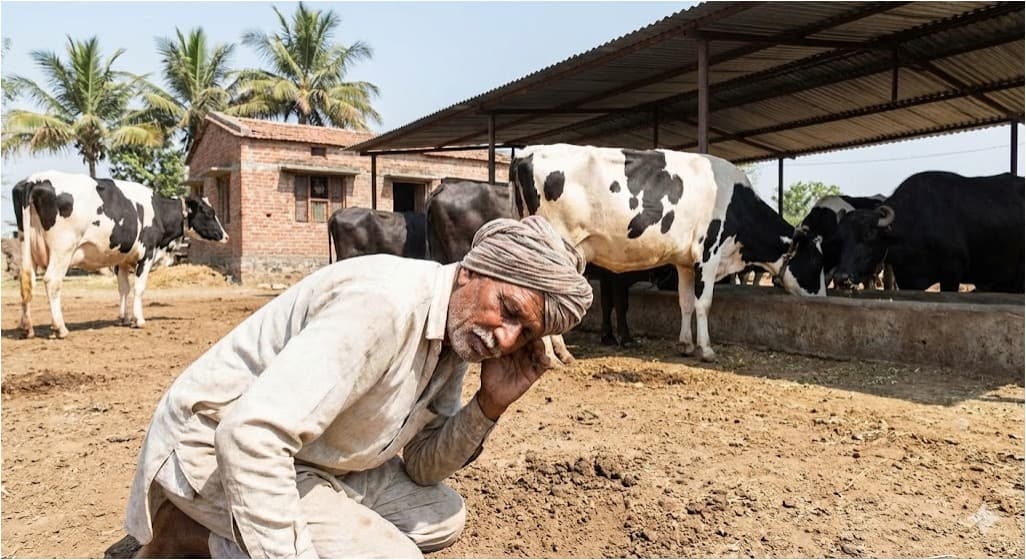
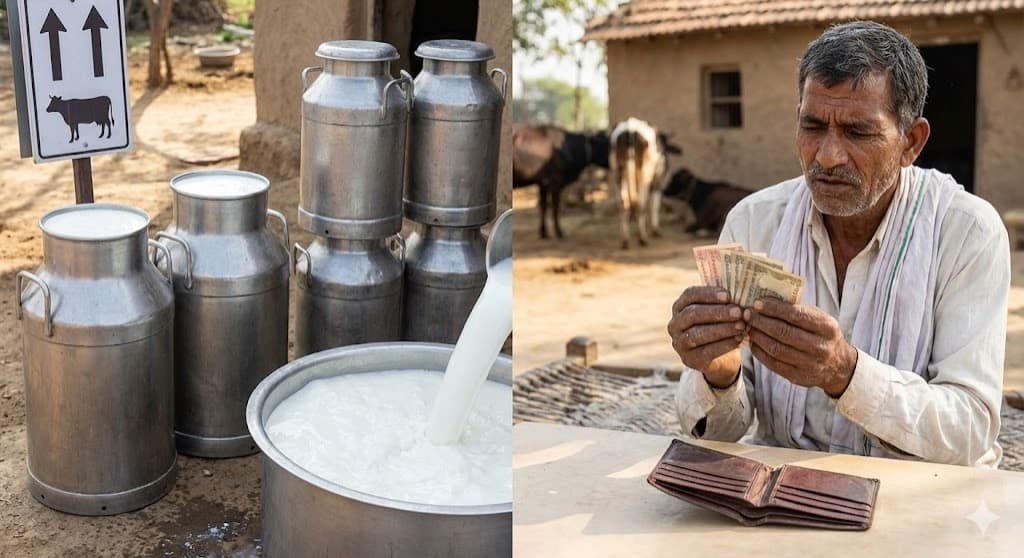
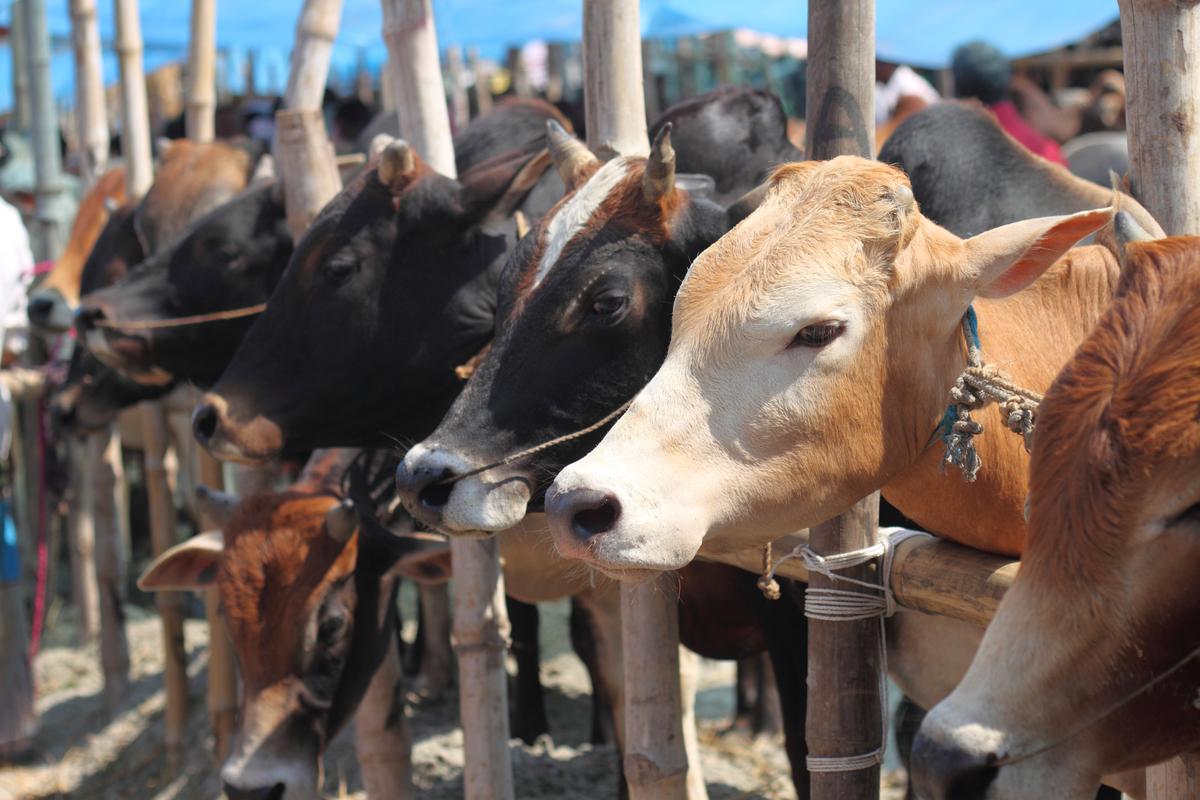
The need is to understand the politics of cow protectionism differently when we place the lived realities of cows and their infants at the centre. Cows are bred for dairying in India, but the extreme and unfathomable violence inherent in dairying is linked with slaughter. Cows who are infertile, diseased, male etc. must be necessarily sent to slaughter.
The public meta-narrative is that cows are either abandoned on the road or sent to gaushalas, but the cold reality of dairy economics is animals bred and exploited for dairy must be eventually slaughtered when no longer producing lactate. This happens underground in India. However, framing the cow as ‘mother’ or ‘goddess’ is basically a gaslighting tactic that blurs the cold reality that the cow is a milk-producing resource and economics demands that the unproductive resources be treated — and disposed of — as such. In masking this reality, the cow’s sacred status intensifies her vulnerability to being used for dairy — it does not protect her or her calf.
Hasn’t the ‘cow’ been consciously used as a political tool to promote identity? Is the idea of a nation-state (around ‘cow’) aimed at political control over the population at the cost of perpetuating social and economic inequality?
In India, cows have been made a ‘Hindu animal’ — and as ostensibly representing a Hindu state. Cows are of course, not naturally Hindu (or of any other religion), which are anthropocentric identifiers of the human self and human others. However, making cows Hindu and banning their slaughter as protection for ‘Hindu animals’, serves a divisive purpose in an aspirational Hindu state. My book, however, exposes the inherent contradiction — and impossibility — of banning cow slaughter in a state that heavily promotes and subsidises dairying. Dairy is a slaughter industry so a cow slaughter ban is a plain economic impossibility.Animal slaughter in any country is usually undertaken by some of the poorest, and most socially vulnerable communities. In India, it is some of the poorest engaging in slaughter, usually of the Dalit and Muslim communities, and who are at enormous risk of getting lynched, raped and killed, for essentially supporting the dairy industry which is both state-supported, and indeed, constitutive of the Hindu identity itself. No Hindu ritual is conducted without milk, ghee and butter, which all require cow slaughter.
Could a parallel be drawn between how we treat the Ganges and a cow?
Absolutely this parallel can and must be drawn. What both the Ganga and the cow demonstrate, is the harm that has been done to both, in the name of their sacralisation. Sacralisation is a form of objectification, and any objectification that is non-consensual, is profoundly harmful to the one being sacralised. The Ganga and the cow have both been harmed — precisely in the name of being sacred — quite literally to their deaths.Why is it that protectionism pertains to just one of the dairy animals (i.e. cow), and neither to its progeny nor its male cogenitor?
Vegetarianism is as violent as carnivorism, as vegetarianism involves the consumption of dairy and eggs, which are both deeply violent, extractive industries, that ultimately require slaughter of the animals. The fact that vegetarianism is also violent is universally blurred.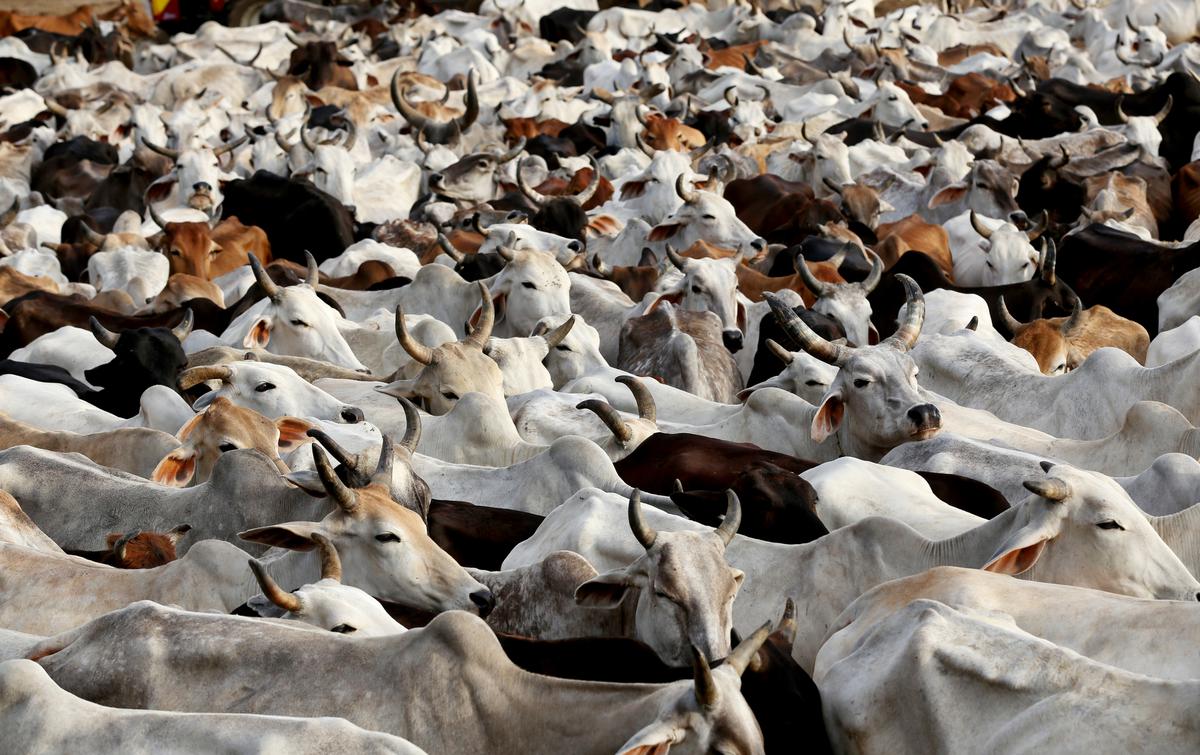
How does a society accommodate in daily life the binary of the ‘cow as a sacred animal’ and the ‘cow roaming the streets’ as a symbol of neglect?
In Indian society, we have come to normalise a huge spectrum of violence against animals. Cows, and indeed pigs, dogs, cats, pigeons, donkeys and so many others, eking out a bare existence by foraging in toxic rubbish dumps, is just one of them. What animals on the street embody, is a chronic state of raving hunger and disease, and also often a fear of human cruelty and violence, especially mothers seeking to feed and protect their newborns and infants. The scale of global animal hunger is scarcely understood and cannot be underestimated. Animals overwhelmingly live, exist and are born into states of chronic hunger — and hunger is something we consider to be one of the most elemental states of suffering when it comes to the members of our own species.We need to broaden the conversation from fetishising the cow as the exclusive concern. We need a clear-sighted animal politics that goes beyond cow politics — and radically expands our concern for animals beyond fascist, religious, or cultural politics around one species.