

Subvention schemes need better targeting in livestock sector
Two sectors that gained traction in rural India in the last five decades are dairy and microfinance. Both involved the latent power of women in the rural areas. About 2 crore people depend upon livestock for their livelihoods; it contributed 16% to the income of small farm households and an average of 14% for all rural households. This growth led to increased availability and consumption of milk, eggs and meat. The investment in fixed assets in rural India indicates additional income generating capability as dairy animals and equipment have the highest share in the total investment, followed by cattle sheds.
Microfinance has a big role in these investments. A majority of small farmers and landless labourers have had little credit history, and finding capital from formal sources is difficult for them. As per MFIN Micrometer, loan disbursals by microfinance companies increased 19% to Rs 77,877 crore during the quarter ending December 2022 and the total microfinance loan portfolio rose to Rs 3.21 trillion. Peer guarantee and negligible documentation requirement of the microfinance sector ensure enthusiastic adoption at the bottom of the pyramid. The dairy farmer, being in a position to get regular payment for milk, is able to make timely repayments, making her an ideal borrower.
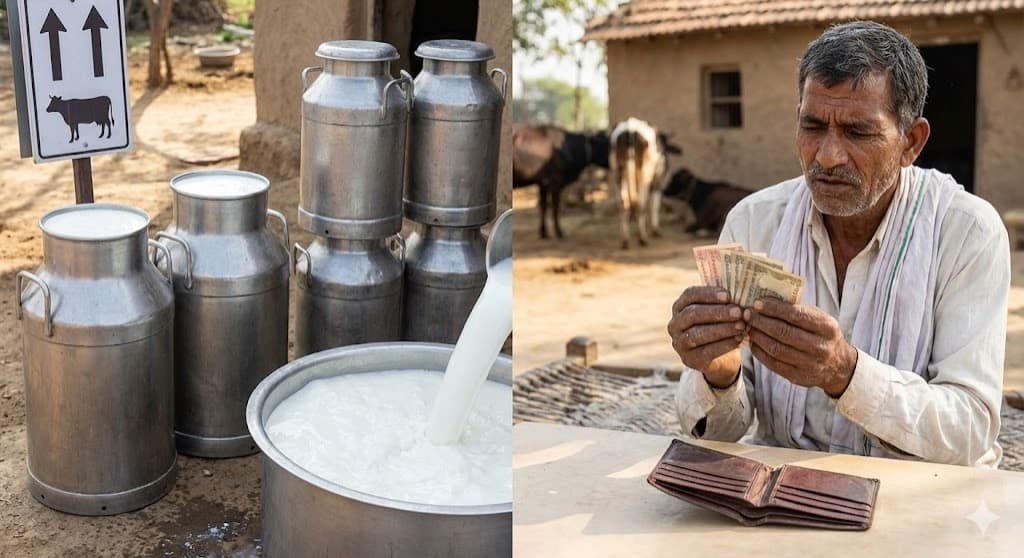
While the exact share of dairy in microfinance is not known, industry estimates put it at 20% . While initial investment is made in non-descript breeds of milch animals, as the borrower reaches the second or third cycle and is in a position to avail larger loans, she buys crossbred cows, buffaloes, or high-milk-yield cows, which cost `50,000-90,000. With a contribution margin of `5/litre and lactation days of ~300/year, the net generated income annually would be `45,000. For a micro credit borrower who borrows `45,000 at 18%, the EMI for two years would be `2,496; so, in effect, she is left with `1,250 per cow per month. Besides utilising largely underemployed women productively, the sector helps empower them.
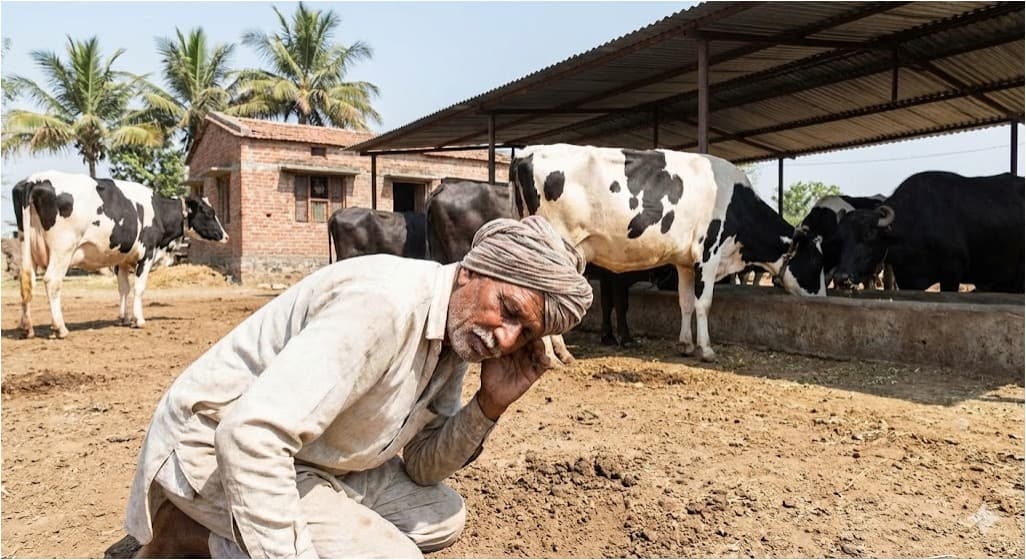
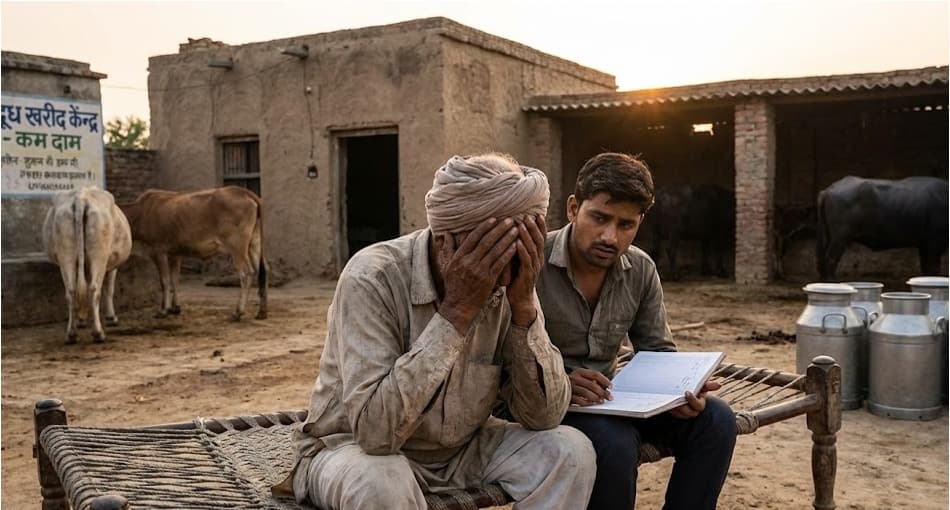
The government provides interest subvention for dairy processing and infrastructure through interventions like Dairy-processing & Infrastructure Development Fund (DIDF), Supporting Dairy Cooperatives & Farmer Producer Organizations (SDCFPO), and Animal Husbandry Infrastructure Development Fund (AHIDF). However, these are meant for institutions and industries that are at the second- or third-level of the supply chain. The primary unit in the dairy supply chain are the farmers (women microfinance borrowers), who end up paying anything between 15-24% interest on loans. But they get no direct benefit from interest subvention or concessional finance from the government, especially in states where dairy co-operatives and private industry are not very strong. Thus, the benefits of the schemes are reaped by comparatively better-off farmers in richer states like Gujarat, Karnataka and Tamil Nadu. One needs to enable rural borrower families in the poorer regions to look at raising resources at a cheaper rate.
It is time that the department of animal husbandry (DAHD), RBI, and NABARD understand that the interest subvention scheme needs to bring poor MFI borrowers in backward districts into its fold. Per DAHD’s Annual Report, the allocation for AHIDF was `113 crore, and less than `7 crore was spent on interest subvention. Similarly, `1,167 crore is earmarked for subvention from an outlay of `11,184 crore. But, the projects sanctioned till 2021 were to the tune of about `5,100 crore—less than half the outlay. DAHD must devise a scheme to deploy these unused funds for interest subvention that can directly benefit dairy-farmer MFI borrowers, for the next two or three years. These beneficiaries should necessarily be resident of the 100 aspirational districts identified by the NITI Aayog.
The DAHD already has an ambitious plan to make use of an Aadhaar equivalent for animals. This unique number could be used by banks or MFIs to link the animals to owners’ Aadhaar and bank accounts. If the interest subvention is made available only once—for one animal linked to one Aadhaar—there would be no room for misuse. This will make direct passing of the subvention to the dairy farmers easy for the government.
This will eliminate inefficiencies and augment dairy farmers’ income. For example, if 10,000 women borrowers in 100 backward districts are given `5,000 each as interest subvention, the total outlay will be `500 crore. Such subventions will not only result in a reduced interest burden on borrowers, but may prompt them to purchase a better yielding variety of milch animals and enhance their income over time.
Source : The Financial Express May 03rd 2023 by Arun Raste