Logo
IndianGlobalBlogsPublicationsPodcastsMarketAboutContact
Logo
IndianGlobalBlogsPublicationsPodcasts
7News
TN Minister Urges Farmers to Adopt Tech for Value Addition in DairyListen to the Farm, Not the Farmer—The New Productivity LensWhat’s Driving Change In Beverages, FMCG And Dairy in 2025ED begins money laundering probe in dairy investment fraud caseIndo-Brazil pact aims to boost cattle genetics and dairy yield

Indian Dairy News

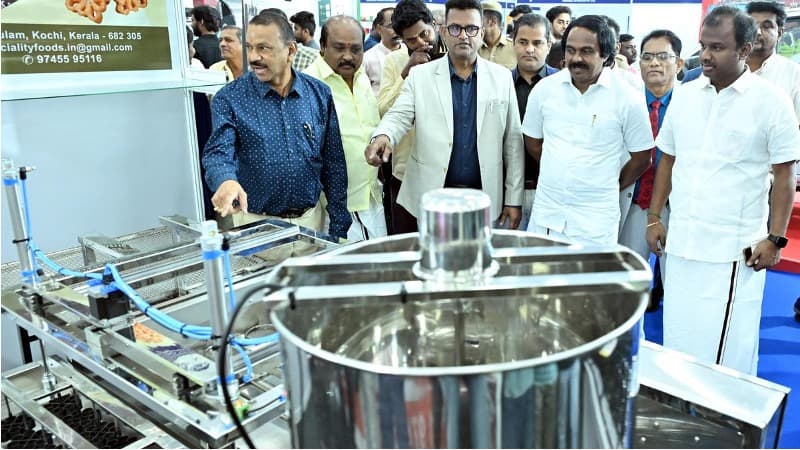
TN Minister Urges Farmers to Adopt Tech for Value Addition in Dairy
Dec 12, 2025

TN Minister Urges Farmers to Adopt Tech for Value Addition in Dairy

In Coimbatore this week, Tamil Nadu’s Minister for Milk and Dairy Development, Mano Thangaraj, called on dairy farmers to embrace modern technologies to boost productivity and value addition across th...Read More

Listen to the Farm, Not the Farmer—The New Productivity Lens
Dec 12, 2025

Listen to the Farm, Not the Farmer—The New Productivity Lens

India’s dairy sector, valued at nearly $30 billion, has reached a point where incremental changes will not deliver the next breakthrough. For decades, improvement programs have focused on what farmers...Read More

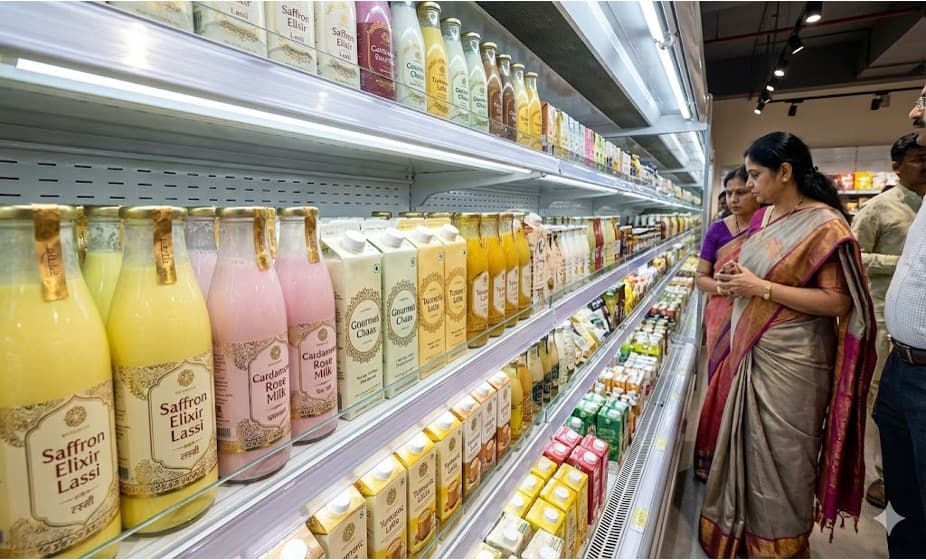
What’s Driving Change In Beverages, FMCG And Dairy in 2025
Dec 12, 2025

What’s Driving Change In Beverages, FMCG And Dairy in 2025

India’s retail landscape in 2025 was marked by a decisive shift in how consumers choose, consume and connect with brands. From beverages to daily nutrition and even the most essential dairy products,...Read More

Latest Blogs

See More
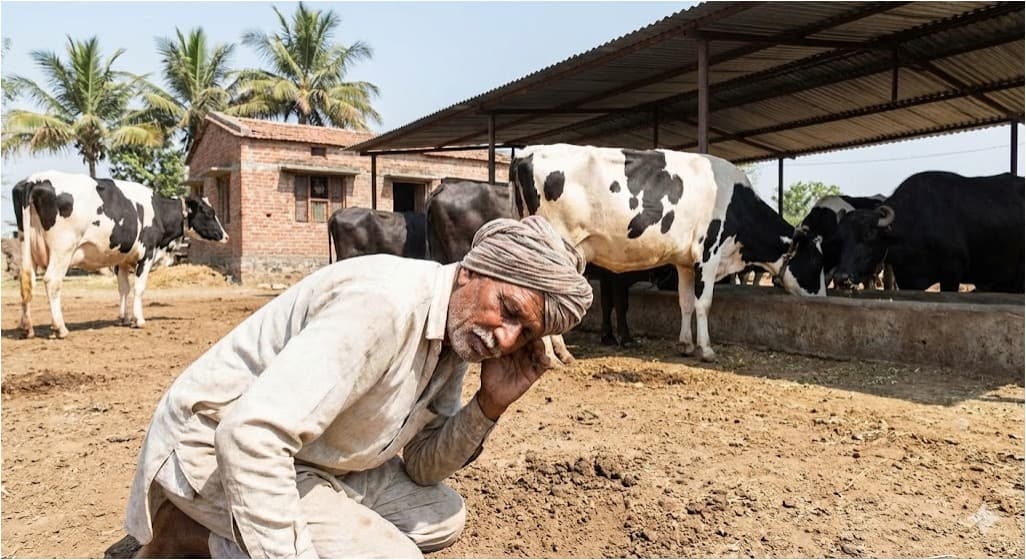
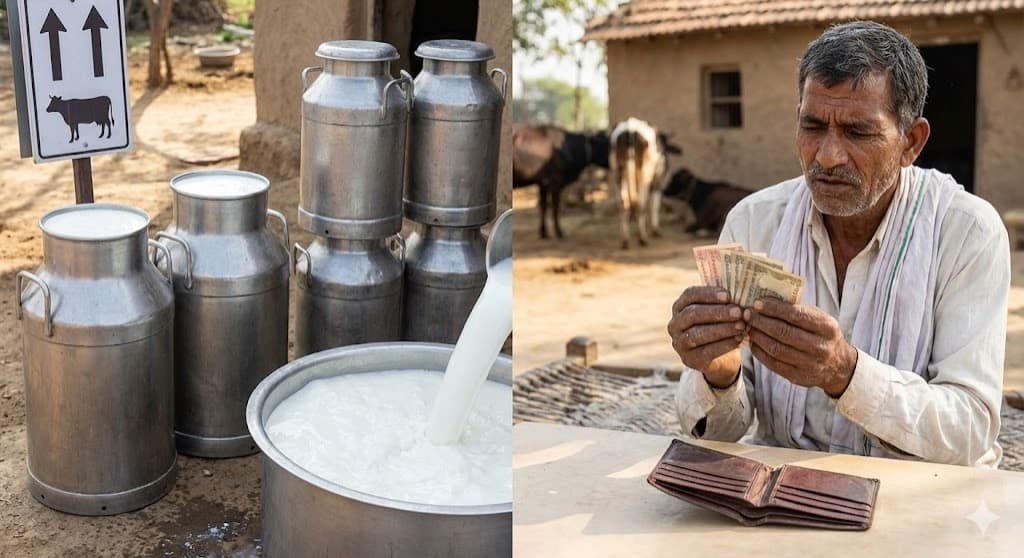
More Milk, Less Money: India’s Dairy Crisis
Dec 01, 2025

More Milk, Less Money: India’s Dairy Crisis

With the release of the BAHS 2025 summary report, I felt compelled to deep dive into its findings and reflect on the real progress and challenges facing India’s dairy sector. Over the last six years,...Read More

India Milk Prices: Cost Shock and Procurement Pressure
Nov 28, 2025

India Milk Prices: Cost Shock and Procurement Pressure

Milk prices in India face upward pressure as rising feed costs and procurement hikes reshape farm economics. Insight on dairy procurement, feed costs, and market outlook. Official government and coope...Read More

Stop Blaming, Start Claiming: Livestock’s Carbon Credit Future
Nov 16, 2025

Stop Blaming, Start Claiming: Livestock’s Carbon Credit Future

This week, I had the opportunity to attend an Agri Carbon Masterclass conducted by CII FACE. The deliberations, case studies, and discussions presented during the session were both insightful and thou...Read More

India Powers the Gulf’s Dairy Revolution -Gulf Food 2025
Oct 31, 2025

India Powers the Gulf’s Dairy Revolution -Gulf Food 2025

As Gulf Food Manufacturing prepares to open its doors from November 4–6 in Dubai, Indian dairy product and equipment manufacturers have a unique opportunity to explore one of the most promising region...Read More

Global Dairy News

Why the global milk business needs a structural shake-up
Dec 08, 2025

Why the global milk business needs a structural shake-up

The New Zealand dairy stalwart Fonterra has sold its consumer dairy-brands (milk, butter, cheese) — including “Anchor” and “Mainland Cheese” — to French agribusiness giant Lactalis in late October 202...Read More

Raw-milk prices in Europe hit 5-yr low; ripple effect looms
Dec 07, 2025

Raw-milk prices in Europe hit 5-yr low; ripple effect looms

European raw-milk prices have plunged to their lowest in five years, as oversupply and weak demand weigh on dairy markets across the region. According to recent data from DCA Market Intelligence B.V.,...Read More

Global food prices ease; FAO dairy index slips — impact looms
Dec 06, 2025

Global food prices ease; FAO dairy index slips — impact looms

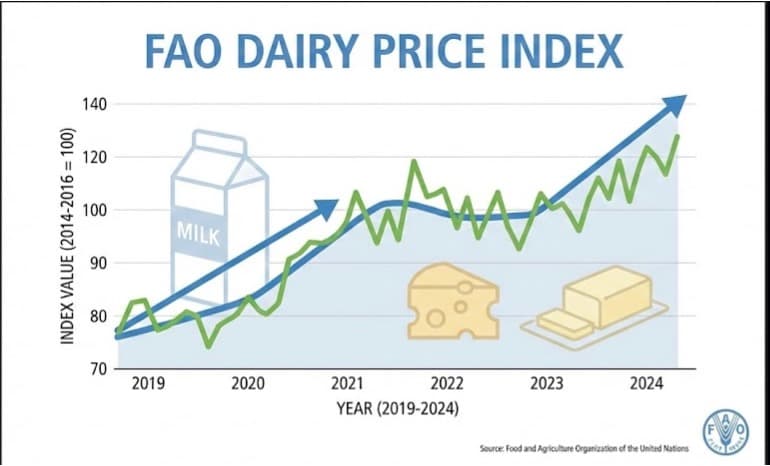
The FAO Dairy Price Index averaged 137.5 points in November, down 4.4 points (3.1 percent) from October and 2.4 points (1.7 percent) from its value a year ago. International dairy prices fell for the...Read More

Dairy News 7x7

Your trusted source for all the latest dairy industry news, market insights, and trending topics.

FOLLOW US
CATEGORIES
  • Global News
  • Indian News
  • Blogs
  • Publications
  • Podcasts
SUBSCRIBE TO OUR NEWSLETTER

Stay informed with the latest updates and trending news in the dairy industry.

No spam, unsubscribe at any time

GET IN TOUCH
C-49, C Block, Sector 65,
Noida, UP 201307
+91 7827405029dairynews7x7@gmail.com

© 2025 Dairy News 7x7. All Rights Reserved.

Terms of ServicePrivacy Policy

Sodhi resignation — Milk industry jolted, writes RN Bhaskar

By Kuldeep Sharma•Published on January 15, 2023

Last week delivered a shock to many in the milk industry.  R.S. Sodhi, the senior-most executive of the largest milk cooperative in India accounting for a turnover of Rs. Rs 46,481 crore in 2021-22, stepped from the helm of affairs.  He resigned from the post of managing director of the Gujarat cooperative Milk Marketing Federation (GCMMF).

His resignation sent shockwaves through the entire agricultural sector.  Many speculate that he was asked to leave because of political reasons.

The Mint stated “other board member who attended the meeting had another take on the issue. “A day before the meeting, chairman (of GCMMF) had asked all board members to be present for the meeting. It was during this meeting (that) we were informed that it was the party’s decision to not allow Sodhi to continue,” As per details, all the 18 milk unions that are members of the GCMMF have BJP-aligned chairpersons. But only ten of them attended this meeting.  Even more worrying is that after the board meeting two of Sodhi’s PAs were also removed from their posts.
GCMMF is the apex body for cooperatives which markets milk and milk products under the AMUL brand.  It owes its origins to the times when milk became a symbol of protest. It was founded in 1946 to stop exploitation of farmers by middlemen. It was inspired by the freedom movement.  The architect of the milk revolution was Verghese Kurien.  Today, the government seems intent to erase his memory.

Currently, more than 17 million milk producers pour their milk in 185,903 dairy cooperative societies across the country. That milk is processed in 222 district cooperatives milk unions and marketed by 28 state marketing federations ensuring a better life for millions. Worryingly, the manner in which Sodhi stepped down is a pointer of things to come.

The Sodhi resignation comes on the hells of five developments which hold out dire portents for India’s largest employer – the agricultural sector but more specifically for the milk sector.

Cow slaughter ban without compensation

The biggest blow to this sector was the central government ban on cow slaughter in May 2017.  It is worth noting that Prime Minister Modi did not speak about the need for such a ban all the time when he was the chief minister of Gujarat (for almost 15 years) despite that state being one of the major milk producers.  Clearly, political compulsions must have changed when he assumed the post of PM.

There is nothing wrong with a government pushing through a legislation which it believes is core to the sentiments of a nation.  But to do this without compensating cattle owners who are affected is patently unfair.  Farmers earned around Rs.20,000 or more when they sold the ageing cattlehead to a trader who in turn sent it to those engaged in the business of meat and leather.

Now the farmer could not get his Rs.20,000, which he used, along with additional borrowings, to purchase a young cattlehead.  With this money not available anymore, the farmer felt constrained.  Nothing shows this up better than the milk production statistics.  The growth in milk production has remained muted since then. In turn, that has resulted in national loses of around Rs.30,000 crore annually.

While slaughter ban does not apply to buffaloes, frenzied gau rakshaks (cattle protectors) are known to waylay any meat wagon, claiming that the consignment is cow’s meat.  The trucks are left in the blazing sun, allowing the meat to go rotten.  Forensics take time, and it is ironic that a country which does not have adequate forensic facilities for humans, is now compelled to do forensics on cattle meat. All this, in turn, has prevented the leather and meat businesses from growing well.

Do note that both leather and milk are labour intensive.  Leather is a major export earner as well. Milk production involves around 10 crore (100 million) farmers who often keep their cattle in their backyard.  Assuming five people per rural household, it is safe to say that the cattle business involves at least 50 crore people. Moreover, milk already accounts for 5.2% of India’s GDP (a quarter of agricultural GDP) which is larger than both rice and wheat put together. As Sodhi points out to people, milk contributes 30%to agriculture GDP but gets on 0.1% and 1.7% of central budget allocation. Expect GDP growth to suffer.  But, for politicians, the number of farmers makes is a tempting target and they want to use cooperatives for garnering votes.

Farmer unfriendly moves

Even while India was trying to cope with the cow slaughter ban (which actually ended up becoming a cattle slaughter ban through fear and intimidation), the government even tried to sell away India’s milk interests, by almost allowing New Zealand to sell its milk products into this country.  The moves appeared innocuous but had the potential of wiping out India’s gains, thanks to Kurien.  Sodhi stoutly protested against such moves. Eventually, faced with a whiplash, the government withdrew from the RCEP. It is possible that the incident had made Sodhi a marked man.

A third move by the government was to slyly allow edible oil imports, under the justification that it needed to cool domestic edible oil prices.  Actually, the opposite happened.  But Indian farmers lost out.  Imports have almost vanquished the Indian edible oilseed sector.

A fourth anti-farmer move was the ban on futures trading.  Banning market trading actually prevents farmers from discovering future prices.  It adversely affects their ability to plan to move into more remunerative crops.

Politicising cooperatives

A fifth move was making the government play a key role in India’s cooperatives, including milk cooperatives. As The Hindu explains, “After Independence, the framers of the Constitution placed cooperatives in the State list. They came to be considered instruments of socio-economic development and became an essential focus of the initial Five-Year Plans. States made their own laws to regulate cooperatives within their jurisdiction, but in 1984, the Multi-State Co-operative Societies Act (amended in 2002) was enacted by Parliament to consolidate different laws at the central level. Verghese Kurien did not want the government to meddle with cooperatives.  That policy is being changed.  Sodhi, it appears, was not too happy with it.  Nor was he happy with the way a BJP office bearer of one of Gujarat’s milk cooperatives was indirectly given an export subsidy to bail him out with surplus production.  Kurien had built his cooperatives without touching government subsidies, or largesse.  That too is being modified now.  At least one of them even threatened to walk out of the GCMMF but finally chose not to.  Government subsidies would bail out this cooperative as well.

Risky times ahead

The danger with subsidies for an industry that has grown without them, is that it fortifies the weak and penalises – even cripples – the efficient.   That is not a happy state to be in.

Sodhi’s resignation will undoubtedly further weaken the milk cooperative movement – carefully crafted by Kurien. It could have dire consequences for the entire agricultural sector, because most farmers who have adopted good feeding practices earn a profit (income less all expenses) of at least Rs.100 per cattle per day for 300 days a year. It is the only agricultural commodity which gets the farmer a daily cashflow (sometimes once in ten days).  Rice and wheat give them a cashflow once in six months.  Vegetables do that once in 30 days.  Milk has been a godsend for Indian farmers and Indian nutrition.

Just look at the ICOR (Incremental capital output ratio) table. The biggest bang for the buck comes mostly from agriculture and livestock related sectors.  It is the biggest employer.  All that is now at risk. Two years ago, the farmer agitation was the result of several policies that had hurt the farmer.   Two years  ago these columns talked about how there was little in the budget for agriculture.

With Sodhi’s abrupt exit, agriculture has been rendered weaker.

Source : Free Press Journal Jan 13th 2023 by R N Bhaskar The author is consulting editor with FPJ

Swipe to continue reading

Previous Article

Next Article