Logo
IndianGlobalBlogsPublicationsPodcastsMarketAboutContact
Logo
IndianGlobalBlogsPublicationsPodcasts
7News
TN Minister Urges Farmers to Adopt Tech for Value Addition in DairyListen to the Farm, Not the Farmer—The New Productivity LensWhat’s Driving Change In Beverages, FMCG And Dairy in 2025ED begins money laundering probe in dairy investment fraud caseIndo-Brazil pact aims to boost cattle genetics and dairy yield

Indian Dairy News

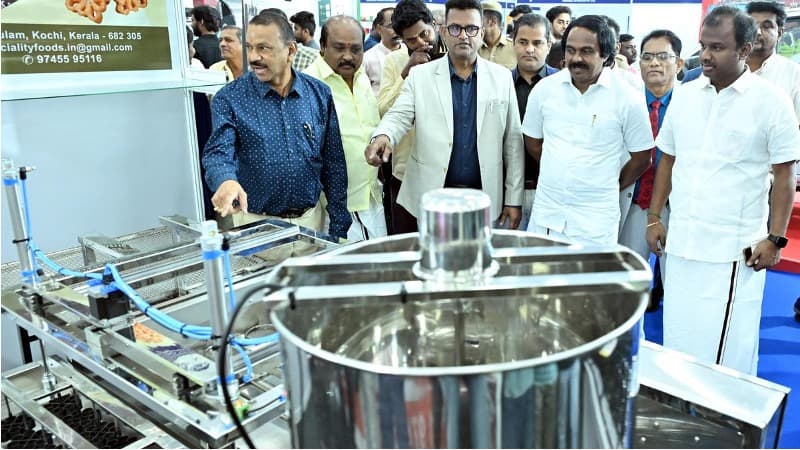
TN Minister Urges Farmers to Adopt Tech for Value Addition in Dairy
Dec 12, 2025

TN Minister Urges Farmers to Adopt Tech for Value Addition in Dairy

In Coimbatore this week, Tamil Nadu’s Minister for Milk and Dairy Development, Mano Thangaraj, called on dairy farmers to embrace modern technologies to boost productivity and value addition across th...Read More

Listen to the Farm, Not the Farmer—The New Productivity Lens
Dec 12, 2025

Listen to the Farm, Not the Farmer—The New Productivity Lens

India’s dairy sector, valued at nearly $30 billion, has reached a point where incremental changes will not deliver the next breakthrough. For decades, improvement programs have focused on what farmers...Read More

What’s Driving Change In Beverages, FMCG And Dairy in 2025
Dec 12, 2025

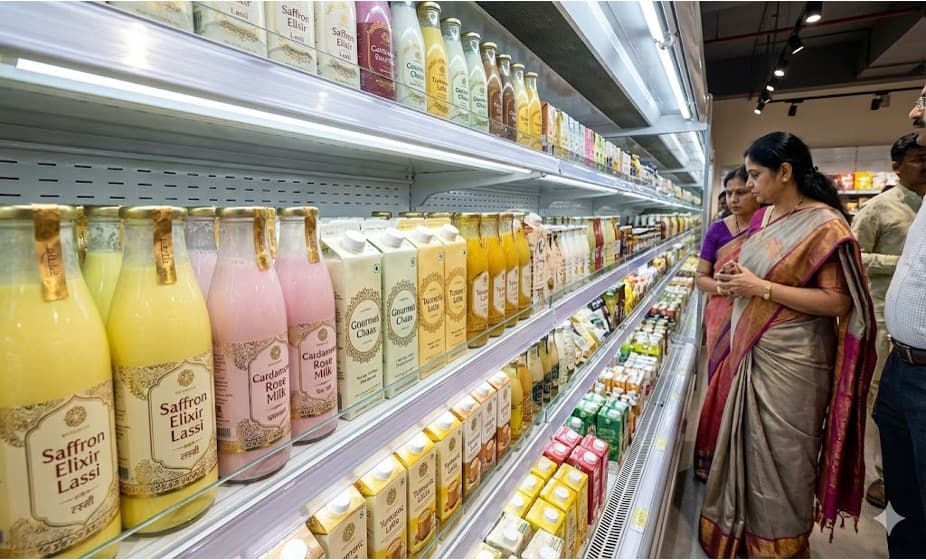
What’s Driving Change In Beverages, FMCG And Dairy in 2025

India’s retail landscape in 2025 was marked by a decisive shift in how consumers choose, consume and connect with brands. From beverages to daily nutrition and even the most essential dairy products,...Read More

Latest Blogs

See More
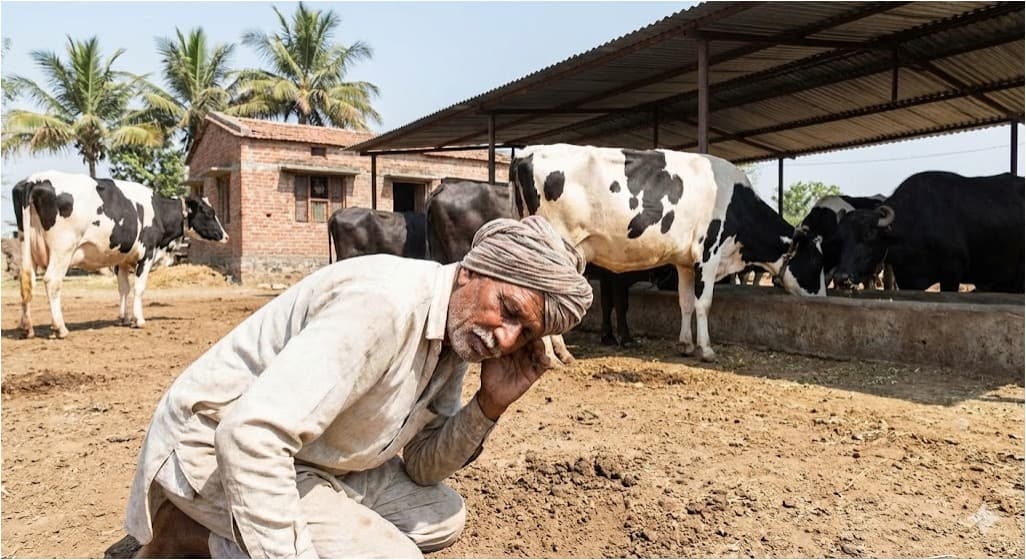
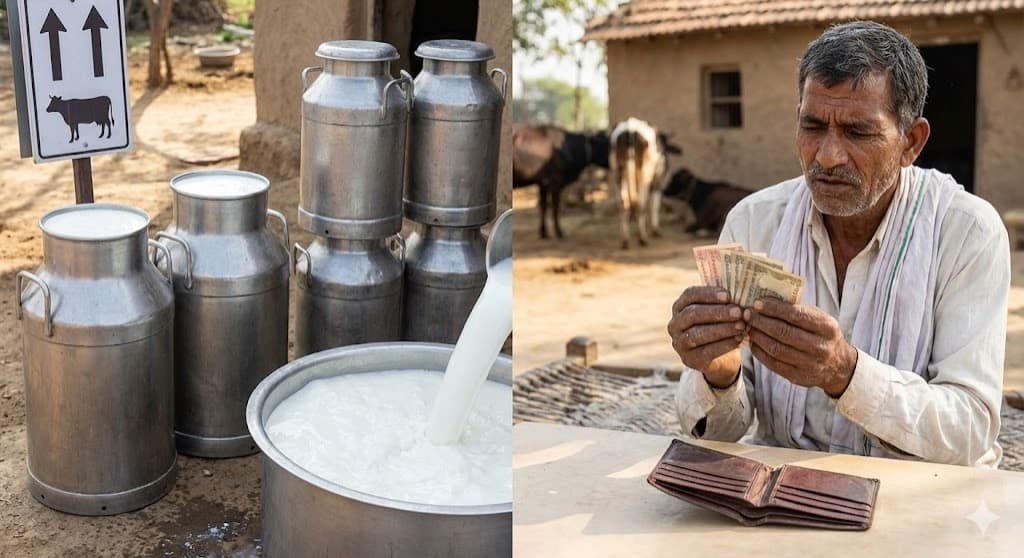
More Milk, Less Money: India’s Dairy Crisis
Dec 01, 2025

More Milk, Less Money: India’s Dairy Crisis

With the release of the BAHS 2025 summary report, I felt compelled to deep dive into its findings and reflect on the real progress and challenges facing India’s dairy sector. Over the last six years,...Read More

India Milk Prices: Cost Shock and Procurement Pressure
Nov 28, 2025

India Milk Prices: Cost Shock and Procurement Pressure

Milk prices in India face upward pressure as rising feed costs and procurement hikes reshape farm economics. Insight on dairy procurement, feed costs, and market outlook. Official government and coope...Read More

Stop Blaming, Start Claiming: Livestock’s Carbon Credit Future
Nov 16, 2025

Stop Blaming, Start Claiming: Livestock’s Carbon Credit Future

This week, I had the opportunity to attend an Agri Carbon Masterclass conducted by CII FACE. The deliberations, case studies, and discussions presented during the session were both insightful and thou...Read More

India Powers the Gulf’s Dairy Revolution -Gulf Food 2025
Oct 31, 2025

India Powers the Gulf’s Dairy Revolution -Gulf Food 2025

As Gulf Food Manufacturing prepares to open its doors from November 4–6 in Dubai, Indian dairy product and equipment manufacturers have a unique opportunity to explore one of the most promising region...Read More

Global Dairy News

Why the global milk business needs a structural shake-up
Dec 08, 2025

Why the global milk business needs a structural shake-up

The New Zealand dairy stalwart Fonterra has sold its consumer dairy-brands (milk, butter, cheese) — including “Anchor” and “Mainland Cheese” — to French agribusiness giant Lactalis in late October 202...Read More

Raw-milk prices in Europe hit 5-yr low; ripple effect looms
Dec 07, 2025

Raw-milk prices in Europe hit 5-yr low; ripple effect looms

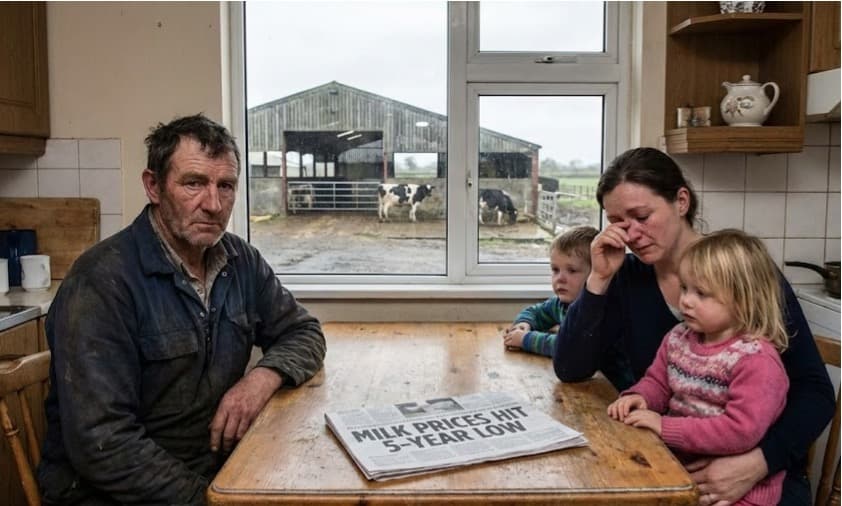
European raw-milk prices have plunged to their lowest in five years, as oversupply and weak demand weigh on dairy markets across the region. According to recent data from DCA Market Intelligence B.V.,...Read More

Global food prices ease; FAO dairy index slips — impact looms
Dec 06, 2025

Global food prices ease; FAO dairy index slips — impact looms

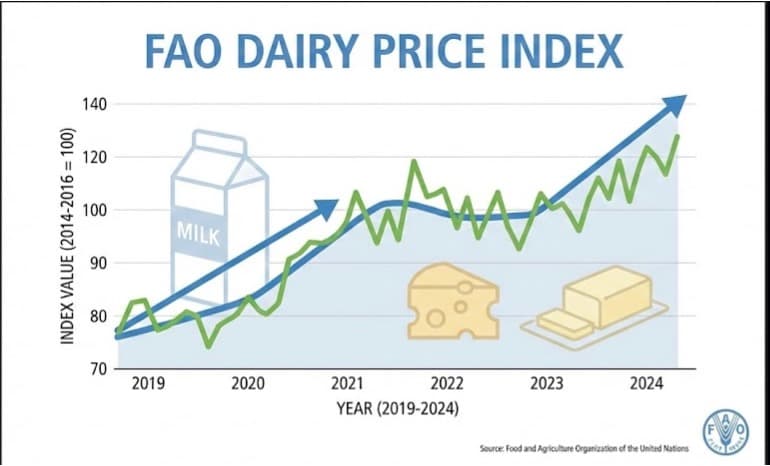
The FAO Dairy Price Index averaged 137.5 points in November, down 4.4 points (3.1 percent) from October and 2.4 points (1.7 percent) from its value a year ago. International dairy prices fell for the...Read More

Dairy News 7x7

Your trusted source for all the latest dairy industry news, market insights, and trending topics.

FOLLOW US
CATEGORIES
  • Global News
  • Indian News
  • Blogs
  • Publications
  • Podcasts
SUBSCRIBE TO OUR NEWSLETTER

Stay informed with the latest updates and trending news in the dairy industry.

No spam, unsubscribe at any time

GET IN TOUCH
C-49, C Block, Sector 65,
Noida, UP 201307
+91 7827405029dairynews7x7@gmail.com

© 2025 Dairy News 7x7. All Rights Reserved.

Terms of ServicePrivacy Policy

PM Modi lauds contribution of dairy farming in the Farmer’s Income

By DairyNews7x7•Published on February 09, 2021

Prime Minister Narendra Modi made some pertinent points on the much-needed farm reforms and did well by mentioning the contribution of dairy farming. In his Rajya Sabha address on Monday, he said: “The contribution of dairy farming is over 28 per cent in the agricultural market in India. Its trade is worth Rs 8-lakh crore. The value of milk is both higher than food grains and pulses combined together.”

This has to be seen in light of the government’s attempts to improve rural incomes. But how to increase the rural income should be the focus. The government data paints a dismal picture as it reveals the growth of income through cultivation to be 3 per cent and through animal husbandry 14 per cent. The per capita income in the village is Rs 6,500. All these figures come in the backdrop of the government’s efforts in doubling farmer’s income. Once the income is doubled, it will lead to growth opportunities.

Animal Husbandry sector

Now when we come to the dairy/animal husbandry sector, we find that it contributes 28 per cent to the agriculture GDP and 4.5 per cent to the national GDP. But the agriculture contribution to the GDP is reducing day by day. At the time of Independence, it was 50 per cent and it is just 15 per cent now. It shows that the agriculture cultivation is going down, while the animal husbandry is going up. (Animal husbandry is Rs 11-lakh crore and the diary is Rs 8-lakh crore). With this, we see that dairy value is more than the combined price of wheat, paddy and sugarcane, where the Minimum Support Price (MSP) is there. In the milk sector, there is no MSP.

Next, we see that in the agriculture cultivation, only landowner farmers are involved, and in dairy, more than 80 per cent of landless and marginal farmers are involved.

The three farm reform measures taken by the government enable the farmers to sell their produce freely to anybody, anywhere and at any price. The industry was liberalised in 1991 and the dairy industry was liberalised in 1992. Although even before that farmers were free to sell their produce to anybody, there were restrictions on the investments by the private sector under certain categories.

Growth in the dairy sector

If you see the dairy industry, its growth in production in the last ten years is more than 6 per cent, which is three times more than the increase in world milk production. In the case of milk, neither we are surplus nor deficit, we produce what we consume. Where in the case of wheat, paddy and sugarcane, we have got surplus but no opportunity for exports. We have a deficit for pulses and edible oil and we are importing Rs 75,000 crore worth of edible oil and Rs 10,000 crore worth of pulses. So the intention of farm bills is to free farmers like industry and animal husbandry and dairy farmers.

We need to divert our agriculture from domestic surplus (wheat, paddy and sugarcane) to import substitution (edible oil and pulses).

Agriculture farmers who are mainly landowners get subsidies like fertilisers, power, seed, crop insurance subsidy, etc. worth Rs 2,15,000,00 per annum as said in the latest Union Budget. On the other hand, the animal husbandry gets only Rs 3,500 crore, (1.5 per cent of the agriculture budget).

APMC versus milk cooperatives

Also, I would like to share that in the case of agriculture, there are 6,000 to 7,000 APMCs and for the milk sector, there are more than 3 lakh mandis in 6,000 villages. So we see that with the corporates, there is competition based on their supply chain efficiency.

I feel that if the government can encourage more MSMEs to enter into buying and aggregating agriculture crops at the village level, this apprehension of the bigger industries monopolising the purchase can be addressed.

Swipe to continue reading

Previous Article

Next Article