





NutriScore, Algorithm Update for Milk drinks and Beverages
On March 30, 2023 it Steering Committee of NutriScore (in which the governments of Belgium, France, Germany, Luxembourg, the Netherlands, Spain and Switzerland participate) has approved an update of the algorithm for drinks. (1)
This completes the update of the nutritional profiles of #NutriScore which began with the changes to the algorithm, approved on July 26, 2022, for solid foods. (2) So as to ensure its best adherence to nutritional recommendations.
1) NutriScore and nutritional recommendations relating to the consumption of drinks, introduction
The category of drinks – in line with the system of food categories adopted by Codex Alimentarius for the classification of food additives – now includes plant-based drinks, but also milk, milk-based drinks and fermented milk-based drinks. In order to clarify the terms of comparison, which are also relevant (and not only) for added sugars and the Glycemic Index. (3)The Scientific Committee of NutriScore also reviewed the scientific literature on the relationship between the consumption of non-nutritive sweeteners (non-nutritive sweeteners, NNS) and unfavorable health outcomes. As we have seen, with regard to their impact on the microbiota and possible correlations with cardiovascular disease and premature mortality, which are added, among other things, to the so-called ‘paradox effect’ (4,5,6).
2) NutriScore algorithm for beverages, updated
The NutriScore algorithm for drinks it is thus subjected to updating on a scientific basis, taking into account the food-based dietary guidelines and the most recent scientific literature, in order to:- carefully distinguish milk and yoghurt-based drinks with a high sugar content which, as our market research also shows, have problematic nutritional profiles, (7)
- add a penalty for the presence of sweeteners in drinks, for better adherence between the NutriScore classification of sugary drinks and public health recommendations.
3) Water, fruit juices, and other beverages
The water remains the only beverage classified in the NutriScore class A. The algorithm for fruit juices and all other beverages – including naturally low-calorie ones – remains unchanged, with NutriScore scores and classifications ranging between categories B and E, in relation to nutritional profiles.Cocoa, coffee and chicory powder are subjected to the NutriScore algorithm for beverages, when their nutritional declaration (per 100g/mL) refers to the product ready for consumption, after reconstitution with milk or water. As indeed dutiful, where the products are presented for this purpose.
4) Application implications
Changes to the algorithm proposed by the Scientific Committee, explains Professor Serge Hercberg, lead to changes in the classifications of some groups of beverages and make it possible to better distinguish products based on their nutritional composition.4.1) Milk and milk-based drinks
The milks Skimmed and semi-skimmed are in the most favorable NutriScore classes for beverages (after water). It is thus possible to differentiate the types of milk according to their fat content, as well as with respect to sweetened milk-based drinks.The milk Skimmed and semi-skimmed cow milk are mostly classified in NutriScore class B, whole milk in C. Whole milk from other species may have a different nutritional profile (higher in saturated fatty acids) and score lower.
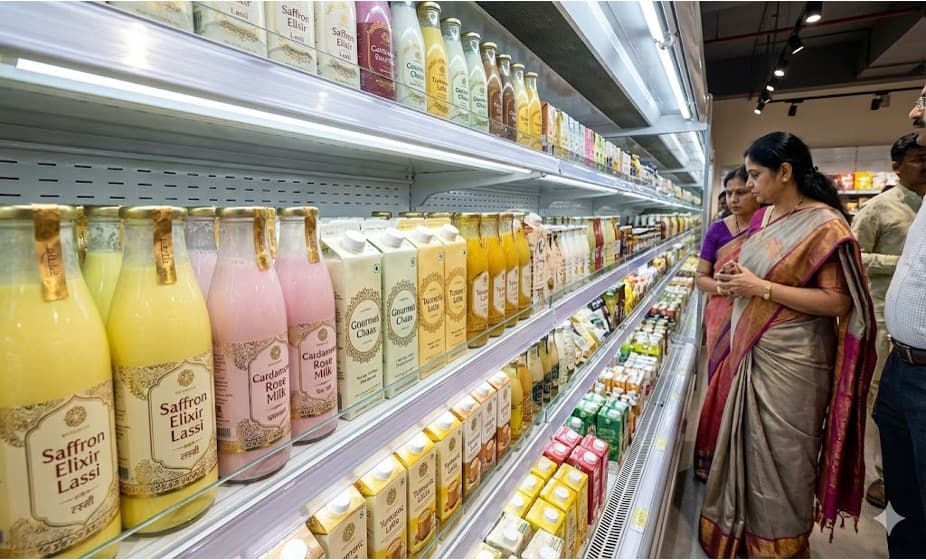
Beverages based on sweetened milk (flavoured milks) will no longer be included in the Nutri-Score classes A or B, as has been the case up to now. The new algorithm for drinks will place low-sugar drinks in C, others in D and E.
Same to you applies to fermented milk-based drinks (including those based on sweetened and flavored yogurt), which in turn will no longer be classified as A, but differentiated according to the sugar content between the NutriScore classes C and E.
4.2) Other beverages
The increasingly popular plant-based beverages (e.g. soy, almonds, oats, rice) will no longer be classified as NutriScore A, as they are now. Instead, they will be distributed between classes B and E, based on their nutritional profiles.The drinks sweetened with very limited quantities of sugar (<2 g/100mL) will be moved to NutriScore class B, while those with high quantities of sugar will be kept in D/E, in order to favor their distinction based on the sugar content.
5) Provisional conclusions
The update of the NutriScore algorithm for the beverage category, as already performed for solid foods, allows a better alignment between the nutritional recommendations and the information offered by the NutriScore.The citizens European consumers can already receive NutriScore’s valuable information on the nutrient profiles of foods through several Whatsapp – from the very popular Yuka to OpenFoodFacts and Que Choisir (8,9) – and even earlier on the label.
6) Market prospects
I italian retailer and operators in the food chain can best express their social responsibility by applying the NutriScore on the label, which:- offers consumers transparency of nutritional profiles on product packaging, without forcing them to use an app (or making them choose other supermarkets and ‘no secrets’ product lines),
- stimulates the adoption of concrete commitments to improve the nutritional profiles of the food products on sale, to promote the health of the population.
7) European and national policies
The political class, at European and EU Member State level, in turn distinguishes between:- who favors the retrograde interests of the industry junk food. Italy in first place, (10) followed by Cyprus, Greece, Czech Republic, Latvia, Hungary. A Brancaleone army to which Romania has joined, which has even banned the use of the NutriScore on the label, starting from 1 May 2023. (11) In clear contrast, ça va sans dire, with the principle of free movement of goods on which the EU is founded and which the European Commission culpably neglects, (12)
- Member States and politicians who instead promote the essential human right to health and well-being as a priority over the junk food business and guarantee citizens informed consumption choices. Through the standard of FOPNL (Front-of-Pack Nutrition Labeling) identified as the best available by the medical-scientific community. The NutriScore in fact, also officially recognized by Holland as the FOPNL of reference, starting from 1 January 2024 (13,14).