Logo
IndianGlobalBlogsPublicationsPodcastsMarketAboutContact
Logo
IndianGlobalBlogsPublicationsPodcasts
7News
Hatsun Agro Q3: Revenue, net profit surgeIndia Slaps 30% Duty on US Pulses; Trade Talks Feel StrainHigh-Oleic Soybeans Could Transform Dairy Feed & Milk QualityAmul Dairy Records ₹14,099 Cr Turnover, 9.2% GrowthHi-Tech dairy plant to be commissioned in Namakkal in February

Indian Dairy News

Hatsun Agro Q3: Revenue, net profit surge
Jan 19, 2026

Hatsun Agro Q3: Revenue, net profit surge

Dairy products maker Hatsun Agro Products Ltd. on Monday, January 19, reported a 48% year-on-year (YoY) growth in net profit to ₹60.6 crore for the quarter ended December 31, 2025. Net profit for the...Read More

Amul Dairy Records ₹14,099 Cr Turnover, 9.2% Growth
Jan 19, 2026

Amul Dairy Records ₹14,099 Cr Turnover, 9.2% Growth

The Kaira District Cooperative Milk Producers’ Union Ltd (Amul Dairy) reported a turnover of ₹14,099 crore in FY25, marking a 9.2 % year-on-year growth, according to figures announced at its 79th Annu...Read More

Hi-Tech dairy plant to be commissioned in Namakkal in February
Jan 19, 2026

Hi-Tech dairy plant to be commissioned in Namakkal in February

A hi-tech dairy plant, that is upcoming in Namakkal at a cost of ₹89.28 crore, will be commissioned next month (February) and the trial run of the plant has begun. The Namakkal Aavin that was bifur...Read More

DairyNews7x7
Advertisement

Latest Blogs

See More
5 Year Budget Plan to Make Indian Dairy Global Leader in 2047
Jan 15, 2026

5 Year Budget Plan to Make Indian Dairy Global Leader in 2047

I recently moderated a key session on India Dairy Vision 2047 at the TPCI's International Dairy Processing Conference 2026, gaining valuable insights from panellists. This led to me developing policy...Read More

From Forecast to Fact: 2025 Lessons, 2026 Dairy Outlook
Jan 01, 2026

From Forecast to Fact: 2025 Lessons, 2026 Dairy Outlook

As we step into 2026, it is worth pausing to reflect on how the Indian dairy sector navigated the challenges of 2025 and how closely reality tracked the forecasts I outlined in the first blog of last...Read More

India–NZ Dairy FTA: Safeguards or Silent Slippages?
Dec 26, 2025

India–NZ Dairy FTA: Safeguards or Silent Slippages?

The recently concluded India–New Zealand Free Trade Agreement (FTA) marks an important milestone in bilateral trade, while carefully ring-fencing India’s sensitive dairy sector. Under the agreement, c...Read More

Vision 2047: India’s Dairy Development Roadmap
Dec 21, 2025

Vision 2047: India’s Dairy Development Roadmap

As India moves steadily toward Vision 2047, the dairy sector stands at a strategic inflection point. From being a food security instrument in the decades following Independence, dairy has evolved into...Read More

Global Dairy News

India Slaps 30% Duty on US Pulses; Trade Talks Feel Strain
Jan 19, 2026

India Slaps 30% Duty on US Pulses; Trade Talks Feel Strain

India has quietly imposed a 30 % tariff on pulses imported from the United States — including key crops like yellow peas and lentils — in what officials present as a protective trade measure for domes...Read More

High-Oleic Soybeans Could Transform Dairy Feed & Milk Quality
Jan 19, 2026

High-Oleic Soybeans Could Transform Dairy Feed & Milk Quality

New research shows that feeding high-oleic soybeans to dairy cows can both improve milk composition and cut feed costs, offering a promising feed strategy for producers amid rising input prices. This...Read More

Dairy Protein Value Index Slips as South America Exports Shift
Jan 18, 2026

Dairy Protein Value Index Slips as South America Exports Shift

The Dairy Protein Value Index posted a modest decline in mid-December, highlighting subtle but meaningful shifts in South American dairy exports that continue to shape global protein markets — includi...Read More

DairyNews7x7
Advertisement
Dairy News 7x7

Your trusted source for all the latest dairy industry news, market insights, and trending topics.

FOLLOW US
CATEGORIES
  • Global News
  • Indian News
  • Blogs
  • Publications
  • Podcasts
SUBSCRIBE TO OUR NEWSLETTER

Stay informed with the latest updates and trending news in the dairy industry.

No spam, unsubscribe at any time

GET IN TOUCH
C-49, C Block, Sector 65,
Noida, UP 201307
+91 7827405029dairynews7x7@gmail.com

© 2026 Dairy News 7x7. All Rights Reserved.

Terms of ServicePrivacy Policy

“New” lactic acid bacteria can make African camel milk safe

By DairyNews7x7•Published on September 23, 2020


A research project headed by the Technical University of Denmark, DTU, has come up with a formula. It is for a freeze-dried starter culture that African camel milk farmers can use to make safe, fermented milk products.

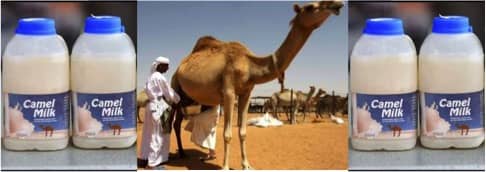
The majority of the world’s camels are located in East Africa, where they are a common dairy animal. Camel milk constitutes upwards of 9% of the total milk production of Africa. The farmers, who milk the animals, sell much of the milk as fermented product in local markets or roadside stalls.

The fermentation process occurs spontaneously as the farmers have no cooling facilities. Given that the level of hygiene is often poor, the milk often also contains disease-causing microorganisms . Such as E.coli and salmonella, which have the opportunity to multiply in the lukewarm milk.

“New” bacteria ferment the milk and increase safety

In a research project, researchers from the National Food Institute, TUD, have found a way of making milk safer. The research was conducted in partnership with the University of Copenhagen, food ingredient producer Chr. Hansen and Haramaya University in Ethiopia. It was partly funded by Denmark’s development cooperation programme, DANIDA.

The researchers have isolated new strains of lactic acid bacteria from raw camel milk. This can be used in a starter culture that both acidifies the milk. And further kills off even very large amounts of various disease-causing microorganisms in the milk. To the researchers’ knowledge, this is the first time research has shown that these bacteria can be used to make camel milk products safer to consume.

Research relay race

The research in the five-year project was conducted partly with the help of a number of students at both the Technical University of Denmark and Haramaya University, who–over time–have passed on the baton. In total, ten students from the National Food Institute have spent a semester in Ethiopia, including three Bachelor of Engineering in Food Safety and Quality, who have found the formula for a freeze-dried, quality controlled starter culture based on the bacteria.

The trio’s experiments have shown that five liters of milk can make enough starter culture to produce half a million liters of safe, fermented camel milk. However, the researchers responsible for the camel milk project recommend that farmers heat-treat the milk to reduce the amount of disease-causing microorganisms in the milk as much as possible before adding the starter culture.

The three students-Line Kongeskov Frimann, Laura Pontoppidan and Louise Marie Matzen-found it to be an exciting and stimulating challenge to conduct a project of engineering relevance in a cooperation between two such different universities.

Foodborne diseases kill more often in Africa

Countries like Denmark have an effective health system that can quickly help people who are unfortunate enough to get sick from something they eat or drink. However, in Africa, the health care system is less robust. A foodborne illness that causes diarrhea and vomiting can quickly make a patient dehydrated, and without access to medical care, the illness can be fatal.

African researchers estimate that food poisoning kills 137,000 people on the continent annually. For Haramaya University, the project is an important element in the university’s work to develop sustainable solutions and increase food safety in Ethiopia.

Research article

The work on isolating the strains from the camel milk is described in further detail in a scientific article in the International Dairy Journal: Antimicrobial activity of novel Lactococcus lactis strains against Salmonella Typhimurium DT12, Escherichia coli O157:H7 VT− and Klebsiella pneumoniae in raw and pasteurised camel milk.

First author Esben Bragason wrote the article during the last semester of his Masters course, while the research laboratories at the DTU were closed down during the spring of 2020–along with much of the rest of Denmark. The article is based on his research, which documents the bacteria strains’ antimicrobial effect.

The project has received approximately 1.1 million Euro in funding from DANIDA. It also received funding from e.g. Laurits Andersen’s Fund. Read about the project in DTU’s research database


Swipe to continue reading

Previous Article

Next Article